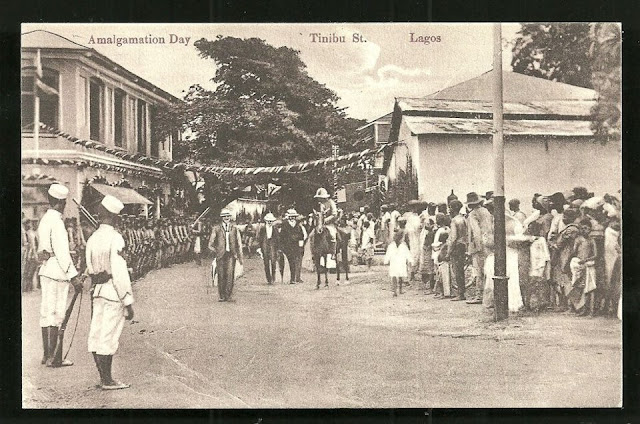
Amalgamation Day in Lagos, 1914

Amalgamation Day in Lagos, 1914

22 January, 2013

The Insidiousness of Propaganda (1)

I prefer not to copy and paste entire articles from newspapers' websites. Many people earn their living through journalism. Heaven knows jobs are scarce everywhere in the world, and that formal sector jobs are especially scarce in the Federal Republic of Nigeria. We have neither Welfare nor the Dole, so one shouldn't make it more difficult for people to support themselves, their families and their retirement through honest work.


Having said that, there is a point I want to make, and in order to make that point, I have to be sure you read the entirety of the article I am about to post here. I don't read the newspaper from which it was sourced, but my attention was drawn to it by a writer on another website.


This is how racism takes root
The different ways the media covered two cases of men grooming children for sex show how shockingly easy it is to demonise a whole community


Joseph Harker
The Guardian, Sunday 22 July 2012 20.30 BST

By now surely everyone knows the case of the eight men convicted of picking vulnerable underage girls off the streets, then plying them with drink and drugs before having sex with them. A shocking story. But maybe you haven't heard. Because these sex assaults did not take place in Rochdale, where a similar story led the news for days in May, but in Derby earlier this month. Fifteen girls aged 13 to 15, many of them in care, were preyed on by the men. And though they were not working as a gang, their methods were similar – often targeting children in care and luring them with, among other things, cuddly toys. But this time, of the eight predators, seven were white, not Asian. And the story made barely a ripple in the national media.

Of the daily papers, only the Guardian and the Times reported it. There was no commentary anywhere on how these crimes shine a light on British culture, or how middle-aged white men have to confront the deep flaws in their religious and ethnic identity. Yet that's exactly what played out following the conviction in May of the "Asian sex gang" in Rochdale, which made the front page of every national newspaper. Though analysis of the case focused on how big a factor was race, religion and culture, the unreported story is of how politicians and the media have created a new racial scapegoat. In fact, if anyone wants to study how racism begins, and creeps into the consciousness of an entire nation, they need look no further.

Imagine you were living in a town of 20,000 people – the size of, say, Penzance in Cornwall – and one day it was discovered that one of its residents had been involved in a sex crime. Would it be reasonable to say that the whole town had a cultural problem, that it needed to address the scourge – that anyone not doing so was part of a "conspiracy of silence"? But the intense interest in the Rochdale story arose from a January 2011 Times "scoop" that was based on the conviction of at most 50 British Pakistanis out of a total UK population of 1.2 million, just one in 24,000: one person per Penzance.

Make no mistake, the Rochdale crimes were vile, and those convicted deserve every year of their sentences. But where, amid all the commentary, was the evidence that this is a racial issue; that there's something inherently perverted about Muslim or Asian culture?

Even the Child Protection and Online Protection Centre (Ceop), which has also studied potential offenders who have not been convicted, has only identified 41 Asian gangs (of 230 in total) and 240 Asian individuals – and they are spread across the country. But, despite this, a new stereotype has taken hold: that a significant proportion of Asian men are groomers (and the rest of their communities know of it and keep silent).

But if it really is an "Asian" thing, how come Indians don't do it? If it's a "Pakistani" thing, how come an Afghan was convicted in the Rochdale case? And if it's a "Muslim" thing, how come it doesn't seem to involve anyone of African or Middle Eastern origin? The standard response to anyone who questions this is: face the facts, all those convicted in Rochdale were Muslim. Well, if one case is enough to make such a generalisation, how about if all the members of a gang of armed robbers were white; or cybercriminals; or child traffickers? (All three of these have happened.) Would we be so keen to "face the facts" and make it a problem the whole white community has to deal with? Would we have articles examining what it is about Britishness or Christianity or Europeanness, that makes people so capable of such things?

In fact, Penzance had not just one paedophile, but a gang of four. They abused 28 girls, some as young as five, and were finally convicted two years ago. All were white. And last month, at a home affairs select committee, deputy children's commissioner Sue Berelowitz quoted a police officer who had told her that "there isn't a town, village or hamlet in which children are not being sexually exploited".

Whatever the case, we know that abuse of white girls is not a cultural or religious issue because there is no longstanding history of it taking place in Asia or the Muslim world.

How did middle-aged Asian men from tight-knit communities even come into contact with white teenage girls in Rochdale? The main cultural relevance in this story is that vulnerable, often disturbed, young girls, regularly out late at night, often end up in late-closing restaurants and minicab offices, staffed almost exclusively by men. After a while, relationships build up, with the men offering free lifts and/or food. For those with a predatory instinct, sexual exploitation is an easy next step. This is an issue of what men can do when away from their own families and in a position of power over badly damaged young people.

It's a story repeated across Britain, by white and other ethnic groups: where the opportunity arises, some men will take advantage. The precise method, and whether it's an individual or group crime, depends on the particular setting – be they priests, youth workers or networks on the web.

Despite all we know about racism, genocide and ethnic cleansing, the Rochdale case showed how shockingly easy it is to demonise a community. Before long, the wider public will believe the problem is endemic within that race/religion, and that anyone within that group who rebuts the claims is denying this basic truth. Normally, one would expect a counter-argument to force its way into the discussion. But in this case the crimes were so horrific that right-thinking people were naturally wary of being seen to condone them. In fact, the reason I am writing this is that I am neither Asian nor Muslim nor Pakistani, so I cannot be accused of being in denial or trying to hide a painful truth. But I am black, and I know how racism works; and, more than that, I have a background in maths and science, so I know you can't extrapolate a tiny, flawed set of data and use it to make a sweeping generalisation.

I am also certain that, if the tables were turned and the victims were Asian or Muslim, we would have been subjected to equally skewed "expert" commentary asking: what is wrong with how Muslims raise girls? Why are so many of them on the streets at night? Shouldn't the community face up to its shocking moral breakdown?

While our media continue to exclude minority voices in general, such lazy racial generalisations are likely to continue. Even the story of a single Asian man acting alone in a sex case made the headlines. As in Derby this month, countless similar cases involving white men go unreported.

We have been here before, of course: in the 1950s, West Indian men were labelled pimps, luring innocent young white girls into prostitution. By the 1970s and 80s they were vilified as muggers and looters. And two years ago, Channel 4 ran stories, again based on a tiny set of data, claiming there was an endemic culture of gang rape in black communities. The victims weren't white, though, so media interest soon faded. It seems that these stories need to strike terror in the heart of white people for them to really take off.

What is also at play here is the inability of people, when learning about a different culture or race, to distinguish between the aberrations of a tiny minority within that group, and the normal behaviour of a significant section. Some examples are small in number but can be the tip of a much wider problem: eg, knife crime, which is literally the sharp end of a host of problems affecting black communities ranging from family breakdown, to poverty, to low school achievement and social exclusion.

But in Asia, Pakistan or Islam there is no culture of grooming or sex abuse – any more than there is anywhere else in the world – so the tiny number of cases have no cultural significance. Which means those who believe it, or perpetuate it, are succumbing to racism, much as they may protest. Exactly the same mistake was made after 9/11, when the actions of a tiny number of fanatics were used to cast aspersions against a 1.5 billion-strong community worldwide. Motives were questioned: are you with us or the terrorists? How fundamental are your beliefs? Can we trust you?

Imagine if, after Anders Breivik's carnage in Norway last year, which he claimed to be in defence of the Christian world, British people were repeatedly asked whether they supported him? Lumped together in the same white religious group as the killer and constantly told they must renounce him, or explain why we should believe that their type of Christianity – even if they were non-believers – is different from his. "It's nothing to do with me", most people would say. But somehow that answer was never good enough when given by Muslims over al-Qaida. And this hectoring was self-defeating because it caused only greater alienaton and resentment towards the west and, in particular, its foreign policies.

Ultimately, the urge to vilify groups of whom we know little may be very human, and helps us bond with those we feel are "like us". But if we are going to deal with the world as it is, and not as a cosy fantasyland where our group is racially and culturally supreme, we have to recognise when sweeping statements are false.

And if we truly care about the sexual exploitation of girls, we need to know that we must look at all communities, across the whole country, and not just at those that play to a smug sense of superiority about ourselves.

17 January, 2013

Channels TV Report on the Nigerian Police College, Ikoyi, Lagos

I criticize the Nigerian Police Force a lot, explicitly and implicitly. Every Nigerian does.

Even police officers are critical of the Force, none more so than Sergeant Musa Usman, the speaker of truth to power whom I wrote about in this post. I still don't know what happened to Sergeant Usman.  If you know anything more about his story, leave a reply or email me.

Among many posts I have made directly or indirectly about the Force is this one, about the murder of a 3-year-old girl, Kaosarat (or Kausarat) Muritala. In September of 2012, the Police Corporal accused of the crime was convicted and sentenced to death. I have not seen anything in the media in terms of an appeal, or in terms of the sentence being carried out.

There is another side of the story, one told in part by Sergeant Usman. The conditions of service of the Nigerian Police Force not only encourage things like graft and corruption, but discourage things like bravery or initiative in the face of violent criminals.

I have often said on this blog that the people who govern Nigeria do not want Nigeria to have an effective law enforcement system or an effective judiciary. If these institutions functioned properly, most of what the political and economic leadership are currently free to do in advancement of their self-interest would become impossible, difficult or would attract a higher risk of sanction than currently pertains. As such, the people most responsible for ensuring that the Police Force are effective are simultaneously the people least interested in the Police Force being effective.

This is not just true of political leadership beyond the Force, but is true of leadership within the Force. Read the blog post on Sergeant Usman, and you will see where he makes clear that the top brass of the Force are ultimately responding for the corruption and graft. They deploy their men in a manner so as to make money for themselves, taking a cut of whatever "action" their men are involved in and passing a share of that cut up the chain of command.

This paradox of the government being constitutionally responsible for an effective law enforcement system while being simultaneously opposed, in practice, to the existence of effective law enforcement has existed since the founding on the modern Nigerian Police Force as an arm of the British Colonial Government(s). From the start, the Nigerian Police Force has been obliged to systemically ignore the fact that the government(s) it served were illegitimate, that these governments could only sustain themselves in power by doing illegitimate and unconstitutional things, and that the policy-making output of these governments were inevitably going to be just as illegitimate.

Indeed, from the very start the Nigerian Police have been poorly paid, and have been expected to supplement their wages through activities that were just as illegitimate as the activities of the governments they served. Yes, believe it or not, Nigerian Police were "supplementing" their pay as far back as the colonial days. I know we have all been taught to believe that everything was perfect when the British ruled us, but that is colonial propaganda still being spread by the products of colonial education systems.

Having said that, the British were a foreign people pursuing their own interests at the expense of ours.  What is our excuse? We regained our self-rule in 1960.  Why have we continued the pattern?  Why are we consigning ourselves to a situation where public security is ephemeral rather than substantive?

As citizens, we perceive the police to be behaving badly, but in reality the police are doing exactly what is expected of them. This is what they were created to do, this is what they are trained to do.  Their original job was never to protect us from crime, but to protect the British colonialists from us and to punish us if we didn't obey British decrees that we neither approved of nor were consulted about.  What we in post-colonial Nigeria see as their brutal treatment of "bloody civilians" is the modern iteration of an institutional culture put in place from the very beginning to create a Force that sees us, the people they are supposed to protect, as people to be beaten into submission on behalf of whoever happens to be in government. Indeed, the post-colonial police have been more likely to aid in rigging an election than they have been to arrest an election rigger.

Again, one can see why the British would do this .... but what is our excuse?

I am a federalist, like every other Nigerian, so I am not philosophically opposed to "state police", but calling for "state police" ignores the basic problem. The Regional and Provincial police forces of the past were just as likely to follow the colonial paradigm, and just as ineffectual when it came to the issue of public security and crime-fighting. If things seems more peaceful in the past, it is because there were fewer armed robbery gangs, for example, and not because the Colonial or First Republic police had any particular skill at fighting armed robbery gangs. Beating up the political opponents of the major regional First Republic parties was a more likely function.

What I am trying to get you to understand is that the Police Force functions the way it was designed to function. For an individual officers, your choice is to do what the institution requires of you, or to exit into the congested pool of unemployed or under-employed formal sector Nigerians. Tell the truth, most of us make compromises of one kind or another to keep our jobs, so long as the compromise does not hurt us individually, and the Nigerian policeman is no different.

I wonder sometimes if the same men and women wouldn't have been more effective as a Police Force if our Federal Republic had been genuinely interested in making them an effective Force.

Channels TV is organizing a forum to discuss the Nigerian Police Force, and prepared this report as a sort of primer to the problems facing the Force. It seems the disincentives to effective policing start as early as the induction to the Nigerian Police College.


09 January, 2013

On the issue of Kidnapping

Dr. Okonjo-Iweala is the Finance Minister and "Coordinating Minister for the Economy".  Last year,  her mother, Professor Kamene Okonjo, was kidnapped and later released.

I am vvery happy that it all ended well and safely for her mother, but the Finance Minister seemed to have chosen to use the incident to play politics, telling a press conference her mother's abduction was linked to the controversial fuel subsidy issue.

Let me stress that I am not heartless. I know exactly how she must have felt when she was told her mother was in the hands of the kidnappers, and exactly how she must have felt to embrace her mother again when it was all over. In such situations you might do or say things that you wouldn't do or say in other circumstances.

But Dr. Okonjo-Iweala occupies what is purported to be the most powerful position in the Jonathan Administration cabinet. In theory, she wields (or is meant to wield) more influence than the any of the Vice-President, the External Affairs Minister or the Defence Minister.  She is presented to the public as though she were President Jonathan's "prime minister" and guiding force of his government.  Of course, the true nature of Nigerian politics is such that other priorities and principals are likely more influential on the President's decision-making than anything Dr. Okonjo-Iweala says or does ....

.... but you start to wonder if the Nigerian Federal Government is giving the long-running epidemic of kidnapping the seriousness, focus, attention and resources it deserves.

With the greatest of respect, the kidnapping of Dr. Okonjo-Iweala's mother had nothing to do with politics or the fuel subsidy issue. It was just another kidnapping in a thriving criminal enterprise. Her mother's situation was only unique in the sense that kidnappings only make the national news when a prominent citizen is taken. Aside from having a daughter who is the Finance Minister, the Okonjo Family are Ogwashi-Ukwu royalty; one newspaper properly addressed Professor Kamene Okonjo as "Her Royal Highness".

Before I go on to talk about the scourge of kidnapping, let me take a moment to put it in perspective, since this blog post may be read by foreigners who don't have firsthand experience of Nigeria. Before the Nigeria'99 World Youth Cup, and years later in advance of the 2010 World Cup hosted by South Africa, one noticed segments of the foreign media creating the impression that as soon as you walked out of your aeroplane into Nigeria or South Africa you would be accosted by violent criminals.

I do want to discuss our public security problems, and I do consider this issue to be at or near the top of the priority list for reform, restructuring and transformation, but I do not want to add to the type of misinformation that preceded Nigeria'99.  There are at least 100 million people living in Nigeria, most of whom are not directly affected by crime of any kind of a daily basis. In all the time I lived in Nigeria, I was never affected by crime. My first personal experience of crime came after I moved to the USA for tertiary education.

Having said that, all Nigerians would agree that the rate of kidnapping in the Federal Republic is far too high, and that the kidnappers are very bold in their actions because they know the odds of facing any kind of judicial sanction are far too slim.

Dr. Okonjo-Iweala's mother is not the first high-profile victim, nor is she the first family-member of a high-profile person to be kidnapped. Indeed, not too long after her release came news Nkiru Sylanus had been kidnapped. Ms. Sylvanus is a not-famous Nigerian film actress who now serves as a Special Assistant on Public Affairs to Imo State Governor Rochas Okorocha.  The criminals who kidnapped Dr. Okonjo-Iweala's mother had demanded ₦200 million; those who took Ms. Sylvanus wanted ₦100 million.

Ms. Sylvanus was released after her family paid ₦8 million. The Nigerian Police Force subsequently issued a public statement saying her family had paid the ransom though they (the police) had told the family not too. After Ms. Sylvanus' release, the police arrested and paraded suspects in her kidnapping and other kidnapping cases.

The articles I've read on Professor Kamen Okonjo's release do not mention whether a ransom was paid or not, but shortly before her release, the army (i.e. not the police) arrested 63 people for questioning regarding the kidnapping.

I don't mean to sound cynical, but our police (and politicians) have little or no credibility in public security issues. One particular boldfaced lie told not too long ago about an extra-judicial execution in Maiduguri will probably go down in our history as the most infamous lie ever told by Nigerian Police brass.  The safest position to take is to say I do not know if there was or wasn't just cause to arrest any of the suspects arrested on suspicion of involvement with these two kidnappings. Maybe there was. Maybe there wasn't.  Maybe someone, anyone had to be arrested for reasons of public appearances, and maybe someone was.

Before accusing me of cynicism, consider these two examples, the first a Vanguard article discussing the case of a pregnant woman who was arrested and held for 6 months, the second a BBC report on a lucky man who was detained without charges for 7 years, during which time he was shot in the leg and tortured, having been arrested on suspicion of being an armed robber -- his parents were told a year into his detention that he was dead.

The people described in the cases above are lucky, both to be alive (what with the issue of extra-judicial executions), but also because someone in the media bothered to tell their stories. As Nigerian citizens, we go about our daily lives with little thought for the 70% of all Nigerian prison inmates who have been stuck in prison "awaiting trial" for years or decades. Some have not been charged with anything.  Some who are arrested as "suspects", mysteriously die during or following "interrogation". Some are only in prison because they are related to someone the police is looking for (by the way, if someone is a hardened criminal, the person most likely doesn't care enough about anyone, to accept starvation and prison-borne diseases in exchange for a family member's freedom).

I don't deal in optimism, pessimism, cynicism or any other "ism". I don't even subscribe to any of the political or ideological "isms".  My thing is to look at problems that have been around for a very long time without anything being done to either fix/correct or even just ameliorate.

While the police were parading their suspects in the Nkiru Sylvanus case, gunmen were busy at work kidnapping a member of the Gombe State House of Assembly.  The linked-to article describes it as the first reported kidnapping in Gombe, but, as I keep pointing out on this blog, these type of events only make it into the news media (and attract the attention of governmental institutions) when it affects someone important, or when the event plays in to one of the broader political narratives constantly being woven by those with the loudest voices in our society (e.g. when an event can be used to reinforce inter-ethnic, inter-regional and and inter-cultural suspicion and distrust). Luckily and happily, the Gombe State lawmaker  was released on the 2nd of January in the New Year ....

.... but surely the scope of the problem is clear? Indeed, the article discussing the arrest of suspects in the Nkiru Sylvanus case also mentioned the since-resolved abduction of the four-year-old daughter of the Publicity Secretary of the Imo State branch of the People’s Democratic Party (PDP)!


I have often pointed out that the nature of Fourth Republic politics obliges politicians to hire private armies of thugs in order to advance their political ambitions. In-between elections, these armed men tend to find ways to make money for themselves through smuggling, brigandage, "militancy" to extort pay-offs and contracts, kidnapping, armed robbery, and assorted other violent criminal enterprises. I am not saying that every person involved in these type of crimes moonlights as a political enforcer during election periods. I am saying the inverse -- that all of the election-year political enforcers moonlight as criminals between elections.

The respected, but now troubled, Nigerian news magazine Newswatch did a story years ago, questioning allegations that Obioma Nwankwo alias Osisikankwu, the infamous kingpin of kidnapping and armed robbery who declared war on Abia State, had began his criminal career as an enforcer manipulating elections on behalf of People's Progressive Alliance then-gubernatorial candidate (and current Governor) Theodore Orji.

It is difficult to know for sure if the allegations reported by Newswatch are factual, however, I have always maintained that the only good thing that came of the 2003-2006 Anambra State political crisis precipitated by Chris Ubah is it gave Nigerians a very clear and unvarnished view of the realities of Nigerian politics.  Politics is no different in the Niger-Delta, the Southwestern states, Kwara State and in the Northwest, the East-Middle-Belt or the Northeast.


It creates a situation, a paradox, where all three tiers of Nigeria's governments are obliged to contradict themselves, to negate their own actions when it comes to issues of law enforcement and public security. On the one hand, they do certain things that are technically designed to improve public security, but on the other hand they do other things that aggressively and deliberately render their law enforcement efforts ineffectual to the degree of being essentially nonexistent.

There have been reported incidents over the years of Nigerian soldiers arriving at the headquarters of a smuggling operation to find the smugglers had been tipped off to their arrival and had disappeared. And there was the very, very embarrassing incident of an impounded smugglers' ship escaping from Nigerian Navy custody without challenge (two Admirals were later shown to have aided the criminal escape).

For these reasons, citizens tend to suspect law enforcement agencies, security agencies and politicians know a lot more about these organized criminal groups than they admit.  The fact that they operate so freely brings up suspicions of political involvement, which are, ironically, then exploited by the three tiers of government to deflect attention from their ineffectual efforts to control and limit crime. President Jonathan has made vague allegations about insurgency collaborators in his government, and Finance Minister Okonjo-Iweala has raised the spectre of the fuel subsidy "cabal" being involved in the kidnapping industry.

The same sort of vague "gist" you get from street conversations.

Or blogs.

08 January, 2013

Central African Republic and Regional Security

This blog focuses mostly on the reform, restructuring and transformation of the Federal Republic of Nigeria, so there haven't really been that many posts on pan-continental issues.

One could argue, I suppose, that matters that affect Nigeria are by definition matters of importance to the continent. What is indisputable is we Africans tend to pay too much attention to political matters in Western Europe (particularly France and the United Kingdom), North America (particularly the USA) and Western Asia ....

.... and too little attention to matters occurring in other African countries or regions.

The quality of information available, to the extent that we do follow events in our neighbourhoods (or even in our own countries) is questionable. We get a lot of "news", "analysis" and "discourse" from foreign (i.e. non-African sources) or from domestic sources that have been influenced by foreign sources (and are often led by managers or journalists who were educated abroad, or educated at home by professors who were educated abroad).  What is presented as the consensus opinion about an issue is something that sounds like what an outsider would come up with from a brief glance at the surface, and does not sound like the product of a person or people who truly understand what is going on, or even just have the complete set of basic facts about the what, why, who and how.

But I digress.

Like I said, I don't write too often about pan-continental issues except insofar as the issues affecting Nigeria are similar to the issues affecting other countries, or insofar as anything that affects Nigeria is important to Africa at large.

I did, however, write this post about African governments that disguise and propagandize their efforts at undemocratic self-preservation against the will of their citizens by purporting to be opposed to "unconstitutional changes of government" (i.e. coups).

Sometime in December, 2012, elements of three Central African Republic rebels groups united to form a new, larger rebel alliance.  This Alliance proved so successful so quickly that it was in position to overrun the capital, Bangui, in a short time. The USA shut down its embassy, and President Bozize called on his neighbours (and on France), to save his government.  Bozize is desperate to agree to offer to share power with the rebels (as though he couldn't have done this a long time ago).

France and the United States are doing the usual thing of officially and publicly professing their political non-involvement, calling for peaceful resolution, etc, etc. As to what they are or are not doing secretly, practically and unofficially, one way or the other, we will only know after we see the results.

African countries have rushed to prop up Bozize's regime. His closest ally is the government of Chad, who rely on him to not support Chadian rebels the way other C.A.R. governments have done; Chadian President Idris Deby pledged to send up to 2,000 soldiers to bolster Bozize. Support also came from Congo-Brazzaville, Gabon and Cameroun.  The hastily-assembled force currently on the ground to protect Bangui from the rebel alliance includes: Chad (400 troops), South Africa (200 troops), Cameroun (120), Gabon (120), and Congo-Brazzaville (120).

Look, if I lived in Bangui or had family living in Bangui, I would want to do anything to avoid the city becoming a combat zone ... again.

I understand that motivation. I have had family in a war zone before. And not just once.

However, the preservation of the Bozize Regime does absolutely nothing to fix the chronic and persistent problems (including a near-constant security crisis) that have plagued the C.A.R. for decades.

Mind you, allowing the rebels to sweep him out of office wouldn't fix the problem either.

This is my problem with Nigerian politics. It is also my problem with African politics. And while I do not have any particular visceral reaction towards the domestic politics of countries in the rest of the world, one notices the same pattern in that citizens are always presented with a situation where none of the choices they are allowed to make is a choice that would actually fix the problems they want to have fixed. You always get a choice between nothing you want, and are expected to choose the party or person that you dislike but dislike less than you dislike the other person or parties.

For other parts of the world, outside of Africa, the deliberately restricted scope of political choice is not that big of a problem, at least not at present.  For example, I suppose the average Japanese person feels some sort of effect from the fact that neither the DPJ or LDP has any answers to Japan's 20-year economic questions, but none of them suffers in the way that a citizen of the C.A.R. suffers due to the absence of a political choice representing a solution to their dillenma.

Presented with this reality, a lot of people's reactions boil down to "don't let the perfect be the enemy of the good" or "don't let the good be the enemy of the better", but these so-called "solutions" to the problems of countries like C.A.R. are themselves no more than lubrication for the continuation of all of the basic problems. This isn't a case of opposing an improvement in the name of perfection, but is more a case of asking why we are fanning the flames when we should be putting them out.

Remember what I said about understanding how someone who lived in Bangui or had family there would want to avoid the city becoming a warzone?  If I lived in Bangui or had family there, I would have experienced this same exact anxiety, trepidation and fear so many times over the last 50 years that I would be sick and tired of it, and would be wondering why we just keep lubricating the continuation of the never-ending conflicts. Being told that soldiers from the rest of Africa are here to make sure the same thing continues happening decades in the future would prompt me to join those people who make perilous journeys across the Sahara just to get to anywhere other than their own countries.


None of these things solve the problem.

It reminds me of a semi-acquaintance of mine, who supports the idea of sending Nigerian soldiers to go and fight in Mali. According to him, if they don't go, it would mean the forces holding the north of Mali would be able to send weapons to the insurgents behind a wave of violence in Nigeria.

But this is warped thinking.

There is nothing that Nigerian troops could or would do in Mali that would stop the flow of weapons to Nigerian insurgent groups. Even if Nigeria single-handedly conquered all of Mali, planted the Nigerian flag, and declared Mali to be the 37th State of Nigeria, all of the insurgent and militant groups in Nigeria would still be getting weapons. I wrote an essay nine years ago, ahead of the 2003 Elections, that complained about the Nigerian Federal Government's inability to do anything about the smuggling of heavy weapons into the country, among other complaints. Back then, everyone thought Mali was an African success story, rating them (along with Ghana) among the most democratic and well-governed countries on the continent.

Mind you, the fact that I wrote the essay in 2003 does not mean the problem of insurgent/militant groups' access to heavy weaponry started in 2003. On the contrary, it was already a long-standing problem by then.

Look, sending Nigerian troops to Darfur has not brought peace to Darfur, nor has it done anything to stop the flow of weapons across African borders in general, or in particular the smuggling of heavy weapons into Nigeria.  Nigerian soldiers have died in Darfur, though nowhere near as many as died in Liberia and Sierra Leone. We've also lost soldiers in Somalia in the early 1990s without there being an appreciable difference in the levels of violence for another 20+ years.

Sierra Leone and Liberia are usually presented as examples of the success of this kind of intervention, but both countries remain fragile in security terms. If anything the "peace" has provided a veil behind which the same forces that created problems in Sierra Leone and Liberia have expanded to affect Cote d'Ivoire (especially), as well as Guinea and Guinea-Bissau to a certain extent. Weapons, armed persons and (in the case of Guinea-Bissau) globally proscribed narcotic products, continue to move across the borders of the wider Mano River Region with ease.

I am not being a pessimist. What I am doing is trying to promote some kind of proactive thinking. The truth of the matter is the Mano River Region is not so much at peace as it is in a sort of inter-war lull before the next outbreak, wherever that outbreak might be.

Indeed, proactive thinking is clearly nonexistent in these many crises. Whatever one may think of the prior government of Libya (or even for that matter of the current government of Libya), the NATO countries' actions in Libya have resulted in something of a catastrophe for Mali and West Africa, and nobody foresaw the possibility or did anything to ward it off or to contain it once it became clear what was going to happen.

I love the Federal Republic of Nigeria, but I hate the "Giant of Africa" tag that our political leaders like to bandy about.  Self-hype is no substitute for basic, simple proactive thinking about strategic interests in our immediate neighbourhood, and self-praise does not hide from anyone the fact that we have little or no influence on events as near to us as Chad, Equatorial Guinea and Niger Republic, much less further afield. We watched what happened in Libya as spectators, watched the fallout as spectators.  We are now scrambling to send soldiers to Mali because other people have told us to do so, and not because we have carefully considered what we have to do to finally fix underlying problems in our country and our region. These "experts" whose requests we are obeying are the same people whose "expertise" created the problem in the first place.

You are probably wondering when I will get to a suggested solution, as opposed to a long litany of complaints.

But that is just it.  The name of this blog is "For A New Federal Republic", and it is sub-titled "Reform, Restructure and Transform" the Federal Republic of Nigeria.

We can't keep things in Nigeria the way they are, and then deceive ourselves that sending soldiers to this or that country will fix the problem with security in our country and in our neighbourhood.

We can't fight to keep the Bozize Government in place, essentially keeping everything in the C.A.R. fundamentally the same as it has always been, and deceive ourselves that we have brought peace to the place.

There is so much that is fundamentally problematic about the nature of the politics and economies of Nigeria and its neighbourhood and all of it has to be fixed, or we will remain excessively and unnecessarily prone to these type of problems.

Indeed, one can argue that the biggest reason why countries like the C.A.R. cannot reach their economic potential is Nigeria, the country that should be the engine driving the region, is doing everything in the world to AVOID achieving its economic potential.

You cannot correct this by sending soldiers here, there and everywhere across Africa.

We must REFORM, RESTRUCTURE AND TRANSFORM the FEDERAL REPUBLIC.

31 December, 2012

INEC de-registers 31 parties

You've probably read all about it and formed your opinions by now. In case there is anyone who hasn't, you can read about the first 28 de-registered parties in this report from This Day, and the 3 additional de-registered parties from the Nigerian Guardian.

A lot of these parties were non-functioning. Many, if not most, were "briefcase" parties, to be offered (for a price) to ambitious politicians who had lost in another party's primaries and were looking for a platform-of-convenience from which to run for the office anyway.

Quite a lot of our politicians hop around from party to party, looking to settle in whichever one allows them to run in the immediately approaching election. The way it happens in practice is cynical and immoral, but in theory there is nothing wrong with this in terms of democracy.  I don't particularly like politicians (and citizens) who are rigidly wedded to a particular party or ideology, and I am not opposed in theory to politicians and voters moving from one party to another.

Among the de-registered parties, there are one-man parties. These are not so much "parties" as they are the brand name of a particular political individual.

This can be a problematic thing, as when the late Alhaji Olusola Saraki used the Allied Congress Party of Nigeria as a tool in what was essentially an intra-family feud. The late godfather of Kwara politics wanted his daughter, Senator Gbemisola Saraki, to replace his son, Governor Bukola Saraki, as Kwara State Governor. Since Bukola had control of the state's branch of the PDP (seizing said control from his father), the late godfather more or less created or recreated the ACPN as a platform for his daughter to challenge his son's preferred successor (i.e. his son's political godson).

On the other hand, there is nothing wrong with this in terms of democracy, and in the context of Nigeria, where mainstream politics is inherently problematic, it can even be a good thing, in an ineffective sort of way. The National Conscience Party was for a long time the personal political vehicle of the late Chief Gani Fawehinmi. I agreed with Chief Fawenhimi's stance on many issues, and respected his courage to speak loud where others were silent with fear. I disagreed with his views on certain other issues. But it would have been a travesty to de-register his party based on some arbitrary INEC decision. Since Fawehinmi's death, it appears his son is attempting to keep the party alive. I wish him luck.

Perhaps a better example is the Peoples Redemption Party, which was de-registered, unlike the NCP. The PRP is now a personal political vehicle for Balarabe Musa, the 76-year-old ex-Governor of Kaduna State during the Second Republic. In theory, Balarabe Musa is trying to carry on the political tradition of the late Mallam Aminu Kano, a legendary figure in Kano State, Hausaland, Northern Nigerian and Nigerian politics. I am not sure how effective Balarabe Musa has been at continuing his mentor's politics in practice, but de-registering the PRP is something that is only possible in a country of arbitrariness, constitutional confusion, and a profound lack of appreciation of history. The First Republic's Northern Elements Progressive Union, and it's Second Republic continuation as the Peoples Redemption Party, were both, to a large extent, the personal political vehicles for the late Mallam Aminu Kano, but that did not diminish the importance and the impact of both parties on the Federal Republic. Is it really the business of the Electoral Commission to decide to junk a party with such history?

Seriously, what business is it of INEC?

Unlimited "freedom" doesn't exist anywhere in the world, and never has, contrary to the self-congratulation of certain commentators in certain countries. I am not advocating unlimited freedom to form organizations; I do think registered and recognized political parties should largely be congruent with Nigerian society and culture. To use an absurd example, if someone wanted to start a local branch of a racist European or American political organization in Nigeria, I do not think we are under any obligation to grant it recognition or civic protections. I was going to give an example of one of these racist organizations, but I don't want the internet to direct people searching for things like that to this blog. I have the same view of internal "racism" (if you can call it that), and do not believe a political organization advocating violent attacks by one Nigerian community against any other Nigerian community should receive civic recognition or protection.

But so long as a political party or organization exists in normal Nigerian political space, it should not be the prerogative of the Electoral Commission to decide which political parties can or cannot be registered. If it is too unwieldy to manage the list at the federal level, then lists of registered entities should be maintained at the Third Tier of governance.

Perhaps there can be a minimum threshold of some kind for a party's candidate to be placed on the ballot, though these sort of rules (in Nigeria and everywhere else in the world) have a tendency of ruling out regular citizens and leaving politics in the hand of ... people who are less than ideal for the task.

Definitely, INEC should discontinue the practice of making payments to the registered parties.  The Electoral Commission justified its actions in part by saying that some of the parties were created so the party owners can collect subsidy payments from INEC without actually doing any politicking with the money. But why is INEC giving any of them money in the first place?

If money must be given to support the smaller parties, there should be some kind of qualification, with the amount of money given tied to the degree to which a party meets or exceeds that qualification. For example, funds might be given only to parties that win a certain number of seats, with a higher sum given to those who win more seats. This should be based on the cheapest seats to run for, since it is difficult for a smaller party to win any kind of seat without support funding in the first place. Currently, the cheapest seat to run for is a local government council seat -- winning just one or two of these should earn a party a bigger infusion of support cash than they would get per seat for each subsequent seat. Of course, this won't be a perfect system (I still wonder why INEC is in the business of paying anything to the parties), but it is better than randomly de-registering parties.

A lot of people's instant reaction to the news of INEC de-registering 31 would have been to support it because they think Nigeria has too many political parties. Usually these people trot out foreign-country examples of "two party systems", portray this as being the ideal, and point to the admittedly odd sight of African countries with as many as 15 people running for President.

I am tempted to launch into an explanation of why the much-hyped "two party system" is not as ideal or optimal as the hype portrays it to be. But I think such a thing is best reserved for a volume of books, and not a blog ....

.... and a quicker, more shorthand thing to say would be to remind everyone that we are talking about the Federal Republic of Nigeria, a specific place with specific people, a specific set of cultures and a specific society. Shift away from the notion that there is a single, perfect way that EVERY country must be. Shift away from the obsession some Africans have with creating mimicry and facsimiles of everything they see in other countries, even if those things are specific, organic outgrowths of those other countries' specific histories, and have no relevance to Nigeria or Africa.

Instead of trying to shoehorn Nigerian into the political system of some other country, why don't we allow the political system of Nigeria be expressive of the Nigerian society, which is not a two-party society welded and wedded to something called "the left" and something called "the right".

It didn't make any sense when General Ibrahim Babangida attempted (or pretended to attempt) to shoehorn Nigerian into the Social Democratic Party and the National Republican Convention.

It doesn't make sense today when opposition politicians talk about creating a giant opposition alliance to challenge the Peoples Democratic Party.

And it only added fuel to a dangerous fire when the First Republic parties amassed into the United Progressives Grand Alliance and the Nigerian National Alliance.

Balarabe Musa's PRP might be inconsequential in the grand scheme of the Fourth Republic, but it is a more organic outgrowth of Nigerian society and politics than any of these other schemes.

And a massive part of the problem with Post-Colonial Africa has been the persistence of the Colonial Paradigm -- the existence of "governments" and (more importantly) systems of governance that have no real or virtual connection to the people and lands they purport to govern. Our governments are indifferent to us, and we are indifferent to our governments. Thus the tragedy of the commons, where nobody feels the need to maintain or secure a thing because nobody feels any sense of ownership of or responsibility toward the thing.

We the people can starve to death and the governments don't care because there is no mechanism for transferring or translating our desperation (or our anger) to the governments.

Conversely, one day, everyone could be hailing the supposed economic miracle of Cote d'Ivoire or the allegedly deepened democracy of Mali, and the next day these countries are doing their best impression of a failed or failing state, because, like the emperor without clothes, the political and economic institutions of the countries crumble the moment anyone challenges their claim toward being the legitimate institutions of that particular geographical patch of land. The fall of the government means nothing to us, because the government meant nothing to us.

Let us stop with the experimenting and constitutional gymnastics, and just allow for an organic politics, not a managed politics.

Post-script: By the way, all of those countries known as "two-party" countries actually have more than two parties. Indeed, there are, and have been, at any given time, far more than three parties represented in the British Parliament.

03 December, 2012

Nigeria and South Africa - PDP and ANC Cooperation?

Nigerian politics have always been different, and more complex than most other countries in Africa.

Most countries in Africa came to "Independence" with either:

(a) One giant "liberation" movement/party which dominated politics until the first coup or until the 1990s (or beyond the 1990s in a few cases like Tanzania and Botswana); or

(b) One giant "liberation" movement/party and a smaller regional- or ethnic-focused rival movement/party, either centred on a large ethnic group that is not the largest ethnic group (e.g. Kenya, Zimbabwe) or is centred on the largest ethnic group where the largest ethnic group is smaller than the combined number of the other ethnic groups (e.g. Ghana, Uganda).

In Nigeria, this basic post-Independence political pattern was replicated but was multiplied by three, with all three facsimiles compelled to interact politically on a fourth, federal stage.  And even that is a simplification, as the internal politics of the Northern Region and of the Western Region were more complicated internally than the usual post-Independence pattern, and the Eastern Region would seem to fit the normal pattern only if you disregard the excision of the Bamenda and Buea provinces, an event (and a preceding political timeline) that was not replicated anywhere else in Africa (the separation of Guinea-Bissau and Cape Verde, and the on-going issues in the Comoro Islands, are both different events driven by a different set of political realities).

But even if you considered the separate internal political dynamics of each of the three regions as being straightforward replications of the basic post-Independence political pattern, you would have to acknowledge that the alliances between the "minority" parties in each Region and the "majority" party of one of the other Regions created a political dynamic absent from the rest of Africa.

In their own ways, the National Party of Nigeria (NPN) and, to a certain extent, General Abacha's United Nigeria Congress Party (UNCP), represented efforts to create the one-party-dominant political model that characterized much of the post-Independence political history of the African continent. But the People's Democratic Party (PDP) is the first political party in Nigeria to really approach that status.

I use the word "approach", because even now Nigeria's political system (and especially our federalism) differentiates us from the rest of the continent. Rival parties like the Action Congress of Nigeria (ACN), All Nigeria Peoples Party (ANPP) and All Progressives Grand Alliance (APGA) control several states. And when I say control several states, I mean those states are effectively one-party states in the classic sense. Almost all of Africa's countries are "unitary", meaning whoever rules at the centre rules all the provinces. Ethiopia, South Sudan and Sudan are theoretically federal, but in practice the party that controls the centre makes sure it controls the constituent states as well.

South Africa is not federal per se, but their system allows for an opposition party (the Democratic Alliance) to run one of their nine provinces, though the DA's influence over the Western Cape is not even close to the unquestioned (often unconstitutional) control exercised by Nigeria's emperor-like governors. In some cases, notably Kwara State and ACN-controlled States, the "emperor" is a political godfather who pulls the puppet governors' strings from behind a curtain. Similarly the African National Congress is stronger as an opposition party in the Western Cape than the PDP is in, for example, Lagos State.

Anyway, the point of this long introduction to a short video is to point out that Africa's dominant political parties tend to be friendly towards each other, and supportive of each other's continued, permanent and perpetual reign as the unchallenged power in their respective countries. Indeed, ruling parties in Africa tend to be as hostile towards the opposition parties in other African countries as they are to their own opposition parties. These alliances of convenience are cemented by certifying each other's rigged elections as being free-and-fair, as well as signing meaningless treaties banning coups (while simultaneously working very hard to make it impossible for their citizens to change their governments by any means other than coups).

Anyway, having put you through a long set-up to a short video, watch this report from Channels Television on a conference between the Peoples Democratic Party and the African National Congress in Abuja.


You might accuse me of cynicism, but I would counter by suggesting that I am a realist. You and I have both seen hundreds of these types of meetings, producing hundreds of these type of statements afterward. I really doubt anything different will be the outcome this time around. Whatever it is you think of the PDP or ANC, good or bad, both organizations are fairly set in their ways are are unlikely to do things differently going forwards.

The economic and political relationship between Abuja and Pretoria since South Africa's "Independence" in 1994 has been .... odd. There have been signficant investments, and a few South African corporations do make more money from their Nigerian operations than they do from their South African business, but in many respects the two countries have little in the way of real, practical cooperation outside of empty rhetoric.

I have no intention of fully discussing why this is, but a part of it, a petty part of it, probably includes Nigeria's discomfiture with the idea of South Africa being the "leader" of Africa (rather than Nigeria), and South Africa's discomfiture with the idea that Nigeria's economy will surpass theirs in the next two or three years, eroding their claim to be the "leader" of Africa. It is interesting that the people who actually created the term "BRICs" did not include South Africa in it, though South Africa has joined the BRICS group that formed subsequent to the creation of the term, whereas the creators of the BRICs term did include Nigeria in their "Next Eleven", while again explicitly not including South Africa.

If you think I am being petty or nationalistic in pointing this out .... I am not. Take my words exactly as they are: That question of who is and/or will be perceived the "leader" of Africa by the rest of the world has both countries eyeing each other a bit like the stereotype of the British and the French.

African Business News and CNBC-Africa created a pan-African cable/satellite business-focused television/online channel. The two videos below are the first and second parts of a discussion on the complex economic and political relationship between Nigeria and South Africa. At the risk of being politically correct, I am not sure the panel is necessarily representative of what Nigerians and South Africans think about the relationship.


Part One

Part Two

The sad thing is .... there is no leader of Africa. Not in any practical or productive sense, anyway.  Our continent is more or less politically adrift, with external global powers treating us as though we were chips on the table of their poker game. Frankly, Nigeria and South Africa both have much less influence over events in West Africa and Southern Africa respectively than their self-promoting propaganda would have you believe.

01 November, 2012

Debt and the "Maintenance Culture"


I had a conversation with a citizen from one of our states. Initially, he effusively praised the state's current governor for his "pro-people" policies. He was particularly appreciative because this governor had embarked on an expansive road-building and road-rehabilitating programme.

He hailed from a town that has had exactly zero tarred roads from the beginning of time till now.  The governor's roads programme is connecting his home town essentially to the federal republic's network of tarred roads generally, and will specifically cut travel times to the nearest large towns and cities.

He also likes his state governor because of his governor's announced "free" education policy. Per this policy, the governor promised to extend the pre-existing "free" education programme, which covered primary schools and junior secondary schools, to include senior secondary schools and state-owned universities; state indigenes attending universities located in the state but not owned by the state will be included in the free education programme via scholarships in its second phase (non-indigenes would still have to pay to attend the state's-owned universities). As I understand it, university students will be expected to pay back a portion of the "free" tuition/room/board/bursary/etc after they graduate and get jobs.

The governor also announced a commitment to eventually providing "free" healthcare to all indigenes of the state, while simultaneously making the state a "health tourism" destination for Nigerians from other states.

Like other state governors, his state governor has embarked on a massive construction programme, to build hospitals in each local government area, to build new universities, to build .... other things.


These things, he told me, speaking continuously without pause, not letting me get a word in.


When he was finished, I asked him how his state governor intended to pay for these things.


He started ... laughing.


In fact, he laughed for a good long time. As his laughter subsided to a combination of grins and chuckles, he told me he didn't think his state government could afford it, that he had noticed that other states that are much richer than his state were finding it impossible to pay for similar-sized construction binges .... and that he though his state governor was duping the contractors.

Apparently, his state governor has not paid the contractors for their work, and has insisted he will not pay them until the work is complete and he (the governor) inspects their work to make sure it isn't the usual wuru-wuru job contractors do to maximize the amount of profit they make from projects. So the contractors are borrowing to finance their work, on the presumption that once they are finished, they will get paid.

What this friend of mine said is he thinks when the projects are completed, the governor will not be able to pay the contractors, and that he suspects the governor knows this, and that this is the real reason he has a policy of not paying them until the projects are finished.

Let me say I do not think his governor is duping the contractors.  Let me go further and say that I do nothing it will be possible for his governor to avoid making payment, even if he wanted to. The contractors borrowed a lot of money and are not just going to go away quietly if they are not paid.  His governor has presidential ambitions, and our political system is built on patron-client networks and relationships that must be sustained with fiscal transfers, be they illegal (i.e. "corruption) or legal (e.g. "contracts" awarded to the politically favoured).  If he doesn't pay, they will turn on him and he won't return as state governor, much less make any kind of run at the presidency.

Having said that, if the governor decides to run in 2015, he might do what other governors have done which is leave office before the bills come due, sticking his gubernatorial successor with huge bills and an empty treasury.  This has been a frequent pattern in the Fourth Republic.

But this conversation highlights a problem I have with supposedly "pro-people" policies.  Over the decades, our governments at all three tiers have tended to do a lot of things, even positive-seeming things, in an unsustainable way.  We praise them when they do it, as it is usually something we rather desperately need, but it is always done in such a way that the benefits of it don't last. In some cases, over the decades, the benefits didn't last beyond the day the project is commissioned.

It is not just a question of poor construction of infrastructure, which falls apart long before it should, but one of funding the infrastructure construction in such a way as to have nothing left with which to maintain it.  To put it in a simplistic sort of way, the Federal and State governments have racked up enormous amounts of debts in the Fourth Republic, a lot of it to do things that the public might actually approve of it the public were given a chance to vote on it. Unfortunately, in the years to come the Federal and State governments are going to be struggling to repay a lot of this debt, probably not all of it, and whatever funds would otherwise have gone to maintenance will go to service the debts that brought the infrastructure into existence.

And so we will watch, as always, as expensively-built infrastructure wither way.


The Surulere National Stadium in Lagos, and for that matter the Abuja National Stadium, are emblematic in this regard.  We spent a lot, and I mean a lot of money to build (Abuja) or refurbish (Lagos) these two stadia, but there was subsequently nothing in the way of making the stadia financially self-supporting and nothing in the way of governmental funding to sustain maintenance in the absence of commercial self-support.  Those are beautiful, iconic facilities, or at least they used to be. What a waste! We keep having to cough up ever-larger sums of money to do "rescue missions" on the National Stadium in Surulere when the Nigerian government decides to host a major sporting competition, and each time we just let that money flush away once the tournament is over.

A lot of people in my acquaintance's home state love their governor because of his "free" education policies, but you know and I know that it is not sustainable. Even in the short-term, quality will fall as the state struggles to find money from somewhere else to cover whatever has been lost in the way of fees that were not sufficient to begin with.  What has happened in the past is teachers and professors invent "fees" of one kind or another outside of the normal school fees, to make up for lost funds, and the government begins to be slower in replacing fixed infrastructure like desks as it struggles to pay for all the different things (education being just one) that are now "free".

Even the part where the university students have to repay the funds. When I first arrived in the USA for university education, one of my nearby neighbours was a Nigerian professor who had been educated abroad at the expense of the Nigerian government decades ago on the understanding that he would come back to Nigeria to work once he graduated. He never went back and he never repaid the money, and that is true of a lot of other people (a minority to be fair) living abroad.

In the case of my friend's home state, what is likely to happen is an appeal (if the governor in the future is amenable) or a protest (if he or she is not) against making the students repay the loans, given the scarcity of jobs and the low level of pay received by students who are lucky to get jobs. Perfectly kind and reasonable arguments will be made (e.g. when they should be thinking about how to support their family or start one of their own on a "small" salary, they are having to repay their loans), and a lot of genuinely nice citizens will feel genuinely sympathetic. Besides, the truth about politics in Nigeria and in the rest of the world is politicians know that giving people things for free brings in votes, even if nothing on Earth is actually "free".  For the same reasons that the current governor has made education "free", the future governor will magnanimously forgive the students their debts, after all, it isn't coming out of his pocket and the state can always go into more debt.

Look, you probably think I am a wicked person for opposing "free" social services. It is quite the contrary. The people who are today praising this governor because he is building roads everywhere will be the same people in the future who start complaining about the lack of "maintenance culture" and the "Nigerian Factor" when a future government cannot maintain those roads and potholes start swallowing the coal-tar.

If we want things to be permanent, we have to do things in a sustainably permanent way.  This is something we innately understand, which is why any number of community improvement unions and self-help organizations levy funds for projects (as opposed to borrowing) and/or make members pay back what is lent (in the case of micro-credit self-help associations).

And for the record, this is not just a Nigeria-specific problem. Everywhere you go in the world, it seems politics revolves around politicians promising to do things that cost a lot of money, for free (as in not making the people pay for it).  Every week it seems, there are massive demonstrations somewhere in the world to demand that the governments give people things without the people having to pay for it. And governments, both from the so-called right-wing and the so-called left-wing, compete to see who can give the most free stuff to the most key constituencies necessary for their particular faction to win an election.

And you know what?  Even in those supposedly "richer" places, eventually they come up against the reality that nothing is free ....

About treaties banning coups

The Economic Community of West African States (ECOWAS) is apparently working on another of those treaties that ban coups-de-tat.

The standard position of the African Union is to condemn coups as "unconstitutional changes of government".

The half-dozen-to-a-dozen countries that call themselves "the international community" also tend to condemn coups, at least officially anyway. Sometimes, in years past, the "international community" has instigated coups, and other times the new occupant of the office is a ready to work with them as they are with him, so after a while all is forgotten. In recent years, the United States (George W. Bush administration) supported a coup in Venezuela against Hugo Chavez before withdrawing the support once the coup failed, and took an acquiescent position (Barrack Obama administration) to the successful coup in Honduras against the Chavez-allied Manuel Zelaya.

I don't support coups-de-tat in Africa for the same reason that I don't support opposition political parties.  They tend to be led by people who are exactly the same as the people they are overthrowing or opposing.

However I find myself laughing at ECOWAS and the African Union when they condemn coups as "unconstitutional changes of government". The majority of the membership of these bodies are now and have always been leaders who are "unconstitutionally" in power in the first place.

I am not talking about elections. Most countries in Africa hold elections, though in a lot of countries these elections are more or less civilian coups-de-tat.  I mean, that is what a rigged election is, isn't it?

Elsewhere the rules are rigged in such a way as to guarantee only one possible victor at the polls. To be fair, almost every "democratic" country in the world has rules that lock power into the hands of particular political parties, even if the parties in question do not hold positions reflective of what the majority of the countries' people want. But whereas there is some leeway for power to switch back and forth between these parties in other countries, the level of distortion in most African countries reaches the level of contradicting the constitution's pretence of guaranteeing democratic governance. In other words, the country is a one-party dictatorship (and in some cases consequently a one-man dictatorship) masquerading as a democracy.

Look, this really isn't a topic that requires lots of rhetoric and grammar.

All things considered, the ECOWAS and AU position on coups is less about safeguarding the rights of we citizens to choose our governments, and more about self-preservation. Our continent is full of presidents who never want to lose power, and in some cases political parties that never want to lose power.  Our sub-regional and continental organizations are basically a self-help society of men and political parties keen to help each other stay in office forever, and as such they take a dim view of anyone who would dare remove one of them.

Okay, I will stop being sarcastic and be serious for a moment.

There is a saying (which I will paraphrase) that anyone who makes peaceful change impossible is by definition making violence change unavoidable.  Here is my problem.  The various governments in Africa make it impossible to democratically remove any of the governments in Africa, so while I do not support coups (for the reasons I stated above), the only alternative our leaders offer us is for them (or their parties) be in office forever, with dire consequences for our countries and our continent.

This is why Nigerians and Africans are apathetic towards coups. As much as commentators might condemn coups, citizens generally shrug their shoulders and carry on, because the government that just fell was irrelevant to them at best, harmful to them at worst.  That is not to say that they support the coups, because they expect the new government to be irrelevant to them at best, and harmful to them at worst.

So while the political leaders in ECOWAS and the AU react with outrage to coups, most Africans react with apathy .... and with amusement to the sight of hypocrites accusing other people of thwarting the constitution. Because lets be honest, inasmuch as there hasn't been a coup in Nigeria since 1999, there hasn't been much "constitutionalism" either.  And we are actually one of the better cases on the continent.

I believe that the people of Africa would stand up and fight if there was something worth fighting for or defending. I believe the reason our people don't fight is there is no sense in risking their lives or dying on behalf of politicians, political parties and political systems that either frustrate their life hopes or actively harm them on a day-to-day basis.

The only way to ensure a stable political environment in Nigeria or Africa, is to create a political environment worth fighting to preserve. And this is the thing our political leaders do not understand, or do not want to understand.

So they can write as many treaties as they want banning coups, it won't save them from coups, or in the case of Egypt and Tunisia, from a sudden explosion of long-pent-up rage at the political system.

Indeed, one gets the distinct impression that even the army officers and soldiers do not feel these governments and political systems are worth dying for.  There is a tendency among them to make peace with the new, rather than defend the old.

About our politics.

If anyone reads this blog (and I have my doubts), I apologize for not having written anything in over a month.

There is always plenty to talk about in terms of the Federal Republic of Nigeria, but it is difficult to do so in a "blog" format.

The thing about Nigeria is very often it isn't just the issue that is a problem, but how we talk about the issue. And it isn't simply an internal problem; much of the discourse about Nigeria/Africa, too much of the discourse about Nigeria/Africa, is driven, powered, peopled and guided from outside Nigeria/Africa, by people who are not Nigerians/Africans, and their "analyses" of our problems are usually ... problematic (and rather self-serving, but that is another argument altogether).

Personally, I am not one for blaming foreigners for our problems. We are the architects of our own direction, and have a responsibility not only to work for our own good but to also work to minimize the effects of whatever it is beyond our borders that would negatively affect us.

So I am not as interested in the problematic analyses from outside our country and am more focused on the our own problematic analyses.

Per this blog, I cannot piggyback off of a consensus position and add a little varnish of my opinion. If I were to fully discuss most issues, I would have to build the argument up from scratch, taking time to argue against each of several competing existing consensus arguments related to that issue.

By way of giving an example, take the 2011 Presidential Election.  Three candidates won states. President Goodluck Jonathan won the most states, General Buhari (rtd) finished second, and Nuhu Ribadu won a single state (Osun).  You know and I know that there are reasons certain states voted for Buhari. The reasons those states voted for Buhari are also the reasons the rest of the states voted for Jonathan, except in the inverse. As for Osun, the ACN machinery in the state obviously misplaced the directives from the party's godfather-in-chief, Ahmed Bola Tinubu.

The thing is .... none of this had any relevance to the important, strategic, vital issues facing Nigeria. If I wanted to comment on the issues, I wouldn't be able to piggyback off of the candidates' campaign positions and add my own varnish.  I would instead have to start from scratch, creating an entirely new "campaign" position of my own.

And while I am on the topic, why are people acting surprised when they see our current President struggle with our problems?  Meaning no offence to anyone, the President inclusive, nobody voted for him because they thought he was capable of handling our problems. They voted for him (to the extent that the election was free and fair) because anything and anyone was preferable to them over Buhari, for exactly the reasons that other states (again, to the extent the election was free and fair) thought Buhari was the candidate for them.

And the problem of Presidents and Prime Ministers who are not necessarily able to tackle the problems is an old one.

Understand I am not trying to be insulting. I actually like Alhaji Abubakar Tafawa Balewa, our first Prime Minister. When he was murdered in 1966, he left behind an estate that was about as large (or in his case, as small) as you would expect from a man who had held the occupations he had held at the times that he held them ... unlike many of our subsequent leaders who left office mysteriously and inexplicably rich, as in multi-million dollar wealthy.

In a sense, Balewa (may he Rest In Peace) was the prototype of the post-1960 Nigerian President or Prime Minister, in that he was a compromise candidate acceptable to the various political cliques and power centres across the country.  And one of the things that makes a candidate "acceptable" to these cliques and centres is that he not be the sort of the personal who tries to, or is capable of, exercising real, pseudo-dictatorial power. The preference is for someone politically weak, who cannot cause a decision to be made or enforce a decision without first having to "consult" with the powerbrokers that put him there.

General Ironsi did not make himself president; other people and other events put him there. General Gowon was not the leader or most influential man in the coalition that brought him to power. For all his fearsome reputation, Muritala Mohammed's ascent to power relied on power brokers, some of whom ended up assassinating him. Olusegun Obasanjo, in his first go-round was quite the docile figurehead, so much so that he was entrusted with figurehead duties two decades later in 1999.

Alhaji Shehu Shagari had much in common with Alhaji Tafawa Balewa. The First Republic (contrary to rose-tinted memory) and Second Republic were both known for rampant corruption, but I believe both men (Shagari relatively and Tafawa Balewa absolutely) were honest men sitting atop corrupt systems they neither controlled nor could influence even if they wanted to.

Buhari got overthrown probably for the same reason that Muritala Mohammed was assassinated.  A lot of people think Ibrahim Babangida is a political genius, but the real powerbrokers in that regime were .... well, this blog post is starting to run long, so let me just say that when Abacha felt like being president, Babangida was sensible enough to invent a way to step down.

Abacha tried to make himself into Nigeria's first true dictator .... and his subsequent death is still a matter of mystery to the Nigerian public. Then came place-holder Abdulsalami Abubakar, followed by professional figurehead Obasanjo, who tried to give himself and unconstitutional Third Term, only to realize that Nigerian powerbrokers, no matter how much he intimidated or bribed them, were not interested in the kind of 25-year and 40-year presidents the rest of Africa has "enjoyed". The Nigerian Presidency simply is not that powerful of an institution, and Obasanjo, who knew a thing or two about when and why Nigerian governments get overthrown, opted to massively, massively, massively manipulate the 2007 election in favour of the late Umaru Yar'Adua (RIP). Between the normal nature of Nigerian politics and his own ill-health, the Presidency remained what it had always been ....

.... and now we have President Goodluck Jonathan, a man who has risen through a sequence of senior political offices without once, not even once giving anyone a real reason as to why they should want him in those offices in the first place.

My point is .... the men who have occupied the position of Prime Minister or President have never been men who proved, one way or another, to Nigerians that they had some kind of a vision as to what we should do about our problems.  Whether by coup or by election, nobody, least of all themselves, had any idea what they were going to do about the issues of the day once they were in office. That they all went on to do a lot of things without actually doing anything is hardly cause for surprise.

Interestingly, we the citizens still manage to get into arguments about which one of them should or should not be our leader. A lot of times when you listen to these arguments, you note that underneath a thin veneer of "issues", a lot of the argument seems to revolve around the same kind of "reasons" that caused some people to support Buhari and others to support Buhari's opponent.

I cannot piggyback off of these sorts of arguments because I want to talk about the issues, and these arguments have nothing to do with the issues.

26 September, 2012

Interviews with Nigerian World War Two veterans


Corporal Sani Akpa (rtd)

The lighting is poor, but the content is clear.


Al Jazeera feature on Isaac Fadoyebo - Burma Campaign Survivor