My comments:
(a) I am not sure why the interviewer kept claiming an author's books would not reach wider audiences if he or she wrote them in an African language. Books written originally in the English language are translated into other languages so non-English speakers can access them. A book written originally in Kikuyu or Ashanti could just as easily be translated for wider audiences. It is not that big of a deal.
(b) What really gets on my nerves is how African governments align themselves in "Francophone" and "Anglophone" blocs in continental and global diplomatic disputes and discourse. I cannot tell you in words typed on a blog how much that aggravates me. A man named Kouame Ousmane Cisse and another man named Kwame Usman Sesay will determinedly back "Francophone" and "Anglophone" candidates respectively, for no sensible reason other than a European language. Laughably, neither of the candidates, if appointed, would do anything that substantively improves the lot of the people of the sociocultural group to which both Kouame and Kwame belong.
The worst part of the "Anglophone"/"Francophone" discourse is the fact that these governments have yet to collectively articulate an African discourse on vital issues. Not an African position on the issues (which does not exist, in spite of talk to the contrary), but an African discourse. There are a billion people on the African continent; we are not all supposed to share the same position on issues, however we can come to better conclusions about those issues if we actually substantively discuss them as Africans.
Much of what is put out there as being in Africa's "interest", are stuff that are not in our interests at all. Much of what is put out there as being in Africa's "interest" are ideas and policy-decisions that were not generated by we Africans to begin with. And much of what our "intellectuals" come up with is very ideological (e.g. "Africa Must Unite") .... and the problem here is not just that there are very few practicalities in it, but that no one ever questions whether the ideology, if made practical, would advance or actually hinder the continent's progress.
But I am beginning to digress. If you haven't watched it already, here is the video:
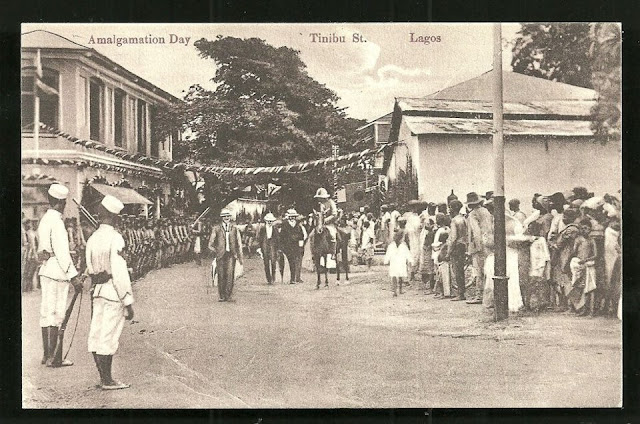
Amalgamation Day in Lagos, 1914
Showing posts with label This crazy world we live in. Show all posts
Showing posts with label This crazy world we live in. Show all posts
16 September, 2013


11 March, 2013
The Insidiousness of Propaganda (3) - Another Example
You've probably seen this video. It is almost 2 years old.
This type of example is easy to "reveal" or "expose". What bothers me are the adjustments and edits made to information reported as "news", that none of us as viewers/readers/listeners are in a position to detect.
For the record, this isn't a rant against the "mainstream media". To be honest, critics of the media are as apt to "adjust" and "edit" as the news outlets are. And don't get me started on politicians, and on the people who are very adamantly attached to politicians, political parties and political ideologies.
This type of example is easy to "reveal" or "expose". What bothers me are the adjustments and edits made to information reported as "news", that none of us as viewers/readers/listeners are in a position to detect.
For the record, this isn't a rant against the "mainstream media". To be honest, critics of the media are as apt to "adjust" and "edit" as the news outlets are. And don't get me started on politicians, and on the people who are very adamantly attached to politicians, political parties and political ideologies.
22 January, 2013
The Insidiousness of Propaganda (2)
This post continues from the one immediately prior.
I have known for decades that there is no such thing as "objective" and "unbiased" when it comes to the media. Indeed, I strive to get "news" from rival sources with contradictory biases, knowing that each side will highlight the part of the news that ties into their bias and ignore the part of the news that doesn't. Even so, I caught myself one day having a viscerally negative reaction to a politician from a foreign country (i.e. not Nigeria) after months of reading relentlessly negative portrayals of that politician from variously biased news sources from the man's home continent.
What made these sources (from the "right" and the "left") dislike the man was his contrary opinion on one specific issue on which journalists from the "right" and "left" of this particular region agreed on. The thing is, the man had every right to have that opinion, and regardless of whether I agreed with him or not, the journalists' shared position was simply an ideological opinion and not an absolute truth.
To be honest, I didn't and don't have an opinion on the man, because I do not understand the man's language and hence have never heard (or read) him expressing his opinion in his own words, from his own mouth (or pen). Everything I have ever heard or learned about him came from the mouths and pens of people who dislike him because he doesn't share their opinion. They tend to caricature him as being stupid, looking stupid and talking stupid. I always made it a point to disregard the caricaturing, but one day, in one moment, after years of reading about him in the English-language media, I looked at a picture of him and the first thing that came to mind was he looked stupid.
I instantaneously caught myself, realized that for all my efforts to block out the propaganda, I had in fact been affected by it.
This video, pulled from Youtube, discusses how journalists, politicians and the media can subtly or openly influence and manipulate citizen perceptions of other peoples.
I have known for decades that there is no such thing as "objective" and "unbiased" when it comes to the media. Indeed, I strive to get "news" from rival sources with contradictory biases, knowing that each side will highlight the part of the news that ties into their bias and ignore the part of the news that doesn't. Even so, I caught myself one day having a viscerally negative reaction to a politician from a foreign country (i.e. not Nigeria) after months of reading relentlessly negative portrayals of that politician from variously biased news sources from the man's home continent.
What made these sources (from the "right" and the "left") dislike the man was his contrary opinion on one specific issue on which journalists from the "right" and "left" of this particular region agreed on. The thing is, the man had every right to have that opinion, and regardless of whether I agreed with him or not, the journalists' shared position was simply an ideological opinion and not an absolute truth.
To be honest, I didn't and don't have an opinion on the man, because I do not understand the man's language and hence have never heard (or read) him expressing his opinion in his own words, from his own mouth (or pen). Everything I have ever heard or learned about him came from the mouths and pens of people who dislike him because he doesn't share their opinion. They tend to caricature him as being stupid, looking stupid and talking stupid. I always made it a point to disregard the caricaturing, but one day, in one moment, after years of reading about him in the English-language media, I looked at a picture of him and the first thing that came to mind was he looked stupid.
I instantaneously caught myself, realized that for all my efforts to block out the propaganda, I had in fact been affected by it.
This video, pulled from Youtube, discusses how journalists, politicians and the media can subtly or openly influence and manipulate citizen perceptions of other peoples.
The Insidiousness of Propaganda (1)
I prefer not to copy and paste entire articles from newspapers' websites. Many people earn their living through journalism. Heaven knows jobs are scarce everywhere in the world, and that formal sector jobs are especially scarce in the Federal Republic of Nigeria. We have neither Welfare nor the Dole, so one shouldn't make it more difficult for people to support themselves, their families and their retirement through honest work.
Having said that, there is a point I want to make, and in order to make that point, I have to be sure you read the entirety of the article I am about to post here. I don't read the newspaper from which it was sourced, but my attention was drawn to it by a writer on another website.
Having said that, there is a point I want to make, and in order to make that point, I have to be sure you read the entirety of the article I am about to post here. I don't read the newspaper from which it was sourced, but my attention was drawn to it by a writer on another website.
This is how racism takes root
The different ways the media covered two cases of men grooming children for sex show how shockingly easy it is to demonise a whole community
Joseph Harker
The Guardian, Sunday 22 July 2012 20.30 BST
By now surely everyone knows the case of the eight men convicted of picking vulnerable underage girls off the streets, then plying them with drink and drugs before having sex with them. A shocking story. But maybe you haven't heard. Because these sex assaults did not take place in Rochdale, where a similar story led the news for days in May, but in Derby earlier this month. Fifteen girls aged 13 to 15, many of them in care, were preyed on by the men. And though they were not working as a gang, their methods were similar – often targeting children in care and luring them with, among other things, cuddly toys. But this time, of the eight predators, seven were white, not Asian. And the story made barely a ripple in the national media.
Of the daily papers, only the Guardian and the Times reported it. There was no commentary anywhere on how these crimes shine a light on British culture, or how middle-aged white men have to confront the deep flaws in their religious and ethnic identity. Yet that's exactly what played out following the conviction in May of the "Asian sex gang" in Rochdale, which made the front page of every national newspaper. Though analysis of the case focused on how big a factor was race, religion and culture, the unreported story is of how politicians and the media have created a new racial scapegoat. In fact, if anyone wants to study how racism begins, and creeps into the consciousness of an entire nation, they need look no further.
Imagine you were living in a town of 20,000 people – the size of, say, Penzance in Cornwall – and one day it was discovered that one of its residents had been involved in a sex crime. Would it be reasonable to say that the whole town had a cultural problem, that it needed to address the scourge – that anyone not doing so was part of a "conspiracy of silence"? But the intense interest in the Rochdale story arose from a January 2011 Times "scoop" that was based on the conviction of at most 50 British Pakistanis out of a total UK population of 1.2 million, just one in 24,000: one person per Penzance.
Make no mistake, the Rochdale crimes were vile, and those convicted deserve every year of their sentences. But where, amid all the commentary, was the evidence that this is a racial issue; that there's something inherently perverted about Muslim or Asian culture?
Even the Child Protection and Online Protection Centre (Ceop), which has also studied potential offenders who have not been convicted, has only identified 41 Asian gangs (of 230 in total) and 240 Asian individuals – and they are spread across the country. But, despite this, a new stereotype has taken hold: that a significant proportion of Asian men are groomers (and the rest of their communities know of it and keep silent).
But if it really is an "Asian" thing, how come Indians don't do it? If it's a "Pakistani" thing, how come an Afghan was convicted in the Rochdale case? And if it's a "Muslim" thing, how come it doesn't seem to involve anyone of African or Middle Eastern origin? The standard response to anyone who questions this is: face the facts, all those convicted in Rochdale were Muslim. Well, if one case is enough to make such a generalisation, how about if all the members of a gang of armed robbers were white; or cybercriminals; or child traffickers? (All three of these have happened.) Would we be so keen to "face the facts" and make it a problem the whole white community has to deal with? Would we have articles examining what it is about Britishness or Christianity or Europeanness, that makes people so capable of such things?
In fact, Penzance had not just one paedophile, but a gang of four. They abused 28 girls, some as young as five, and were finally convicted two years ago. All were white. And last month, at a home affairs select committee, deputy children's commissioner Sue Berelowitz quoted a police officer who had told her that "there isn't a town, village or hamlet in which children are not being sexually exploited".
Whatever the case, we know that abuse of white girls is not a cultural or religious issue because there is no longstanding history of it taking place in Asia or the Muslim world.
How did middle-aged Asian men from tight-knit communities even come into contact with white teenage girls in Rochdale? The main cultural relevance in this story is that vulnerable, often disturbed, young girls, regularly out late at night, often end up in late-closing restaurants and minicab offices, staffed almost exclusively by men. After a while, relationships build up, with the men offering free lifts and/or food. For those with a predatory instinct, sexual exploitation is an easy next step. This is an issue of what men can do when away from their own families and in a position of power over badly damaged young people.
It's a story repeated across Britain, by white and other ethnic groups: where the opportunity arises, some men will take advantage. The precise method, and whether it's an individual or group crime, depends on the particular setting – be they priests, youth workers or networks on the web.
Despite all we know about racism, genocide and ethnic cleansing, the Rochdale case showed how shockingly easy it is to demonise a community. Before long, the wider public will believe the problem is endemic within that race/religion, and that anyone within that group who rebuts the claims is denying this basic truth. Normally, one would expect a counter-argument to force its way into the discussion. But in this case the crimes were so horrific that right-thinking people were naturally wary of being seen to condone them. In fact, the reason I am writing this is that I am neither Asian nor Muslim nor Pakistani, so I cannot be accused of being in denial or trying to hide a painful truth. But I am black, and I know how racism works; and, more than that, I have a background in maths and science, so I know you can't extrapolate a tiny, flawed set of data and use it to make a sweeping generalisation.
I am also certain that, if the tables were turned and the victims were Asian or Muslim, we would have been subjected to equally skewed "expert" commentary asking: what is wrong with how Muslims raise girls? Why are so many of them on the streets at night? Shouldn't the community face up to its shocking moral breakdown?
While our media continue to exclude minority voices in general, such lazy racial generalisations are likely to continue. Even the story of a single Asian man acting alone in a sex case made the headlines. As in Derby this month, countless similar cases involving white men go unreported.
We have been here before, of course: in the 1950s, West Indian men were labelled pimps, luring innocent young white girls into prostitution. By the 1970s and 80s they were vilified as muggers and looters. And two years ago, Channel 4 ran stories, again based on a tiny set of data, claiming there was an endemic culture of gang rape in black communities. The victims weren't white, though, so media interest soon faded. It seems that these stories need to strike terror in the heart of white people for them to really take off.
What is also at play here is the inability of people, when learning about a different culture or race, to distinguish between the aberrations of a tiny minority within that group, and the normal behaviour of a significant section. Some examples are small in number but can be the tip of a much wider problem: eg, knife crime, which is literally the sharp end of a host of problems affecting black communities ranging from family breakdown, to poverty, to low school achievement and social exclusion.
But in Asia, Pakistan or Islam there is no culture of grooming or sex abuse – any more than there is anywhere else in the world – so the tiny number of cases have no cultural significance. Which means those who believe it, or perpetuate it, are succumbing to racism, much as they may protest. Exactly the same mistake was made after 9/11, when the actions of a tiny number of fanatics were used to cast aspersions against a 1.5 billion-strong community worldwide. Motives were questioned: are you with us or the terrorists? How fundamental are your beliefs? Can we trust you?
Imagine if, after Anders Breivik's carnage in Norway last year, which he claimed to be in defence of the Christian world, British people were repeatedly asked whether they supported him? Lumped together in the same white religious group as the killer and constantly told they must renounce him, or explain why we should believe that their type of Christianity – even if they were non-believers – is different from his. "It's nothing to do with me", most people would say. But somehow that answer was never good enough when given by Muslims over al-Qaida. And this hectoring was self-defeating because it caused only greater alienaton and resentment towards the west and, in particular, its foreign policies.
Ultimately, the urge to vilify groups of whom we know little may be very human, and helps us bond with those we feel are "like us". But if we are going to deal with the world as it is, and not as a cosy fantasyland where our group is racially and culturally supreme, we have to recognise when sweeping statements are false.
And if we truly care about the sexual exploitation of girls, we need to know that we must look at all communities, across the whole country, and not just at those that play to a smug sense of superiority about ourselves.
17 April, 2011
Where a sachet of water is a deadly weapon
Usually, I prefer to post a link to stories carried by Nigerian newspaper websites, so if you wished to read the story, you'd give the web traffic to the professionals who invested resources, time and effort in reporting the story.
Today, for the first (and I hope only) time, I will post the full text of a news report. On the off-chance that NEXT edits the report in the future, I want you to see the story exactly as I saw it few days ago. This is the link to the story on NEXT's website.
Can you believe it? A 13-year-old kid, charged with "attempted murder" for throwing sachets of pure water? Not "disorderly conduct" or something like that, but "attempted murder"?
And the kid is denied bail because ....? Is he a criminal mastermind? Perhaps he will graduate to throwing handfuls of dry leaves if we don't keep him under lock and key with hardened, adult criminals for room-mates?
Why did his lawyers ask for bail anyway? Why didn't they ask the judge to dismiss the case? I strongly doubt the police can prove beyond a reasonable doubt that the boy threw sachets of water in the first place (our treatment of evidence and crime scenes leaves a lot to be desired). But even if they can, it is simply impossible to legally sustain a murder case against a 13-year-old sachet-of-water-thrower.
The judge's rationale for denying bail is the severity of the crime, a felony punishable by life imprisonment. Before she got to the question of whether bail can be awarded, shouldn't she have first made a finding as to whether a prima facie felony case exists in the first place? Shouldn't she have quashed the charges the moment she realized the ridiculous nature of the case? At the very least she could have instructed the prosecutors to revise their charges against the boy to something that makes sense (and is applicable to what he actually did), at which point she would be free to grant him bail based on the new charges?
There is simply no prima facie evidentiary rationale for the boy's detention on a murder charge. Not only should the judge have issued an order setting him free, she should also have strongly cautioned the police against wasting the court's time with such an unprofessional "case".
You know what probably happened?
The Imo State Governor is driving through the streets with his guest ex-President Obasanjo, and some people embarrass him by throwing sachets of "pure" water at their cars. The governor orders the police to "arrest those hooligans".
The police then round up everyone standing in the vicinity from which sachets were thrown. They have no pictures, no video, no eye-witness accounts, nothing linking the people standing around there other than the fact that they were standing there when water was thrown. The police tell them that even if they were not among, they either (a) saw the people who did it; or (b) supported the people who did it. Either way, "you are coming with us to the station". Someone, the governor or over-zealous policemen seeking the governor's favour, come up with the bright idea of charging the sachet-of-water-throwers with attempted murder.
Sensing an opportunity, the governor orders the police to arrest the lieutenants and functionaries of his principal political opponent, Rochas Okorocha, on charges of "inciting" the throwers of water sachets, thus causing a "security breach". The governor probably does not know that a 13-year-old boys was among the detainees. When he asks the Police Commissioner whether his orders have been carried out, the Commissioner likely tell him "yes" and maybe gives him the number of people arrested and the names of the VIPs arrested for incitement ... but the "hooligans" who actually threw sachets of water are not important enough to be named, and the Commissioner probably sees absolutely nothing about arresting a 13-year-old for attempted-murder-by-water-sachet that should warrant specially reporting it to the governor. Heck, the Commissioner's subordinates probably didn't tell him; they too see nothing especially out of the ordinary with charging a child with attempted-murder-by-means-of-water-sachet.
The case then comes to a judge who knows the case is stupid, and knows it is wrong to lock up a 13-year-old with hardened, adult criminals in an abominable Nigerian jail, but who also knows that if she releases even one of the governor's enemies without the governor's explicit approval, she will feel the governor's wrath. Even if the governor would think it stupid to have arrested the boy if someone had told him, that does not mean he would forgive a judge for acting as if she could overrule an order that came from him.
If the boy's lawyers were serious about getting him out, they would "leak" his story to Al Jazeera or CNN or Sky News. Governments in Nigeria are far more concerned about their image in the global media than they are about their image among Nigerian citizens.
If this story went worldwide, the governor (or frankly the president) would not only order the boy's release, but would then very loudly order the Police Commissioner to investigate how such a thing could have happened. The Commissioner will promise thunder-and-lightning for anyone found to have breached regulations.
Then time will pass ... everyone will forget ... life will go on same as usual ... but at least the boy would be free.
Today, for the first (and I hope only) time, I will post the full text of a news report. On the off-chance that NEXT edits the report in the future, I want you to see the story exactly as I saw it few days ago. This is the link to the story on NEXT's website.
Boy, 13, jailed for pelting Obasanjo's convoy with 'pure water'
By Nicholas Ibekwe
April 14, 2011 04:58PM
A 13-year-old boy, Precious Efurueze, who is accused of allegedly attempting to kill former president Olusegun Obasanjo and the governor of Imo State, Ikedi Ohakim, in Owerri on 31, March, by stoning their campaign convoy with sachets of pure water; was on Wednesday denied bail by a chief magistrate court in Owerri.
Master Efurueze is among 18 people charged with attempted murder for participation in the attack on Messrs. Obasanjo and Ohakim. Notable among the accused is Prince Madumere, the chief of staff to the gubernatorial candidate of the All Progressive Grand Alliance (APGA), Rochas Okorocha.
At the resumed hearing of the suit yesterday the presiding magistrate, V.C Isiguzo, while delivering ruling on the application for bail for the accused, explained that her court has no jurisdiction on two of the charges because they are punishable by life imprisonment. Mrs. Isiguzo, however, turned down the accused's request to be granted bail until the conclusion of the substantive suit.
The chief magistrate explained that her reason for denying the accused bail is that they had been charged with felony which carries a punishment of life imprisonment if found guilty. She said the offence is a serious one and, therefore, should not be treated lightly.
Speaking to newsmen at the end of the court session, Greg Okemiri, the counsel representing the 12th to the 16th accused persons, while expressing his displeasure with the ruling of the magistrate, hinted that the reason the application was denied may be political. He was also angered by the continued detention of Master Efurueze who, he explained, under the law of the country, by virtue of being a minor, is considered incapable of committing a crime.
"The law describes him as not capable of committing crime yet," he said. "All these things are in our law. Sometimes I feel very sad that we do not want to do things right. You see someone who the law describes as not capable of committing a crime yet, and you remand him in an adult prison." Mr. Okemiri, however, stated that he has taken steps to see that the boy is released soon. The case was adjourned to May 30, for further hearing.
Can you believe it? A 13-year-old kid, charged with "attempted murder" for throwing sachets of pure water? Not "disorderly conduct" or something like that, but "attempted murder"?
And the kid is denied bail because ....? Is he a criminal mastermind? Perhaps he will graduate to throwing handfuls of dry leaves if we don't keep him under lock and key with hardened, adult criminals for room-mates?
Why did his lawyers ask for bail anyway? Why didn't they ask the judge to dismiss the case? I strongly doubt the police can prove beyond a reasonable doubt that the boy threw sachets of water in the first place (our treatment of evidence and crime scenes leaves a lot to be desired). But even if they can, it is simply impossible to legally sustain a murder case against a 13-year-old sachet-of-water-thrower.
The judge's rationale for denying bail is the severity of the crime, a felony punishable by life imprisonment. Before she got to the question of whether bail can be awarded, shouldn't she have first made a finding as to whether a prima facie felony case exists in the first place? Shouldn't she have quashed the charges the moment she realized the ridiculous nature of the case? At the very least she could have instructed the prosecutors to revise their charges against the boy to something that makes sense (and is applicable to what he actually did), at which point she would be free to grant him bail based on the new charges?
There is simply no prima facie evidentiary rationale for the boy's detention on a murder charge. Not only should the judge have issued an order setting him free, she should also have strongly cautioned the police against wasting the court's time with such an unprofessional "case".
You know what probably happened?
The Imo State Governor is driving through the streets with his guest ex-President Obasanjo, and some people embarrass him by throwing sachets of "pure" water at their cars. The governor orders the police to "arrest those hooligans".
The police then round up everyone standing in the vicinity from which sachets were thrown. They have no pictures, no video, no eye-witness accounts, nothing linking the people standing around there other than the fact that they were standing there when water was thrown. The police tell them that even if they were not among, they either (a) saw the people who did it; or (b) supported the people who did it. Either way, "you are coming with us to the station". Someone, the governor or over-zealous policemen seeking the governor's favour, come up with the bright idea of charging the sachet-of-water-throwers with attempted murder.
Sensing an opportunity, the governor orders the police to arrest the lieutenants and functionaries of his principal political opponent, Rochas Okorocha, on charges of "inciting" the throwers of water sachets, thus causing a "security breach". The governor probably does not know that a 13-year-old boys was among the detainees. When he asks the Police Commissioner whether his orders have been carried out, the Commissioner likely tell him "yes" and maybe gives him the number of people arrested and the names of the VIPs arrested for incitement ... but the "hooligans" who actually threw sachets of water are not important enough to be named, and the Commissioner probably sees absolutely nothing about arresting a 13-year-old for attempted-murder-by-water-sachet that should warrant specially reporting it to the governor. Heck, the Commissioner's subordinates probably didn't tell him; they too see nothing especially out of the ordinary with charging a child with attempted-murder-by-means-of-water-sachet.
The case then comes to a judge who knows the case is stupid, and knows it is wrong to lock up a 13-year-old with hardened, adult criminals in an abominable Nigerian jail, but who also knows that if she releases even one of the governor's enemies without the governor's explicit approval, she will feel the governor's wrath. Even if the governor would think it stupid to have arrested the boy if someone had told him, that does not mean he would forgive a judge for acting as if she could overrule an order that came from him.
If the boy's lawyers were serious about getting him out, they would "leak" his story to Al Jazeera or CNN or Sky News. Governments in Nigeria are far more concerned about their image in the global media than they are about their image among Nigerian citizens.
If this story went worldwide, the governor (or frankly the president) would not only order the boy's release, but would then very loudly order the Police Commissioner to investigate how such a thing could have happened. The Commissioner will promise thunder-and-lightning for anyone found to have breached regulations.
Then time will pass ... everyone will forget ... life will go on same as usual ... but at least the boy would be free.
04 April, 2011
No Comment on Election Postponement
I have absolutely nothing to say about the first postponement and the second, subsequent, postponement of the already postponed date.
Commenting on the vagaries of our elections is like commenting on the sunrise and sunset.
It is natural.
It is "normal".
Until such a point as we overhaul the system, reform our Federal Republic from its very roots, this will remain our reality.
Commenting on the vagaries of our elections is like commenting on the sunrise and sunset.
It is natural.
It is "normal".
Until such a point as we overhaul the system, reform our Federal Republic from its very roots, this will remain our reality.
22 March, 2011
People and Power
A fellow citizen acquaintance of mine was complaining the other day about the high cost of DSTV and HiTV. More specifically, he was complaining about how much money he would have to spend to watch the English Premier League (only Heaven knows how much money we collectively waste on the EPL; if only we invested a fraction of that on our own clubs and sporting structures).
Anyway, this acquaintance half-jokingly said that if he was a candidate for the presidency, one of his campaign promises would be to get the EPL, La Liga, UEFA Champions League, Serie A, Bundesliga and UEFA Confederation Cup to Nigerians at affordable prices.
I thought about it, and came to the depressing conclusion that a candidate who ran on such a platform would stand a strong chance of winning a surprisingly large share of the vote .... if not winning accommodations at Aso Rock outright.
I am not yabbing us Nigerians.
I am commenting on human beings in general, on people everywhere.
All over the world, democratic and pseudo-democratic politicians win more votes promising comfortable, pleasurable, substantively meaningless short-term rubbish ... and lose votes if they offer real, practical, applicable solutions to serious systemic problems.
Dictators and autocrats know this too; health care, education and transportation infrastructure can be rubbish, but holidays, festivals and carnivals will always rock. In Africa, countries that are begging for food aid will nevertheless find the resources to host major sporting tournaments, building (at great expense) for the event the sort of infrastructure their real economies desperately need but will never get.
To be honest, even the richest country in Africa is guilty of this. South Africa in the next few years (if it hasn't happened already) will outgrow Apartheid-era infrastructure that was originally designed to service 10% of the population only. One can't help but wonder if the billions of dollars spent hosting several events in the last 17 years (of which the 2010 World Cup was the biggest), might not have been better spent updating and expanding infrastructure. The promoters of these sort of big events always say that there are economic benefits to be accrued from hosting .... but the reality is the organizing bodies (e.g. IOC, FIFA, IRB, ICC, etc) reap profits without costs, while the host nations reap costs without profits.
Don't get me wrong. I am quite happy South Africa hosted the event. I am not sure why they felt the need to build so many new stadia, when they already had enough World-Cup-level stadia to have hosted the event long before they decided to apply for the hosting privilege. And as I have said above, this sort of thinking is not strictly "African".
One thing I have never understood about the United States is how cities that are struggling with debts and poor social services nevertheless decided to build multi-billion dollar stadia and then hand over ownership entirely and for free (!) to professional sports franchises that could afford to build their own stadium. They do not sell it or allowing the team to use municipal property on contract. No, they give it away like a Christmas or Sallah gift; it is now the property of the franchise which gains a massive new asset on its balance sheet without paying a kobo for it. I lived in Washington DC at a time when the city was closing down hospitals that catered to the poor because of budget difficulties, and when the city's public schools were acknowledged to be abysmal, yet the city was talking about using its money to build a stadium for a baseball team. It didn't make sense.
The strange thing is we the people then complain profusely because our governments fail to deliver those substantively more important things that have a more substantively more significant effect on our substantive quality of living.
It is a paradox.
Anyway, this acquaintance half-jokingly said that if he was a candidate for the presidency, one of his campaign promises would be to get the EPL, La Liga, UEFA Champions League, Serie A, Bundesliga and UEFA Confederation Cup to Nigerians at affordable prices.
I thought about it, and came to the depressing conclusion that a candidate who ran on such a platform would stand a strong chance of winning a surprisingly large share of the vote .... if not winning accommodations at Aso Rock outright.
I am not yabbing us Nigerians.
I am commenting on human beings in general, on people everywhere.
All over the world, democratic and pseudo-democratic politicians win more votes promising comfortable, pleasurable, substantively meaningless short-term rubbish ... and lose votes if they offer real, practical, applicable solutions to serious systemic problems.
Dictators and autocrats know this too; health care, education and transportation infrastructure can be rubbish, but holidays, festivals and carnivals will always rock. In Africa, countries that are begging for food aid will nevertheless find the resources to host major sporting tournaments, building (at great expense) for the event the sort of infrastructure their real economies desperately need but will never get.
To be honest, even the richest country in Africa is guilty of this. South Africa in the next few years (if it hasn't happened already) will outgrow Apartheid-era infrastructure that was originally designed to service 10% of the population only. One can't help but wonder if the billions of dollars spent hosting several events in the last 17 years (of which the 2010 World Cup was the biggest), might not have been better spent updating and expanding infrastructure. The promoters of these sort of big events always say that there are economic benefits to be accrued from hosting .... but the reality is the organizing bodies (e.g. IOC, FIFA, IRB, ICC, etc) reap profits without costs, while the host nations reap costs without profits.
Don't get me wrong. I am quite happy South Africa hosted the event. I am not sure why they felt the need to build so many new stadia, when they already had enough World-Cup-level stadia to have hosted the event long before they decided to apply for the hosting privilege. And as I have said above, this sort of thinking is not strictly "African".
One thing I have never understood about the United States is how cities that are struggling with debts and poor social services nevertheless decided to build multi-billion dollar stadia and then hand over ownership entirely and for free (!) to professional sports franchises that could afford to build their own stadium. They do not sell it or allowing the team to use municipal property on contract. No, they give it away like a Christmas or Sallah gift; it is now the property of the franchise which gains a massive new asset on its balance sheet without paying a kobo for it. I lived in Washington DC at a time when the city was closing down hospitals that catered to the poor because of budget difficulties, and when the city's public schools were acknowledged to be abysmal, yet the city was talking about using its money to build a stadium for a baseball team. It didn't make sense.
The strange thing is we the people then complain profusely because our governments fail to deliver those substantively more important things that have a more substantively more significant effect on our substantive quality of living.
It is a paradox.
27 February, 2011
Bode George forgives you
Are you one of those people who thinks thieves are bad and criminals should be punished? Bode George forgives you.
The criminal forgave those he stole from at a Thanksgiving held at the Cathedral Church in Lagos Island to commemorate his release from Kiri-Kiri prison following the end of a ridiculously light 2-year de facto sentence.
The ex-con retains a certain degree of popularity, his release prompting celebration among his supporters, aides, clients, patrons and allies.
Bode George, thank you for forgiving me. You are an ole, a barawo, an onyeoshi. It is rude of me to call you a thief in the Federal Republic's three biggest languages, but I know you forgive me.
The criminal forgave those he stole from at a Thanksgiving held at the Cathedral Church in Lagos Island to commemorate his release from Kiri-Kiri prison following the end of a ridiculously light 2-year de facto sentence.
The ex-con retains a certain degree of popularity, his release prompting celebration among his supporters, aides, clients, patrons and allies.
Bode George, thank you for forgiving me. You are an ole, a barawo, an onyeoshi. It is rude of me to call you a thief in the Federal Republic's three biggest languages, but I know you forgive me.
03 January, 2011
And now for something completely different ....
Growing up in Nigeria, I felt and knew the way we treated people suffereing from severe mental illness was wrong.
It was wrong the way we left them to fend for themselves, roaming the streets and fields, totally naked and utterly filthy, and more often than not covered in wounds and sores. On occasion, they would attack people, sometimes because those people mocked or otherwise provoked them, and sometimes because of an acute attack of whatever illness they were suffering (I don't know the technical terms; on television I've heard them say "manic episode", but that may not be what it was).
One such mentally ill woman who roamed the towns near my secondary school was raped (that is the word for it) by a youth or youths in the area. I don't know how many there were, or even when he or they did it. There was no police investigation, no social service agency to look into how it was that the women ended up pregnant. By the time her pregnancy was visible (she was naked, so there was no hiding it), any evidence of the incident was likely long gone. The woman herself was in no mental condition to give evidence or help investigators, not that anyone was interested in investigating.
Let me digress for a second ....
There is a certain kind of young man who exploits vulnerable women; teenaged female domestic servants (a.k.a. "househelps") were particularly vulnerable to the depredations of the teenage sons (and fathers if we are to be honest) in the family homes where they worked. It is particularly bad for these househelps because the mothers/wives are liable to react in outrage towards the girl (and not their sons or husbands) if they ever find out. These girls cannot even turn to their own parents, because their parents are usually the ones who sent them out to work 24/7 in vulnerable conditions in someone else's house in exchange for payments from the family in question. The last thing they want is their daughter upsetting their apple cart, or acquiring a reputation as a "disobedient" or "troublesome" girl, which would make it difficult to place her in another home. You know the sons (or fathers) are going to deny it if the girl appeals to the woman of the house, and the woman of the house naively (or perhaps desperately) believes her sons and husband over "that wicked girl" ... and you know she will tell all her friends about it too, and they will all commisserate, fellow sufferers of the machinations of these "wicked husband-snatchers".
But enough digressing ....
As I said, there was a mentally ill woman who wandered around the towns near my secondary school. She was raped, she became pregnant ....
.... and every day as we drove by, to or from school, I wondered what would happen to the child. Indeed, I wondered what would happen when the woman went into labour.
I never did find out. The woman "disappeared" at some point. Only God knows what happened to her. Maybe all went well. On the other hand, if she had died in childbirth, who would know or care?
You might ask, "Well what did you do to help?"
Well, as a small child in Nigeria, it is your job to shut up. Reminding older people that they are not doing what they are supposed to do is an action that brings consequences ... consequences which do not include said older persons doing the thing you thought they were supposed to do.
Years (well, decades) later, as an adult myself I have to say I understand the apathy. At that time, and even today, the super-majority of Nigerians did not have enough for their families, much less a stranger. How can you give someone food when you don't have any? Give them money when you are hiding from your landlord lest your family is evicted?
It did not help that institutions of state and government agencies were designed to PUNISH anyone who tried to help. Far from lessening your load as a private citizens, these entities would add to it. Indeed, if you came upon a person bleeding to death from a gunshot wound or multiple gunshot wounds, the safest thing for you to do was to leave them to their fate, because if you took them to the hospital it was highly likely the police would arrest you and accuse you of being an armed robber! They would keep you locked in jail, without charge or trial, for months or years, insisting all the time that you are a robber and demanding you tell them where the rest of your gang is.
It is not like you could have called an ambulance -- there were none.
Its not like you could have anonymously called the police at 999 and then disappeared before they arrived. In those days there were no phones, and even today after the GSM revolution, the police still respond to emergency calls 24 hours after the call was made (and promptly ask the caller to refund their gas money and give them "a little something" so they can eat that afternoon).
We Nigerians are not the only people guilty of mistreating the mentally ill.
When I first came to the "rich" United States, I did not expect to see mentally ill people roaming the streets as they did in Nigeria. The Americans have a $14 trillion dollar economy. Their population is only two or three times ours (depending on if you believ our population is 150 or 100 million), while their economy is 70 times bigger in nominal terms and 42 times bigger in Purchasing Power Parity measurments. If our teeming masses can live, somehow, with what we have, then surely the Americans had more than enough to avoid the spectre of mentally ill citizens roaming the streets?
Alas, I was wrong.
There they were, fully clothed, but just as mentally disturbed, and just as homeless.
What really got me during the time I lived in Washington DC was the public park just outside the World Bank building. This park was within spitting distance of the White House, the IMF, the World Bank, the US Supreme Court and the US Capitol. On these streets, powerful men and women drove to and from work, to and from meetings with each other and with other global grandees. These men and women move and shake the world, supervise massive budgets, and tell anyone unfortunate enough to have to listen that they are committed to fighting poverty and what-not.
You see, this public park outside the World Bank building was a place that the homeless and the mentally ill would gather every day and presumably sleep every night (I was never there at night, so I am just guessing).
These powerful men and women drove past these homeless, mentally ill people everyday ... and just looked the other way pretending not to see .... the same as we, the global poor, did in Nigeria.
It was wrong the way we left them to fend for themselves, roaming the streets and fields, totally naked and utterly filthy, and more often than not covered in wounds and sores. On occasion, they would attack people, sometimes because those people mocked or otherwise provoked them, and sometimes because of an acute attack of whatever illness they were suffering (I don't know the technical terms; on television I've heard them say "manic episode", but that may not be what it was).
One such mentally ill woman who roamed the towns near my secondary school was raped (that is the word for it) by a youth or youths in the area. I don't know how many there were, or even when he or they did it. There was no police investigation, no social service agency to look into how it was that the women ended up pregnant. By the time her pregnancy was visible (she was naked, so there was no hiding it), any evidence of the incident was likely long gone. The woman herself was in no mental condition to give evidence or help investigators, not that anyone was interested in investigating.
Let me digress for a second ....
There is a certain kind of young man who exploits vulnerable women; teenaged female domestic servants (a.k.a. "househelps") were particularly vulnerable to the depredations of the teenage sons (and fathers if we are to be honest) in the family homes where they worked. It is particularly bad for these househelps because the mothers/wives are liable to react in outrage towards the girl (and not their sons or husbands) if they ever find out. These girls cannot even turn to their own parents, because their parents are usually the ones who sent them out to work 24/7 in vulnerable conditions in someone else's house in exchange for payments from the family in question. The last thing they want is their daughter upsetting their apple cart, or acquiring a reputation as a "disobedient" or "troublesome" girl, which would make it difficult to place her in another home. You know the sons (or fathers) are going to deny it if the girl appeals to the woman of the house, and the woman of the house naively (or perhaps desperately) believes her sons and husband over "that wicked girl" ... and you know she will tell all her friends about it too, and they will all commisserate, fellow sufferers of the machinations of these "wicked husband-snatchers".
But enough digressing ....
As I said, there was a mentally ill woman who wandered around the towns near my secondary school. She was raped, she became pregnant ....
.... and every day as we drove by, to or from school, I wondered what would happen to the child. Indeed, I wondered what would happen when the woman went into labour.
I never did find out. The woman "disappeared" at some point. Only God knows what happened to her. Maybe all went well. On the other hand, if she had died in childbirth, who would know or care?
You might ask, "Well what did you do to help?"
Well, as a small child in Nigeria, it is your job to shut up. Reminding older people that they are not doing what they are supposed to do is an action that brings consequences ... consequences which do not include said older persons doing the thing you thought they were supposed to do.
Years (well, decades) later, as an adult myself I have to say I understand the apathy. At that time, and even today, the super-majority of Nigerians did not have enough for their families, much less a stranger. How can you give someone food when you don't have any? Give them money when you are hiding from your landlord lest your family is evicted?
It did not help that institutions of state and government agencies were designed to PUNISH anyone who tried to help. Far from lessening your load as a private citizens, these entities would add to it. Indeed, if you came upon a person bleeding to death from a gunshot wound or multiple gunshot wounds, the safest thing for you to do was to leave them to their fate, because if you took them to the hospital it was highly likely the police would arrest you and accuse you of being an armed robber! They would keep you locked in jail, without charge or trial, for months or years, insisting all the time that you are a robber and demanding you tell them where the rest of your gang is.
It is not like you could have called an ambulance -- there were none.
Its not like you could have anonymously called the police at 999 and then disappeared before they arrived. In those days there were no phones, and even today after the GSM revolution, the police still respond to emergency calls 24 hours after the call was made (and promptly ask the caller to refund their gas money and give them "a little something" so they can eat that afternoon).
We Nigerians are not the only people guilty of mistreating the mentally ill.
When I first came to the "rich" United States, I did not expect to see mentally ill people roaming the streets as they did in Nigeria. The Americans have a $14 trillion dollar economy. Their population is only two or three times ours (depending on if you believ our population is 150 or 100 million), while their economy is 70 times bigger in nominal terms and 42 times bigger in Purchasing Power Parity measurments. If our teeming masses can live, somehow, with what we have, then surely the Americans had more than enough to avoid the spectre of mentally ill citizens roaming the streets?
Alas, I was wrong.
There they were, fully clothed, but just as mentally disturbed, and just as homeless.
What really got me during the time I lived in Washington DC was the public park just outside the World Bank building. This park was within spitting distance of the White House, the IMF, the World Bank, the US Supreme Court and the US Capitol. On these streets, powerful men and women drove to and from work, to and from meetings with each other and with other global grandees. These men and women move and shake the world, supervise massive budgets, and tell anyone unfortunate enough to have to listen that they are committed to fighting poverty and what-not.
You see, this public park outside the World Bank building was a place that the homeless and the mentally ill would gather every day and presumably sleep every night (I was never there at night, so I am just guessing).
These powerful men and women drove past these homeless, mentally ill people everyday ... and just looked the other way pretending not to see .... the same as we, the global poor, did in Nigeria.
09 October, 2009
Nobel Peace Prize
This will probably be the briefest blog post ever.
Today the Nobel prize committee in Sweden (or is it Norway?) announced US President Barrack Obama as the 2009 Nobel Peace Prize winner.
With all due respect to the man (he didn't ask them to pick him) and to the committee (though they are sycophantic, hero-worshippers with childish thinking processes) this is ridiculous. It is like an April Fool's joke.
Wow.
The Nobel Peace Prize has become steadily more irrelevant and worthless over the years. I think this just about ends any credibility it ever had.
Today the Nobel prize committee in Sweden (or is it Norway?) announced US President Barrack Obama as the 2009 Nobel Peace Prize winner.
With all due respect to the man (he didn't ask them to pick him) and to the committee (though they are sycophantic, hero-worshippers with childish thinking processes) this is ridiculous. It is like an April Fool's joke.
Wow.
The Nobel Peace Prize has become steadily more irrelevant and worthless over the years. I think this just about ends any credibility it ever had.
Subscribe to:
Posts (Atom)