What you have in the Cote d'Ivoire are two large armies led by two men.
Having grown rapidly over the last 17 years, the "official" army, the militia supporting Laurent Gbagbo, is now the second-largest in West Africa by number of enlisted me. I am not sure of the numbers of the rebel New Forces, but I suspect they have enough force at least to balance the "government" army (or the war would have resumed).
So long as Gbagbo and Ouattara can each count on tens of thousands of soldiers to back his claim, neither man was ever going to accept defeat in an election. If you think Ouattara would have gracefully accepted defeat, had he been declared the loser, you must not have noticed what has been going on these last 17 years. There are credible suggestions that both men "manipulated" results in areas under the control of their respective armies; and even pie-in-the-sky optimists have queried the rationale of holding an election in what is still effectively a divided war zone (albeit one with a firm ceasefire).
If Gbagbo does not step down, the New Forces will not relinquish their control of the North and will not recognize his government. This much everyone acknowledges.
Unsurprisingly, no one is similarly acknowledging the fact that the 50,000-strong "official" government army is just as unlikely to accept Ouattara as its president.
The "international community" (i.e. a small group of Western European, North American and Japanese countries) has been threatening Gbagbo, trying to get him to step down for Ouattara. I personally don't think Gbagbo, Ouattara or Bedie is the solution to the Ivoirien crisis, but Ouattara is clearly the favourite of the "international community", having previously held high office at the IMF, at the BCEAO and in the neo-colonial Houphouet-Boigny government.
The "international community" may or may not have persuaded the Economic Community of West African States to back their line.
I rather suspect ECOWAS leaders couldn't care less about "democracy" in Cote d'Ivoire.
For one thing, the majority of ECOWAS member states are either undemocratic or pseudo-democratic. An organization that recognizes Yahya Jammeh of Gambia and Faure Gnassingbe of Togo can hardly presume to comment on the democratic virtues (or lack thereof) of anyone. Even the likes of Abdoulaye Wade of Senegal and Goodluck Jonathan of Nigeria can hardly hold their heads up with pride and say they were properly elected (remember, Goodluck Jonathan is in office because of the monumentally undemocratic 2007 Nigerian Elections).
For another thing, the only matter of principle on which all African presidents can agree on is their own self-preservation, and as such, the idea of removing a sitting African president should ever lose office. And for something as "trivial" as not being democratic?
Thing is, the "international community" and ECOWAS have taken to declaring the existence of a military option for forcing Gbagbo from office.
I am not sure anyone takes the threat of military force seriously.
I don't.
Gbagbo doesn't seem to either.
Three (maybe four) members of "the international community" have deployable military forces of the sort that could intervene militarily in Cote d'Ivoire. Of this shortlist, all except France are tied up in other conflicts they consider strategically more important. All, including France, face voting publics who (a) are tired of war; (b) are uninterested in and possibly entirely unaware of Cote d'Ivoire and/or its crisis; and (c) do not think Cote d'Ivoire and its problems are worth the life of even one of their soldiers. France, the most likely "international community" member to intervene, is widely disliked in Cote d'Ivoire and across much of West and Central Africa, as well well as in Rwanda, which these days is considered East Africa.
The "international community" could (in theory) use bombs and long-range missiles in place of troops on the ground, but I suspect a key outcome of such an act would be greater hatred of Ouattara, France and the "international community" among any Ivoiriens not emotionally committed to Ouattara. The sight of a partially bombed-out Abidjan wouldn't play well in the rest of Africa either; because the average African does not hold a particularly high opinion of Gbagbo, Bedie or Ouattara, the average African does not thing any of them is so important he is worth bombing Abidjan for.
In fact, that is one of the sources of political apathy among the African masses, the sense that none of the politicians or political factions is worth fighting for. And you can't say the fight is for "democracy" because the masses know the politicians and factions do not believe in "democracy". Everyone sees Gbagbo using undemocratic tactics against Bedie and Ouattara; everyone has forgotten that Bedie and Ouattara were part of the Felix Houphouet-Boigny regime that used similarly undemocratic tactics against Gbagbo (back when Gbagbo was Houphouet's only substantial opposition). At the end of the day, all three of them have, are, and would use undemocratic means to keep themselves in office, and the people of Africa know it.
One gets the impression that the "international community" will get around these various handicaps by leaning on ECOWAS to either mount this putative military expedition, or to at least to provide the visible military muscle that can be pointed at to back up the verbal threats. As such there have been ECOWAS conferences (most recently in Abuja), and lots of vague talk about all options still being on the table, including the military option. This is a link to a briefing on ECOWAS involvement in the Ivoirien crisis.
I doubt any ECOWAS member state is interested in an armed intervention in Cote d'Ivoire. But I equally doubt any of them has the guts to say so to the "international community". Even without the prior experience of ECOMOG in the Liberian and Sierra Leonian wars as a guide, the assumption behind any suggestion of an "ECOWAS" intervention in Cote d'Ivoire is that it would be a Nigerian intervention in all but name -- and Nigeria has NO INTEREST whatsoever in doing such a thing. Of course, the Nigerian federal government will never openly say it has no interest in an Ivorien intervention; Presidents Obasanjo, Yar'Adua (RIP) and Jonathan have all continually promised the "international community" they would send soldiers to Somalia, but I don't think we ever will, nor do I think Obasanjo, Yar'Adu and Jonathan ever had any intention of doing so.
All things considered, a West African military intervention to dethrone Gbagbo and enthrone Ouattara is unlikely at the moment.
Still, there was an interesting opinion piece in the Guardian today, discussing what Nigeria should or shouldn't do if it is planning on a military intervention in Cote d'Ivoire.
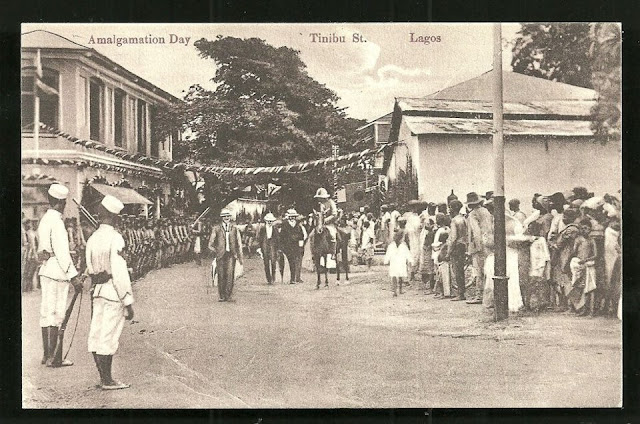
Amalgamation Day in Lagos, 1914
11 January, 2011


09 January, 2011
Stand for nothing, fall for everything
I have this Zimbabwean acquaintance who is a staunch, hero-worshipping supporter of Robert Mugabe. So this Zimbabwean declares the other day his belief that multi-party democracy has "failed" in Africa and followed up by insisting a one-party state was the ideal system for Africa.
First let me say I am always fascinated by that micro-minority of Africans who say multi-party democracy has failed in Africa. I always want to ask them ... when did we try multi-party democracy? I mean, if you are saying it failed somewhere in Africa, then surely it means it was tried somewhere in Africa and didn't work there. So where is this place in Africa you are talking about; when did they try it; how long did the experiment last; and when did it fail?
I was under the impression that we had spent the last 50 years doing everything in the world EXCEPT multi-party democracy. Mind you, those are two different, separate words; you can have many political parties (like Nigeria) without having "democracy". Heck, you can hold any number of elections (like Egypt) without there being any "democracy"
Ghana's experience with multi-party democracy is 10 years old; it seems to be working well for them.
Other than Ghana, the closest thing Africa has to democracy are those countries that (like Japan between 1955 and 2009) are one-party states in all but name. In those countries (as, ironically in Japan), the inertia and rigidity of the ruling parties, and the complete lack of motivation to do anything (because even if they do nothing, they still "win") retard development.
Either way, it is silly to say multi-party democracy has failed when the continent's political, economic, social and cultural elite have done everything in the world to AVOID multi-party democracy.
But that is not the worst part of it.
You see, my Zimbabwean acquaintance does not really support the one-party state, nor does he really believe it is the best system for Africa. What he really supports is Robert Mugabe and the ZANU-PF, and in order to keep them in power forever, he is quite willing to prevent the existence of democracy in his homeland.
Let me put it this way: If Morgan Tsvangirai and the MDC somehow came to power and subsequently declared Zimbabwe a one-party state, this acquaintance of mine would be the first and most vociferous opponent of the move. And in doing so, he would have proven the very reason why the one-party state is such a failure; you see, once a person and party you dislike (or in his case, hate) is in office, you cannot remove them because there are no elections. You are stuck with a situation you do not want "forever".
Yet, he sees nothing wrong with denying people who oppose ZANU and Mugabe the very constitutional right he would demand if it were Morgan Tsvangirai and MDC in office. Indeed, stupid claims like "democracy has failed in Africa" are usually uttered by the very same people who work so hard to prevent it from existing in the first place as an excuse for their actions in blocking it.
My Zimbabwean acquaintance is quite typical of the people who dominate Africa's politics, business community and society. When they are in power, they tell you Africa does not need democracy, constitutionalism, rule of law, human rights, etc, but when they are out of power and their opponents are crushing them with the same tools of state they used to use against their opponents, they become born-again believers in all of the things they did not do when in office. And if by some chance they return to office, they will simply carry on where they left off, explaining to all and sundry that democracy has never worked in Africa, and how constitutionalism and rule of law are "foreign" concepts, etc, etc.
I have another acquaintance, a fellow Nigerian. He and I get into arguments because he believes the proper response to a "bad" African government is to support the "opposition" party. I keep telling him the "opposition" party (or parties) are exactly the same as the "government" party. Opposition politicians will exploit his passion and desire for change in their quest for power, will promise him everything they know he wants, and will oppose every aspect of the current government they know he opposes....
....but if they somehow seize power, they will immediately forget about him and do exactly the same things as the current government he is opposed to.
Some of them do not even wait until their faction gains power, but instead opt for a sort of trade-by-barter or extortion. We who believe in nothing will oppose you and mobilize those who truly believe in something to oppose you too .... unless you cut us in on the deal. As soon as the ruling faction gives them a share of the political spoils, they undergo an "ideological" conversion and begin to defend the very things they were vociferously opposed to just a few seconds before.
I am baffled and exasperated by those of my countrymen who get really militant about issues of "power shift". We have had more changes of government in the last 50 years than most countries in the world, and I am not just talking about countries with lifetime dictators; the "democratic" countries of Western Europe and the United States have changed their governments fewer times than we have.
We have had army generals and civilians; we have had northerners and southerners; we have had "minorities" and "majorities"; we have had parliamentary, presidential and authoritarians systems; we have had Open Ballot, Option A-4, Closed Ballot; I could go on and on and on. We have been power-shifting like crazy and nothing about the substance of governance in Nigeria has ever changed.
Don't you understand? These people competing for the power of political office stand for nothing and believe in nothing.
You might argue that the same thing happens in other countries. Regardless of which political faction wins the world over, the fundamental nature of governance, administration, policy-making and policy-execution in those countries does not really change.
I agree, and it isn't a problem if the fundamental substance of governance, administration, policy-making and policy-execution in your country is working well enough for your country and its people. But when "the system" is a failure, a hindrance, a roadblock, then you start to run into trouble ... and the trouble starts to persist and gain a certain permanence.
[By the way, for the record, a large part of the world's current economic troubles lie in the fact that the political party systems are good for maintaining Mid-20th Century realities, but lack the flexibility or originality of thought to deal with the changed reality of the 21st Century. Honestly speaking, none of them have a clue as to what to do.
But I digress.]
If you are a Nigerian (or African) interested in fundamental reform, restructuring and transformation, then politically you have nowhere to turn. The political factions that profess to want what you want will stop "wanting" those things the moment they get into political office. Once they have access to the same "enjoyment" the current occupants of those offices are enjoying, they will forget what they promised. Actually, they never believed in their promises, only using the words to mobilize support from the masses.
And they are successful at it. Over the decades, many of the Nigerian/African masses have invested so much hope and belief in certain political figures/factions. Some of use have fought for, shed blood for, and even died on behalf of our chosen heroes and their factions. We keep doing it though time and again we have been betrayed by the very people in whom we placed so much trust. They have wasted our energies and wasted our lives and achieved little of what we truly want. Again and again it has been like George Orwell's Animal Farm ... after an initial period of morale-boosting publicity stunts (what we Nigerians call "initial gra-gra") the new regime eventually becomes indistinguishable from the old regime.
It is funny ... in a sad way.
In Nigeria, men and women who claim to be "progressive reformers" are nevertheless quite keen on gaining wealth, status and position as the technocratic managers of the very system they pretend they want to reform. Some continue talking-the-talk of reform while walking-the-status-quo-walk. Others metamorphose to become vociferous defenders of the status quo. Either way, they (secretly or openly) become enemies of true reform, because reform might eliminate their cushy positions, or at best open their jobs up to competition -- and like my Zimbabwean acquaintance, the "supporter" of one-party states, they hate the idea of having to compete for their jobs.
And so the alleged "progressives" and "reformers" make a lucrative career out of being the mouthpieces and bureaucratic functionaries of the same class of oligarchs, godfathers, plutocrats, kleptocrats and political vagabonds they once loquaciously pretended to oppose. Their only real "ideology" is doing anything that GUARANTEES themselves a political job. Their allegiance is to any political machine willing to grant them a well-paid job, with no care to the consequences to the country.
This is the point where some people will accuse me of "bad belle". As Jos burns (again), bombs explode in Abuja (again), police are killed in Maiduguri (again) and violence flares in the Niger-Delta (again), there are still many citizens willing to hail those who acquire wealth and any costs and denigrate anyone who points out the obvious -- our political system is rubbish!
For the record, a few years ago I was offered a well-paying Abuja-based job. At first, I thought it was a dream job where I would get to do some of the things I can only blog about .... but then I realized I would be working for someone who is directly and personally responsible for some of the crises faced by the federal republic in the Fourth Republic. I turned the job down. What would have been the point? I would have been drawing a salary to participate in propagating avoidable crises.
The funny thing is, the man in question has since fallen out of favour in Abuja. Had I been inclined to sell my soul for money, I would probably be jobless by now.
But you see, I have actual principles. There are things I believe to be right, and things I believe to be wrong. As I read news of the violence in Jos (for example), what would I have thought of myself if I was a part of causing the mess?
In fact, what do these people think of themselves? How can people be so bad at their jobs, but still be so pompous, self-important and arrogant? Have they no shame?
Nobody really cares about anything, except power.
Ahead of the 2011 (rigged) Elections, politicians are moving around like cockroaches surprised by someone turning on the light. Everyone is looking for guaranteed candidature and guaranteed victories at the polls. Like my Zimbabwean acquaintance, the thought of a fair contest, may the best man win, is anathema to them.
Mohammedu Buhari has created a party from scratch so he could be a presidential candidate without having to hassle with the few remaining ANPP governors. Much of the ANPP had already decamped to the PDP anyway, the trickle of movement becoming a flood during the administration of the late President Umaru Yar'Adua (RIP); Isa Yuguda and Mahmud Shinkafi, governors of Bauchi and Zamfara respectively were among the more notable decampees. What remains of the ANPP exists only because the holdouts have no hope of GUARANTEED candidatures in the PDP (their state branch is the private property of rival machines), or CPC (Buhari left the ANPP to get away from them in the first place).
Nuhu Ribadu has moved from the corruption-filled PDP to work for the corrupt Bola Tinubu because Tinubu promised him the ACN presidential ticket.
Dora Akunyili has decamped from PDP to APGA, because Governor Peter Obi will use the power of the Governor's mansion to give her the Senatorial nomination, and may have promised to hand her the gubernatorial mansion in 2014. The enemy of my enemy is my friend; Peter Obi and Dora Akunyili are both feuding with the Anambra political machines helmed by Charles Soludo (former CBN Governor), Andy Uba (former illicit cash carrier for President Olusegun Obasanjo) and Chris Uba (former breaker of every felony law in the Nigerian statute book in broad daylight and full view of everyone, though was never prosecuted, convicted or jailed).
Adams Oshiomhole had no interest in the hard work necessary to mobilize rally blue-collar workers and the poor masses into creating a left-leaning party to fight for change politicially (as opposed to hurting citizens, harming the economy, and wasting everyone's time with strikes that never achieve anything); alas, Oshiomhole decided it was much easier to ride Tinubu's powerful coat-tails into office, even though Tinubu is the sort of politician a left-leaning party should be trying to unseat.
The garrulous and oft-unintelligible Patrick Obahiagbon has defected from the PDP to the ACN. He says his "peregrination" to ACN was in response to his people who had left the PDP and joined the ACN. But why was he in the PDP to begin with? Because that was the one his people wanted him to be in? Does he have a political opinion or does he change party when "his people" ask him to? Why can't he be honest and say he was in the PDP because their political machines controlled Edo State, so any PDP candidate was guaranteed a seat in the federal legislature. Now that those political machines have switched allegiance to Tinubu's ACN, he has made sure to switch too. I bet if the machines switch to APGA or CPC or even the Chinese Communist Party, Patrick Obahiagbon will switch with them.
I know I sound harsh, but these people are supposed to be LEADERS. They are supposed to guide the federal republic in a particular direction, towards something they BELIEVE IN. But they just flit like butterflies from flower to flower looking for nectar anywhere they can find it, concerned only with filling their bellies.
They are ridiculous.
Future students of Nigerian politics will surely study the chameleon-like antics of the Ilorin political warlord, Olusola Saraki. Lets focus just on his activities in the Fourth Republic. In 1999, as a chieftain of the All People's Party (later All Nigeria People's Party, ANPP), Saraki imposed Mohammed Lawal as Governor of Kwara. When Lawal rebelled (as all Fourth Republic godsons have done to their godfathers), Saraki left the ANPP and joined the PDP, from where he handed Kwara State to his son Bukola Saraki. Since Bukola was his won, Papa Saraki probably figured he had escaped the inevitable godfater-vs-godson battle, but alas, Bukola is refusing to play along with his father's plans to impose Senator Gbemisola Saraki (Olusola's daughter and Bukola's sister) as Bukola's successor. So Papa Saraki has left the PDP and invested in an unknown micro-party called Allied Congress Party of Nigeria, his third party since 1999.
Its not like it matters. All of the parties are the same. The big ones. The small ones. The ones in government. The ones in opposition. The ones that were registered and kept vacant and disused so the owner can sell it to when a politician cannot get a nomination elsewhere and needs to rent the empty shell to use as his election vehicle (which is what Saraki seems to have done).
Everyone does it.
Nnamdi "Andy" Uba facilitated illegal movements of cash for the Obasanjo regime. Having served Obasanjo loyally, he was rewarded with (rigged) "victory" at the 2007 Anambra gubernatorial elections. But then Obasanjo was gone from Aso Rock, freeing the courts to annul Uba's so-called victory and restore Peter Obi to office. The late President Yar'Adua, keen on ridding Anambra of the Uba brothers, imposed Charles Soludo as the PDP candidate for the eventual 2010 state polls. In response, the Labour Party (which sounds like something Oshiomhole should have been leading, but which in fact is as much a joke as the rest of the parties) saw an opportunity and offered Andy Uba a guaranteed ticket as their candidate. Uba took their offer. Uba assured his new party of his loyalty by promising the Labour Party he would not dump them and return to the PDP if he won. He lost, and (you guessed it) has now defected from the Labour Party back to the PDP.
How can you take any of them seriously? What do they believe in? Do they even believe in anything? Anything at all, good, bad or otherwise? What principle are they willing to fight for, other than their own political and financial ambitions?
And where are you supposed to turn if you are interested in reform, restructuring and transformation?
First let me say I am always fascinated by that micro-minority of Africans who say multi-party democracy has failed in Africa. I always want to ask them ... when did we try multi-party democracy? I mean, if you are saying it failed somewhere in Africa, then surely it means it was tried somewhere in Africa and didn't work there. So where is this place in Africa you are talking about; when did they try it; how long did the experiment last; and when did it fail?
I was under the impression that we had spent the last 50 years doing everything in the world EXCEPT multi-party democracy. Mind you, those are two different, separate words; you can have many political parties (like Nigeria) without having "democracy". Heck, you can hold any number of elections (like Egypt) without there being any "democracy"
Ghana's experience with multi-party democracy is 10 years old; it seems to be working well for them.
Other than Ghana, the closest thing Africa has to democracy are those countries that (like Japan between 1955 and 2009) are one-party states in all but name. In those countries (as, ironically in Japan), the inertia and rigidity of the ruling parties, and the complete lack of motivation to do anything (because even if they do nothing, they still "win") retard development.
Either way, it is silly to say multi-party democracy has failed when the continent's political, economic, social and cultural elite have done everything in the world to AVOID multi-party democracy.
But that is not the worst part of it.
You see, my Zimbabwean acquaintance does not really support the one-party state, nor does he really believe it is the best system for Africa. What he really supports is Robert Mugabe and the ZANU-PF, and in order to keep them in power forever, he is quite willing to prevent the existence of democracy in his homeland.
Let me put it this way: If Morgan Tsvangirai and the MDC somehow came to power and subsequently declared Zimbabwe a one-party state, this acquaintance of mine would be the first and most vociferous opponent of the move. And in doing so, he would have proven the very reason why the one-party state is such a failure; you see, once a person and party you dislike (or in his case, hate) is in office, you cannot remove them because there are no elections. You are stuck with a situation you do not want "forever".
Yet, he sees nothing wrong with denying people who oppose ZANU and Mugabe the very constitutional right he would demand if it were Morgan Tsvangirai and MDC in office. Indeed, stupid claims like "democracy has failed in Africa" are usually uttered by the very same people who work so hard to prevent it from existing in the first place as an excuse for their actions in blocking it.
My Zimbabwean acquaintance is quite typical of the people who dominate Africa's politics, business community and society. When they are in power, they tell you Africa does not need democracy, constitutionalism, rule of law, human rights, etc, but when they are out of power and their opponents are crushing them with the same tools of state they used to use against their opponents, they become born-again believers in all of the things they did not do when in office. And if by some chance they return to office, they will simply carry on where they left off, explaining to all and sundry that democracy has never worked in Africa, and how constitutionalism and rule of law are "foreign" concepts, etc, etc.
I have another acquaintance, a fellow Nigerian. He and I get into arguments because he believes the proper response to a "bad" African government is to support the "opposition" party. I keep telling him the "opposition" party (or parties) are exactly the same as the "government" party. Opposition politicians will exploit his passion and desire for change in their quest for power, will promise him everything they know he wants, and will oppose every aspect of the current government they know he opposes....
....but if they somehow seize power, they will immediately forget about him and do exactly the same things as the current government he is opposed to.
Some of them do not even wait until their faction gains power, but instead opt for a sort of trade-by-barter or extortion. We who believe in nothing will oppose you and mobilize those who truly believe in something to oppose you too .... unless you cut us in on the deal. As soon as the ruling faction gives them a share of the political spoils, they undergo an "ideological" conversion and begin to defend the very things they were vociferously opposed to just a few seconds before.
I am baffled and exasperated by those of my countrymen who get really militant about issues of "power shift". We have had more changes of government in the last 50 years than most countries in the world, and I am not just talking about countries with lifetime dictators; the "democratic" countries of Western Europe and the United States have changed their governments fewer times than we have.
We have had army generals and civilians; we have had northerners and southerners; we have had "minorities" and "majorities"; we have had parliamentary, presidential and authoritarians systems; we have had Open Ballot, Option A-4, Closed Ballot; I could go on and on and on. We have been power-shifting like crazy and nothing about the substance of governance in Nigeria has ever changed.
Don't you understand? These people competing for the power of political office stand for nothing and believe in nothing.
You might argue that the same thing happens in other countries. Regardless of which political faction wins the world over, the fundamental nature of governance, administration, policy-making and policy-execution in those countries does not really change.
I agree, and it isn't a problem if the fundamental substance of governance, administration, policy-making and policy-execution in your country is working well enough for your country and its people. But when "the system" is a failure, a hindrance, a roadblock, then you start to run into trouble ... and the trouble starts to persist and gain a certain permanence.
[By the way, for the record, a large part of the world's current economic troubles lie in the fact that the political party systems are good for maintaining Mid-20th Century realities, but lack the flexibility or originality of thought to deal with the changed reality of the 21st Century. Honestly speaking, none of them have a clue as to what to do.
But I digress.]
If you are a Nigerian (or African) interested in fundamental reform, restructuring and transformation, then politically you have nowhere to turn. The political factions that profess to want what you want will stop "wanting" those things the moment they get into political office. Once they have access to the same "enjoyment" the current occupants of those offices are enjoying, they will forget what they promised. Actually, they never believed in their promises, only using the words to mobilize support from the masses.
And they are successful at it. Over the decades, many of the Nigerian/African masses have invested so much hope and belief in certain political figures/factions. Some of use have fought for, shed blood for, and even died on behalf of our chosen heroes and their factions. We keep doing it though time and again we have been betrayed by the very people in whom we placed so much trust. They have wasted our energies and wasted our lives and achieved little of what we truly want. Again and again it has been like George Orwell's Animal Farm ... after an initial period of morale-boosting publicity stunts (what we Nigerians call "initial gra-gra") the new regime eventually becomes indistinguishable from the old regime.
It is funny ... in a sad way.
In Nigeria, men and women who claim to be "progressive reformers" are nevertheless quite keen on gaining wealth, status and position as the technocratic managers of the very system they pretend they want to reform. Some continue talking-the-talk of reform while walking-the-status-quo-walk. Others metamorphose to become vociferous defenders of the status quo. Either way, they (secretly or openly) become enemies of true reform, because reform might eliminate their cushy positions, or at best open their jobs up to competition -- and like my Zimbabwean acquaintance, the "supporter" of one-party states, they hate the idea of having to compete for their jobs.
And so the alleged "progressives" and "reformers" make a lucrative career out of being the mouthpieces and bureaucratic functionaries of the same class of oligarchs, godfathers, plutocrats, kleptocrats and political vagabonds they once loquaciously pretended to oppose. Their only real "ideology" is doing anything that GUARANTEES themselves a political job. Their allegiance is to any political machine willing to grant them a well-paid job, with no care to the consequences to the country.
This is the point where some people will accuse me of "bad belle". As Jos burns (again), bombs explode in Abuja (again), police are killed in Maiduguri (again) and violence flares in the Niger-Delta (again), there are still many citizens willing to hail those who acquire wealth and any costs and denigrate anyone who points out the obvious -- our political system is rubbish!
For the record, a few years ago I was offered a well-paying Abuja-based job. At first, I thought it was a dream job where I would get to do some of the things I can only blog about .... but then I realized I would be working for someone who is directly and personally responsible for some of the crises faced by the federal republic in the Fourth Republic. I turned the job down. What would have been the point? I would have been drawing a salary to participate in propagating avoidable crises.
The funny thing is, the man in question has since fallen out of favour in Abuja. Had I been inclined to sell my soul for money, I would probably be jobless by now.
But you see, I have actual principles. There are things I believe to be right, and things I believe to be wrong. As I read news of the violence in Jos (for example), what would I have thought of myself if I was a part of causing the mess?
In fact, what do these people think of themselves? How can people be so bad at their jobs, but still be so pompous, self-important and arrogant? Have they no shame?
Nobody really cares about anything, except power.
Ahead of the 2011 (rigged) Elections, politicians are moving around like cockroaches surprised by someone turning on the light. Everyone is looking for guaranteed candidature and guaranteed victories at the polls. Like my Zimbabwean acquaintance, the thought of a fair contest, may the best man win, is anathema to them.
Mohammedu Buhari has created a party from scratch so he could be a presidential candidate without having to hassle with the few remaining ANPP governors. Much of the ANPP had already decamped to the PDP anyway, the trickle of movement becoming a flood during the administration of the late President Umaru Yar'Adua (RIP); Isa Yuguda and Mahmud Shinkafi, governors of Bauchi and Zamfara respectively were among the more notable decampees. What remains of the ANPP exists only because the holdouts have no hope of GUARANTEED candidatures in the PDP (their state branch is the private property of rival machines), or CPC (Buhari left the ANPP to get away from them in the first place).
Nuhu Ribadu has moved from the corruption-filled PDP to work for the corrupt Bola Tinubu because Tinubu promised him the ACN presidential ticket.
Dora Akunyili has decamped from PDP to APGA, because Governor Peter Obi will use the power of the Governor's mansion to give her the Senatorial nomination, and may have promised to hand her the gubernatorial mansion in 2014. The enemy of my enemy is my friend; Peter Obi and Dora Akunyili are both feuding with the Anambra political machines helmed by Charles Soludo (former CBN Governor), Andy Uba (former illicit cash carrier for President Olusegun Obasanjo) and Chris Uba (former breaker of every felony law in the Nigerian statute book in broad daylight and full view of everyone, though was never prosecuted, convicted or jailed).
Adams Oshiomhole had no interest in the hard work necessary to mobilize rally blue-collar workers and the poor masses into creating a left-leaning party to fight for change politicially (as opposed to hurting citizens, harming the economy, and wasting everyone's time with strikes that never achieve anything); alas, Oshiomhole decided it was much easier to ride Tinubu's powerful coat-tails into office, even though Tinubu is the sort of politician a left-leaning party should be trying to unseat.
The garrulous and oft-unintelligible Patrick Obahiagbon has defected from the PDP to the ACN. He says his "peregrination" to ACN was in response to his people who had left the PDP and joined the ACN. But why was he in the PDP to begin with? Because that was the one his people wanted him to be in? Does he have a political opinion or does he change party when "his people" ask him to? Why can't he be honest and say he was in the PDP because their political machines controlled Edo State, so any PDP candidate was guaranteed a seat in the federal legislature. Now that those political machines have switched allegiance to Tinubu's ACN, he has made sure to switch too. I bet if the machines switch to APGA or CPC or even the Chinese Communist Party, Patrick Obahiagbon will switch with them.
I know I sound harsh, but these people are supposed to be LEADERS. They are supposed to guide the federal republic in a particular direction, towards something they BELIEVE IN. But they just flit like butterflies from flower to flower looking for nectar anywhere they can find it, concerned only with filling their bellies.
They are ridiculous.
Future students of Nigerian politics will surely study the chameleon-like antics of the Ilorin political warlord, Olusola Saraki. Lets focus just on his activities in the Fourth Republic. In 1999, as a chieftain of the All People's Party (later All Nigeria People's Party, ANPP), Saraki imposed Mohammed Lawal as Governor of Kwara. When Lawal rebelled (as all Fourth Republic godsons have done to their godfathers), Saraki left the ANPP and joined the PDP, from where he handed Kwara State to his son Bukola Saraki. Since Bukola was his won, Papa Saraki probably figured he had escaped the inevitable godfater-vs-godson battle, but alas, Bukola is refusing to play along with his father's plans to impose Senator Gbemisola Saraki (Olusola's daughter and Bukola's sister) as Bukola's successor. So Papa Saraki has left the PDP and invested in an unknown micro-party called Allied Congress Party of Nigeria, his third party since 1999.
Its not like it matters. All of the parties are the same. The big ones. The small ones. The ones in government. The ones in opposition. The ones that were registered and kept vacant and disused so the owner can sell it to when a politician cannot get a nomination elsewhere and needs to rent the empty shell to use as his election vehicle (which is what Saraki seems to have done).
Everyone does it.
Nnamdi "Andy" Uba facilitated illegal movements of cash for the Obasanjo regime. Having served Obasanjo loyally, he was rewarded with (rigged) "victory" at the 2007 Anambra gubernatorial elections. But then Obasanjo was gone from Aso Rock, freeing the courts to annul Uba's so-called victory and restore Peter Obi to office. The late President Yar'Adua, keen on ridding Anambra of the Uba brothers, imposed Charles Soludo as the PDP candidate for the eventual 2010 state polls. In response, the Labour Party (which sounds like something Oshiomhole should have been leading, but which in fact is as much a joke as the rest of the parties) saw an opportunity and offered Andy Uba a guaranteed ticket as their candidate. Uba took their offer. Uba assured his new party of his loyalty by promising the Labour Party he would not dump them and return to the PDP if he won. He lost, and (you guessed it) has now defected from the Labour Party back to the PDP.
How can you take any of them seriously? What do they believe in? Do they even believe in anything? Anything at all, good, bad or otherwise? What principle are they willing to fight for, other than their own political and financial ambitions?
And where are you supposed to turn if you are interested in reform, restructuring and transformation?
05 January, 2011
The Secret Oil Deal
Strange days in the Nigerian Oil industry.
Take a look at this mysterious, opaque deal to swap crude oil for imports of refined fuel.
Aside from the fact that we are committing ourselves to a long-term deal that is self-defeating, as well as being far from an optimal way to run our oil industry (surely I don't have to explain "why" to you), the deal is kind of shady (in the way such deals always are), designed to create grey areas certain people can milk.
Even now the government is going through the motions of pretending to investigate the alleged embezzlement and/or mismanagement of =N=1.2 trillion ($8 billion) related the fuel-price subsidy; the Nigerian National Petroleum Corporation (NNPC), the Petroleum Products Pricing Regulatory Agency (PPPRA) are being subjected to forensic audit.
The entire structure of our fuel markets make no sense. The NNPC continues to run up debts to that unproductive class of rent-seekers known as "fuel importers".
It is abnormal that Nigeria, which long ago should have become the major exporter of refined petroleum products to the African market (and the major investor in newly-discovered oil fields in Ghana, Cote d'Ivoire, Uganda, Chad and elsewhere) is planning on importing refined fuel product from Cote d'Ivoire.
Take a look at this mysterious, opaque deal to swap crude oil for imports of refined fuel.
Aside from the fact that we are committing ourselves to a long-term deal that is self-defeating, as well as being far from an optimal way to run our oil industry (surely I don't have to explain "why" to you), the deal is kind of shady (in the way such deals always are), designed to create grey areas certain people can milk.
Even now the government is going through the motions of pretending to investigate the alleged embezzlement and/or mismanagement of =N=1.2 trillion ($8 billion) related the fuel-price subsidy; the Nigerian National Petroleum Corporation (NNPC), the Petroleum Products Pricing Regulatory Agency (PPPRA) are being subjected to forensic audit.
The entire structure of our fuel markets make no sense. The NNPC continues to run up debts to that unproductive class of rent-seekers known as "fuel importers".
It is abnormal that Nigeria, which long ago should have become the major exporter of refined petroleum products to the African market (and the major investor in newly-discovered oil fields in Ghana, Cote d'Ivoire, Uganda, Chad and elsewhere) is planning on importing refined fuel product from Cote d'Ivoire.
04 January, 2011
The Ivoirien franc
A few Ivoirien news sources are reporting rumours that the Laurent Gbagbo government is considering withdrawing Cote d'Ivoire from the CFA Franc and inaugurating a new currency that could be called the "Ivoirien", the "Ivoirien franc" or the "MIR". [The news site in the hyper-link is in French].
Gbagbo's action is prompted by moves by the Banque Centrale des États de l'Afrique de l'Ouest to deny his government access to Cote d'Ivoire's revenues/reserves/treasury. The BCEAO is an 8-nation, shared Central Bank that administers the western CFA franc zone (the Banque des Etats de l'Afrique Centrale or BEAC administers the Central African CFA zone).
I personally think Cote d'Ivoire would be better off rid of Gbagbo, Ouattara AND Bedie, as well as every other Houphouet-Era politician and the support structures (including younger politicians) that keep these dinosaurs from extinction.
Also, I do not think the Ivoiriens will carry through with the threat to start a new currency. Cote d'Ivoire is the richest member of the BCEAO zone (actually, they are probably the wealthiest member of the two CFA zones combined), and I suspect the threat of withdrawal is being used as a negotiating tactic to force the BCEAO to contemplate life without Cote d'Ivoire thus pressuring them into neutrality in the Ivoirien political crisis.
Having said that, a part of me wishes Cote d'Ivoire would break free of the CFA.
I have two problems with that currency. One is political. The other is economic.
On the political side, the CFA is anachonistic and is managed in an anachronistic way. It is as though the French Colonial Empire never ended. Like a colonial currency, the CFA is pegged to the French currency (first the French Franc, and now the Euro), and while everyone pretends the currency is managed by the BCEAO and BEAC, it is in reality managed by the French Treasury (and thus by extension the French government).
All BCEAO and BEAC countries are required to deposit their reserves with the French Treasury. The French Treasury then gets to "lend" their own money back to them, earning interest (i.e. adding to French revenues). Over the years I have read many (angry) commentaries by citizens of BCEAO and BEAC countries complaining about the lack of transparency, some believing the French use these reserves to bolster France's own fiscal position, credit rating, and internal capital investment (i.e. investment in France).
But that is another long argument in itself ... and one that I am not interested in.
Suffice to say, the CFA is managed in a rather "colonial" way, and that bothers me.
On the economic side of things, there is much debate about what constitutes an "Optimal Currency Area". Outside of the rarified world of academic and theoretical Economics, there exists in the "real world" political camps ranging from nationalistic ideologuess who never want to give up their own national currency, and free market ideologues who seem to believe everything, everywhere will be better if all currencies are replaced with a single currency.
Life is never as simple as a textbook or as a political ideology.
Massive fiscal transfers sustain most of the world's large currency areas, even in the United States where there are no barriers per se to the movement of labour or capital.
The newest large currency area, the Euro is currently struggling with the dawning reality that their currency cannot exist without such transfers from richer regions of the currency area (e.g. Germany) to poorer regions (e.g. Greece). The Europeans might want to consider the United States, where states that receive net fiscal transfers from other states tend to be the states that vote against exactly the kind of government tax-and-spend policies that allow their states to receive the unearned largesse. Having been quite happy to be receive years of de facto subsidies from California, Congressional legislators from the recipient states are just as happy to vote against using federal money to bail out California in its time of economic distress because it would mean their states would stop being transfer recipients and become instead the source of fiscal transfers to a putatively recipient California.
The newest large economy, China, is struggling to handle (actually to prevent) the massive internal movements of labour driven by regionally unbalanced growth. While there are legally no barriers to movement in the United States, in practice most citizens of the United States would probably rather have New York indirectly subsidize Mississippi, rather than having the whole population of Mississippi come crowding into New York City (or to have had the population of Alaska before the discovery of crude oil abandon the place for California).
Long story short, I do not think Africa would benefit from having a single continental currency (the so-called "Afro"; yes, that is what they call it, these people who just copy the facade, but not the substance, of everything Europe does).
On the other hand, I do not think Africa's present-day currency areas are optimal or even basically reflective of the continent's underlying economics.
Why does Cote d'Ivoire share the same currency as the Central African Republic and Cameroun (or even Senegal) ... but not with Ghana?
It doesn't make sense.
In fact, I daresay Ghana, Cote d'Ivoire and Burkina Faso should constitute a single currency area. This would mean the rearrangement of currency areas beyond these three. While I am not interested in getting into that long discussion, suffice to say no one would argue with me if I said our northern neighbour Niger Republic should be in the Naira zone, or that Gambia and Senegal should be in the same zone (ironically Gambia is trying to join a shared zone with Nigeria that will not be the Naira zone, while Senegal remains in a currency it incongruously shares with Gabon).
It is no simple thing to change currency and adjusting currency area, however, the fact that Ghana already has a currency (the Ghana Cedi) would make such a transition less jarring for Cote d'Ivoire and Burkina Faso than it would be if the Ivoiriens and/or Burkinabes were trying to create new national currencies from scratch.
Of course none of this will happen.
The Ivoirien Franc won't happen either. Mind you, if it did, I will probably write a blog post to criticize it. Rather than two currencies (Cedi and CFA) or three (Cedi, CFA and Ivoirien Franc), the Ivoiriens should be moving to a single currency area with their neighbours Ghana and Burkina Faso.
Gbagbo's action is prompted by moves by the Banque Centrale des États de l'Afrique de l'Ouest to deny his government access to Cote d'Ivoire's revenues/reserves/treasury. The BCEAO is an 8-nation, shared Central Bank that administers the western CFA franc zone (the Banque des Etats de l'Afrique Centrale or BEAC administers the Central African CFA zone).
I personally think Cote d'Ivoire would be better off rid of Gbagbo, Ouattara AND Bedie, as well as every other Houphouet-Era politician and the support structures (including younger politicians) that keep these dinosaurs from extinction.
Also, I do not think the Ivoiriens will carry through with the threat to start a new currency. Cote d'Ivoire is the richest member of the BCEAO zone (actually, they are probably the wealthiest member of the two CFA zones combined), and I suspect the threat of withdrawal is being used as a negotiating tactic to force the BCEAO to contemplate life without Cote d'Ivoire thus pressuring them into neutrality in the Ivoirien political crisis.
Having said that, a part of me wishes Cote d'Ivoire would break free of the CFA.
I have two problems with that currency. One is political. The other is economic.
On the political side, the CFA is anachonistic and is managed in an anachronistic way. It is as though the French Colonial Empire never ended. Like a colonial currency, the CFA is pegged to the French currency (first the French Franc, and now the Euro), and while everyone pretends the currency is managed by the BCEAO and BEAC, it is in reality managed by the French Treasury (and thus by extension the French government).
All BCEAO and BEAC countries are required to deposit their reserves with the French Treasury. The French Treasury then gets to "lend" their own money back to them, earning interest (i.e. adding to French revenues). Over the years I have read many (angry) commentaries by citizens of BCEAO and BEAC countries complaining about the lack of transparency, some believing the French use these reserves to bolster France's own fiscal position, credit rating, and internal capital investment (i.e. investment in France).
But that is another long argument in itself ... and one that I am not interested in.
Suffice to say, the CFA is managed in a rather "colonial" way, and that bothers me.
On the economic side of things, there is much debate about what constitutes an "Optimal Currency Area". Outside of the rarified world of academic and theoretical Economics, there exists in the "real world" political camps ranging from nationalistic ideologuess who never want to give up their own national currency, and free market ideologues who seem to believe everything, everywhere will be better if all currencies are replaced with a single currency.
Life is never as simple as a textbook or as a political ideology.
Massive fiscal transfers sustain most of the world's large currency areas, even in the United States where there are no barriers per se to the movement of labour or capital.
The newest large currency area, the Euro is currently struggling with the dawning reality that their currency cannot exist without such transfers from richer regions of the currency area (e.g. Germany) to poorer regions (e.g. Greece). The Europeans might want to consider the United States, where states that receive net fiscal transfers from other states tend to be the states that vote against exactly the kind of government tax-and-spend policies that allow their states to receive the unearned largesse. Having been quite happy to be receive years of de facto subsidies from California, Congressional legislators from the recipient states are just as happy to vote against using federal money to bail out California in its time of economic distress because it would mean their states would stop being transfer recipients and become instead the source of fiscal transfers to a putatively recipient California.
The newest large economy, China, is struggling to handle (actually to prevent) the massive internal movements of labour driven by regionally unbalanced growth. While there are legally no barriers to movement in the United States, in practice most citizens of the United States would probably rather have New York indirectly subsidize Mississippi, rather than having the whole population of Mississippi come crowding into New York City (or to have had the population of Alaska before the discovery of crude oil abandon the place for California).
Long story short, I do not think Africa would benefit from having a single continental currency (the so-called "Afro"; yes, that is what they call it, these people who just copy the facade, but not the substance, of everything Europe does).
On the other hand, I do not think Africa's present-day currency areas are optimal or even basically reflective of the continent's underlying economics.
Why does Cote d'Ivoire share the same currency as the Central African Republic and Cameroun (or even Senegal) ... but not with Ghana?
It doesn't make sense.
In fact, I daresay Ghana, Cote d'Ivoire and Burkina Faso should constitute a single currency area. This would mean the rearrangement of currency areas beyond these three. While I am not interested in getting into that long discussion, suffice to say no one would argue with me if I said our northern neighbour Niger Republic should be in the Naira zone, or that Gambia and Senegal should be in the same zone (ironically Gambia is trying to join a shared zone with Nigeria that will not be the Naira zone, while Senegal remains in a currency it incongruously shares with Gabon).
It is no simple thing to change currency and adjusting currency area, however, the fact that Ghana already has a currency (the Ghana Cedi) would make such a transition less jarring for Cote d'Ivoire and Burkina Faso than it would be if the Ivoiriens and/or Burkinabes were trying to create new national currencies from scratch.
Of course none of this will happen.
The Ivoirien Franc won't happen either. Mind you, if it did, I will probably write a blog post to criticize it. Rather than two currencies (Cedi and CFA) or three (Cedi, CFA and Ivoirien Franc), the Ivoiriens should be moving to a single currency area with their neighbours Ghana and Burkina Faso.
Comparative Budgets Part 2
Like any good Nigerian film, I have to supply a "Part Two" don't I?
But seriously, this is an addendum to my earlier post on the 2011 Budgets of our federal and state governments.
KANO STATE
Population: 9.4 million
2011 State Budget: $730 million (=N=109.5 billion)
Budget Expense Per Capita: $77.66
This is shockingly low, both as an absolute number and as a per capita statistic. Business Day is the most reliable source of Nigerian business/economic/financial news, but could they have made a typographical error?
I am sure someone will raise the old argument about census and population, but that does not affect the conclusion here. I am on record as saying I think Nigeria's population is not as high as 150 million, and also on record as saying I believe EVERY state's population has been inflated .... but any and all estimates of Kano State's "real" population (be they good-faith or with malign intent) would still leave you facing the reality of a $730 million state budget, and consequently a per capita spending statistic that will still be shockingly low.
For the record, the per capita statistic for the other states I've mentioned in my 2011 "Comparative Budgets" posts are (in ascending order):
Katsina: $115
Anambra: $106
Enugu: $138
Oyo: $171
Nigeria (federal budget): $253
Lagos: $330
Rivers: $373
Bayelsa: $635
(See raw numbers in "Part 1" of "Comparative Budgets").
These are not particularly high numbers (there is only a $29 difference between Anambra and Kano, for instance), though you would expect Lagos and Rivers States (acting in consort with the supplementary federal spending statistic) to at least have more impressive results from public spending than and Uganda, especially since they have smaller geographic spaces to deal with.
Mind you, being better than Uganda is a different proposition from being sufficient. As I have said before on this blog, the problem with the "Giant of Africa" ideology is that it permits us to be satisfied with being the biggest of the small, the strongest of the weak, the quickest of the slow. We should aspire to be even with the global juggernauts, and on that basis we are very far away from where we want to be. I mean, it is great and all that the Falcons always win the African Women's Cup and the Eagles always finish in the top three at the Nations Cup, but these achievements start to pale somewhat when you realize we are cannon-fodder at the World Cup and Women's World Cup.
But seriously, this is an addendum to my earlier post on the 2011 Budgets of our federal and state governments.
KANO STATE
Population: 9.4 million
2011 State Budget: $730 million (=N=109.5 billion)
Budget Expense Per Capita: $77.66
This is shockingly low, both as an absolute number and as a per capita statistic. Business Day is the most reliable source of Nigerian business/economic/financial news, but could they have made a typographical error?
I am sure someone will raise the old argument about census and population, but that does not affect the conclusion here. I am on record as saying I think Nigeria's population is not as high as 150 million, and also on record as saying I believe EVERY state's population has been inflated .... but any and all estimates of Kano State's "real" population (be they good-faith or with malign intent) would still leave you facing the reality of a $730 million state budget, and consequently a per capita spending statistic that will still be shockingly low.
For the record, the per capita statistic for the other states I've mentioned in my 2011 "Comparative Budgets" posts are (in ascending order):
Katsina: $115
Anambra: $106
Enugu: $138
Oyo: $171
Nigeria (federal budget): $253
Lagos: $330
Rivers: $373
Bayelsa: $635
(See raw numbers in "Part 1" of "Comparative Budgets").
These are not particularly high numbers (there is only a $29 difference between Anambra and Kano, for instance), though you would expect Lagos and Rivers States (acting in consort with the supplementary federal spending statistic) to at least have more impressive results from public spending than and Uganda, especially since they have smaller geographic spaces to deal with.
Mind you, being better than Uganda is a different proposition from being sufficient. As I have said before on this blog, the problem with the "Giant of Africa" ideology is that it permits us to be satisfied with being the biggest of the small, the strongest of the weak, the quickest of the slow. We should aspire to be even with the global juggernauts, and on that basis we are very far away from where we want to be. I mean, it is great and all that the Falcons always win the African Women's Cup and the Eagles always finish in the top three at the Nations Cup, but these achievements start to pale somewhat when you realize we are cannon-fodder at the World Cup and Women's World Cup.
03 January, 2011
And now for something completely different ....
Growing up in Nigeria, I felt and knew the way we treated people suffereing from severe mental illness was wrong.
It was wrong the way we left them to fend for themselves, roaming the streets and fields, totally naked and utterly filthy, and more often than not covered in wounds and sores. On occasion, they would attack people, sometimes because those people mocked or otherwise provoked them, and sometimes because of an acute attack of whatever illness they were suffering (I don't know the technical terms; on television I've heard them say "manic episode", but that may not be what it was).
One such mentally ill woman who roamed the towns near my secondary school was raped (that is the word for it) by a youth or youths in the area. I don't know how many there were, or even when he or they did it. There was no police investigation, no social service agency to look into how it was that the women ended up pregnant. By the time her pregnancy was visible (she was naked, so there was no hiding it), any evidence of the incident was likely long gone. The woman herself was in no mental condition to give evidence or help investigators, not that anyone was interested in investigating.
Let me digress for a second ....
There is a certain kind of young man who exploits vulnerable women; teenaged female domestic servants (a.k.a. "househelps") were particularly vulnerable to the depredations of the teenage sons (and fathers if we are to be honest) in the family homes where they worked. It is particularly bad for these househelps because the mothers/wives are liable to react in outrage towards the girl (and not their sons or husbands) if they ever find out. These girls cannot even turn to their own parents, because their parents are usually the ones who sent them out to work 24/7 in vulnerable conditions in someone else's house in exchange for payments from the family in question. The last thing they want is their daughter upsetting their apple cart, or acquiring a reputation as a "disobedient" or "troublesome" girl, which would make it difficult to place her in another home. You know the sons (or fathers) are going to deny it if the girl appeals to the woman of the house, and the woman of the house naively (or perhaps desperately) believes her sons and husband over "that wicked girl" ... and you know she will tell all her friends about it too, and they will all commisserate, fellow sufferers of the machinations of these "wicked husband-snatchers".
But enough digressing ....
As I said, there was a mentally ill woman who wandered around the towns near my secondary school. She was raped, she became pregnant ....
.... and every day as we drove by, to or from school, I wondered what would happen to the child. Indeed, I wondered what would happen when the woman went into labour.
I never did find out. The woman "disappeared" at some point. Only God knows what happened to her. Maybe all went well. On the other hand, if she had died in childbirth, who would know or care?
You might ask, "Well what did you do to help?"
Well, as a small child in Nigeria, it is your job to shut up. Reminding older people that they are not doing what they are supposed to do is an action that brings consequences ... consequences which do not include said older persons doing the thing you thought they were supposed to do.
Years (well, decades) later, as an adult myself I have to say I understand the apathy. At that time, and even today, the super-majority of Nigerians did not have enough for their families, much less a stranger. How can you give someone food when you don't have any? Give them money when you are hiding from your landlord lest your family is evicted?
It did not help that institutions of state and government agencies were designed to PUNISH anyone who tried to help. Far from lessening your load as a private citizens, these entities would add to it. Indeed, if you came upon a person bleeding to death from a gunshot wound or multiple gunshot wounds, the safest thing for you to do was to leave them to their fate, because if you took them to the hospital it was highly likely the police would arrest you and accuse you of being an armed robber! They would keep you locked in jail, without charge or trial, for months or years, insisting all the time that you are a robber and demanding you tell them where the rest of your gang is.
It is not like you could have called an ambulance -- there were none.
Its not like you could have anonymously called the police at 999 and then disappeared before they arrived. In those days there were no phones, and even today after the GSM revolution, the police still respond to emergency calls 24 hours after the call was made (and promptly ask the caller to refund their gas money and give them "a little something" so they can eat that afternoon).
We Nigerians are not the only people guilty of mistreating the mentally ill.
When I first came to the "rich" United States, I did not expect to see mentally ill people roaming the streets as they did in Nigeria. The Americans have a $14 trillion dollar economy. Their population is only two or three times ours (depending on if you believ our population is 150 or 100 million), while their economy is 70 times bigger in nominal terms and 42 times bigger in Purchasing Power Parity measurments. If our teeming masses can live, somehow, with what we have, then surely the Americans had more than enough to avoid the spectre of mentally ill citizens roaming the streets?
Alas, I was wrong.
There they were, fully clothed, but just as mentally disturbed, and just as homeless.
What really got me during the time I lived in Washington DC was the public park just outside the World Bank building. This park was within spitting distance of the White House, the IMF, the World Bank, the US Supreme Court and the US Capitol. On these streets, powerful men and women drove to and from work, to and from meetings with each other and with other global grandees. These men and women move and shake the world, supervise massive budgets, and tell anyone unfortunate enough to have to listen that they are committed to fighting poverty and what-not.
You see, this public park outside the World Bank building was a place that the homeless and the mentally ill would gather every day and presumably sleep every night (I was never there at night, so I am just guessing).
These powerful men and women drove past these homeless, mentally ill people everyday ... and just looked the other way pretending not to see .... the same as we, the global poor, did in Nigeria.
It was wrong the way we left them to fend for themselves, roaming the streets and fields, totally naked and utterly filthy, and more often than not covered in wounds and sores. On occasion, they would attack people, sometimes because those people mocked or otherwise provoked them, and sometimes because of an acute attack of whatever illness they were suffering (I don't know the technical terms; on television I've heard them say "manic episode", but that may not be what it was).
One such mentally ill woman who roamed the towns near my secondary school was raped (that is the word for it) by a youth or youths in the area. I don't know how many there were, or even when he or they did it. There was no police investigation, no social service agency to look into how it was that the women ended up pregnant. By the time her pregnancy was visible (she was naked, so there was no hiding it), any evidence of the incident was likely long gone. The woman herself was in no mental condition to give evidence or help investigators, not that anyone was interested in investigating.
Let me digress for a second ....
There is a certain kind of young man who exploits vulnerable women; teenaged female domestic servants (a.k.a. "househelps") were particularly vulnerable to the depredations of the teenage sons (and fathers if we are to be honest) in the family homes where they worked. It is particularly bad for these househelps because the mothers/wives are liable to react in outrage towards the girl (and not their sons or husbands) if they ever find out. These girls cannot even turn to their own parents, because their parents are usually the ones who sent them out to work 24/7 in vulnerable conditions in someone else's house in exchange for payments from the family in question. The last thing they want is their daughter upsetting their apple cart, or acquiring a reputation as a "disobedient" or "troublesome" girl, which would make it difficult to place her in another home. You know the sons (or fathers) are going to deny it if the girl appeals to the woman of the house, and the woman of the house naively (or perhaps desperately) believes her sons and husband over "that wicked girl" ... and you know she will tell all her friends about it too, and they will all commisserate, fellow sufferers of the machinations of these "wicked husband-snatchers".
But enough digressing ....
As I said, there was a mentally ill woman who wandered around the towns near my secondary school. She was raped, she became pregnant ....
.... and every day as we drove by, to or from school, I wondered what would happen to the child. Indeed, I wondered what would happen when the woman went into labour.
I never did find out. The woman "disappeared" at some point. Only God knows what happened to her. Maybe all went well. On the other hand, if she had died in childbirth, who would know or care?
You might ask, "Well what did you do to help?"
Well, as a small child in Nigeria, it is your job to shut up. Reminding older people that they are not doing what they are supposed to do is an action that brings consequences ... consequences which do not include said older persons doing the thing you thought they were supposed to do.
Years (well, decades) later, as an adult myself I have to say I understand the apathy. At that time, and even today, the super-majority of Nigerians did not have enough for their families, much less a stranger. How can you give someone food when you don't have any? Give them money when you are hiding from your landlord lest your family is evicted?
It did not help that institutions of state and government agencies were designed to PUNISH anyone who tried to help. Far from lessening your load as a private citizens, these entities would add to it. Indeed, if you came upon a person bleeding to death from a gunshot wound or multiple gunshot wounds, the safest thing for you to do was to leave them to their fate, because if you took them to the hospital it was highly likely the police would arrest you and accuse you of being an armed robber! They would keep you locked in jail, without charge or trial, for months or years, insisting all the time that you are a robber and demanding you tell them where the rest of your gang is.
It is not like you could have called an ambulance -- there were none.
Its not like you could have anonymously called the police at 999 and then disappeared before they arrived. In those days there were no phones, and even today after the GSM revolution, the police still respond to emergency calls 24 hours after the call was made (and promptly ask the caller to refund their gas money and give them "a little something" so they can eat that afternoon).
We Nigerians are not the only people guilty of mistreating the mentally ill.
When I first came to the "rich" United States, I did not expect to see mentally ill people roaming the streets as they did in Nigeria. The Americans have a $14 trillion dollar economy. Their population is only two or three times ours (depending on if you believ our population is 150 or 100 million), while their economy is 70 times bigger in nominal terms and 42 times bigger in Purchasing Power Parity measurments. If our teeming masses can live, somehow, with what we have, then surely the Americans had more than enough to avoid the spectre of mentally ill citizens roaming the streets?
Alas, I was wrong.
There they were, fully clothed, but just as mentally disturbed, and just as homeless.
What really got me during the time I lived in Washington DC was the public park just outside the World Bank building. This park was within spitting distance of the White House, the IMF, the World Bank, the US Supreme Court and the US Capitol. On these streets, powerful men and women drove to and from work, to and from meetings with each other and with other global grandees. These men and women move and shake the world, supervise massive budgets, and tell anyone unfortunate enough to have to listen that they are committed to fighting poverty and what-not.
You see, this public park outside the World Bank building was a place that the homeless and the mentally ill would gather every day and presumably sleep every night (I was never there at night, so I am just guessing).
These powerful men and women drove past these homeless, mentally ill people everyday ... and just looked the other way pretending not to see .... the same as we, the global poor, did in Nigeria.
01 January, 2011
This is not about 2011 politics
I was on a Nigerian discussion board this morning. As is often the case with these sort of political discussions, people were inventing stories that are not supported by the facts. Fans of Goodluck Jonathan were accusing Ibrahim Babangida and Atiku Abubakar of being behind the bombings; and those who oppose Goodluck Jonathan were insisting the bombings were a sign he was a weak leader. Gradually, I got more and more annoyed, and then I read this from a man who seems to worship the ground Goodluck Jonathan walks on:
Okay, listen people.
There was violence in Nigeria before anyone knew Goodluck Jonathan even existed. Heck, there was violence in Nigeria before Jonathan was old enough to go to primary school. And at this rate (unfortunately), there will probably be violence in Nigeria long after Jonathan, Atiku, Babangida, Buhari, Ribadu and the rest have disappeared into political irrelevance. Violence is a seeming constant, as much a recurrent part of our existence as the Harmattan winds.
No country is totally free of violence. No country on Earth is free from crime, and crime can be (and often is) violent. No country on Earth is free from the scourge of cold-blooded murder.
The thing is, Nigeria has the "usual" sort of criminal violence that exists everywhere in the world and has always existed (for example armed robbery) but has been plagued by additional "political" violence. This political violence comes in many forms and goes by many names, be it "communal" or "religious" or "assassination" or "militancy" or "coup" or "extremism" or "land case" or "indigene versus settler" or "ethnic clash" or "militia violence" or "farmers and herdsmen" or whatever. It can be between people of differing ethnicity or religion, or it can be between people who are essentially the same (like this sequence of clashes between two tiny Ogoni communities that are separated from each other literally by nothing more than a narrow road).
We have lost more citizens' lives to political violence than we have to "regular" criminal violence. You might say it is unfair to include the lives lost to the Civil War, because it was an out-and-out war, but the fact is even if you subtract the lives lost to the Civil War from the total, we have still lost more lives to political violence than to criminal violence. Heck, subtract all of the lives lost in the violent decade-and-half from 1954 to 1970, and count only the ones lost since 1970 .... and we have still lost more citizens to political violence than to criminal violence.
Criminal violence is unavoidable because human society is what it is and what it has always been.
Political violence on the other hand is NOT unavoidable. There is nothing inevitable about it. And even if it had to happen, surely the frequency and magnitude of its occurrence in Nigeria is monumentally ABNORMAL. We must have one of the highest rates of political violence for a country that is not actively or openly at war. It is ridiculous .... and deadly .... and so counter-productive.
This phenomenon is not about underwhelming President Goodluck Jonathan. Nor is it about the rest of the plague of unimpressive herd who constitute our political class. Frankly, there is no difference between any of them. They are all policy-illiterates with nothing to offer.
Neither Jonathan nor any of the other candidates or would-be candidates has said anything or done anything to suggest they have a plan of action to create a Nigeria where we will finally be free of the scourge of rampant, unchecked political violence. All I am hearing out of the federal government (and the political class at large) is the same empty rhetoric they have been spewing for decades.
I think there must be some kind of textbook or thesaurus from which they get their empty, meaningless words, because it is not just the politicians but the police force and all the security agencies that spew out the same standardized tripe. And don't get me started on the media reports; all the usual cliches, from top to bottom. I wonder if they (politicians, security agencies, journalists) have a template saved on their computers, which they just copy-and-paste to the public once there has been another outbreak.
No one pays any attention to these empty vessels and their empty noise. We have all heard it before, and we do not believe them. We do not believe their assurances, we do not believe their promises. They will not do anything new, different or better, and we will not be any more secure (or insecure) than we are now.
It is just the same thing over and over again. In 2008 there was violence between Egba youths and Awori youths in Sango-Ota (not far from Lagos) over a chieftaincy issue. The politicians, the police and all the other security agencies made the usual empty noises. Two years later, in 2010, guess what? Another outbreak of violence in Sango-Ota, this time over a land case.
Half the time I think they like it this way. Their actions spawn and sustain political violence; for the most part they (the political class) are the beneficiaries of the violence (it certainly helps them mobilize ethnic, regional and religious blocs which they can then trade to each other in the backrooms chess that really decides Nigerian politics); and they would be the losers should Nigeria ever become a country where constitutionalism and rule of law prevailed. All things considered, maybe they are not too keen on changing the state of affairs.
The other half the time I suspect the real reason they are ineffectual is they don't have a mental, philosophical, ideological or practical clue as to what to do about the issue. They are as clueless as a newborn baby subjected to a calculus exam.
We should be able, Christians, Moslems and Traditionalists alike, to call upon our faith, our spirituality, our traditions and customs to guide us collectively to build a land that substantively reflects our beliefs. But we can't do that, can we? Somehow these most precious cultural and spiritual strengths have become tools for politicians keen on dividing us, on keeping us disunited and suspicious of each other. This too spawns violence.
Indeed, our political class has so successfully intertwined issues of identity with the violence that they (the political class) have put themselves in a position where renouncing and crushing the violence is akin to renouncing and crushing themselves. Nowhere was this more obvious than Goodluck Jonathan's confused response to bombings where MEND was the chief suspect. Other politicians have been similarly tongue-tied over the OPC, Bakassi Boys and over groups that wreak violence on those of differing religion. When clashes erupt between youths from Zangon and Kataf, or between youths from the Benue River valley peoples (Tiv, Jukun, Chamba), it soon becomes clear that the "national" political figures from the area, the men who you would expect to calm things down, are actually falling over themselves to support the youths from their communities covertly while overtly shielding the youths from blame in the court of public opinion.
It just annoys me that this is being portrayed as an issue about President Goodluck Jonathan. With all due respect, the man might be "President" but he isn't even an important figure within the confraternity of the political class ... and even if he was, this is not an issue in which we should take the side of one member of that class over another.
It makes no difference which member of the political class emerges victorious in 2011. All of them, the entire political class, are individually and collectively useless to anyone who is serious about building a Nigeria of constitutionalism, peace, order and the rule of law.
Clearly, this bombings have been designed to make Jonathan look weak. But it has failed.
Okay, listen people.
There was violence in Nigeria before anyone knew Goodluck Jonathan even existed. Heck, there was violence in Nigeria before Jonathan was old enough to go to primary school. And at this rate (unfortunately), there will probably be violence in Nigeria long after Jonathan, Atiku, Babangida, Buhari, Ribadu and the rest have disappeared into political irrelevance. Violence is a seeming constant, as much a recurrent part of our existence as the Harmattan winds.
No country is totally free of violence. No country on Earth is free from crime, and crime can be (and often is) violent. No country on Earth is free from the scourge of cold-blooded murder.
The thing is, Nigeria has the "usual" sort of criminal violence that exists everywhere in the world and has always existed (for example armed robbery) but has been plagued by additional "political" violence. This political violence comes in many forms and goes by many names, be it "communal" or "religious" or "assassination" or "militancy" or "coup" or "extremism" or "land case" or "indigene versus settler" or "ethnic clash" or "militia violence" or "farmers and herdsmen" or whatever. It can be between people of differing ethnicity or religion, or it can be between people who are essentially the same (like this sequence of clashes between two tiny Ogoni communities that are separated from each other literally by nothing more than a narrow road).
We have lost more citizens' lives to political violence than we have to "regular" criminal violence. You might say it is unfair to include the lives lost to the Civil War, because it was an out-and-out war, but the fact is even if you subtract the lives lost to the Civil War from the total, we have still lost more lives to political violence than to criminal violence. Heck, subtract all of the lives lost in the violent decade-and-half from 1954 to 1970, and count only the ones lost since 1970 .... and we have still lost more citizens to political violence than to criminal violence.
Criminal violence is unavoidable because human society is what it is and what it has always been.
Political violence on the other hand is NOT unavoidable. There is nothing inevitable about it. And even if it had to happen, surely the frequency and magnitude of its occurrence in Nigeria is monumentally ABNORMAL. We must have one of the highest rates of political violence for a country that is not actively or openly at war. It is ridiculous .... and deadly .... and so counter-productive.
This phenomenon is not about underwhelming President Goodluck Jonathan. Nor is it about the rest of the plague of unimpressive herd who constitute our political class. Frankly, there is no difference between any of them. They are all policy-illiterates with nothing to offer.
Neither Jonathan nor any of the other candidates or would-be candidates has said anything or done anything to suggest they have a plan of action to create a Nigeria where we will finally be free of the scourge of rampant, unchecked political violence. All I am hearing out of the federal government (and the political class at large) is the same empty rhetoric they have been spewing for decades.
I think there must be some kind of textbook or thesaurus from which they get their empty, meaningless words, because it is not just the politicians but the police force and all the security agencies that spew out the same standardized tripe. And don't get me started on the media reports; all the usual cliches, from top to bottom. I wonder if they (politicians, security agencies, journalists) have a template saved on their computers, which they just copy-and-paste to the public once there has been another outbreak.
No one pays any attention to these empty vessels and their empty noise. We have all heard it before, and we do not believe them. We do not believe their assurances, we do not believe their promises. They will not do anything new, different or better, and we will not be any more secure (or insecure) than we are now.
It is just the same thing over and over again. In 2008 there was violence between Egba youths and Awori youths in Sango-Ota (not far from Lagos) over a chieftaincy issue. The politicians, the police and all the other security agencies made the usual empty noises. Two years later, in 2010, guess what? Another outbreak of violence in Sango-Ota, this time over a land case.
Half the time I think they like it this way. Their actions spawn and sustain political violence; for the most part they (the political class) are the beneficiaries of the violence (it certainly helps them mobilize ethnic, regional and religious blocs which they can then trade to each other in the backrooms chess that really decides Nigerian politics); and they would be the losers should Nigeria ever become a country where constitutionalism and rule of law prevailed. All things considered, maybe they are not too keen on changing the state of affairs.
The other half the time I suspect the real reason they are ineffectual is they don't have a mental, philosophical, ideological or practical clue as to what to do about the issue. They are as clueless as a newborn baby subjected to a calculus exam.
We should be able, Christians, Moslems and Traditionalists alike, to call upon our faith, our spirituality, our traditions and customs to guide us collectively to build a land that substantively reflects our beliefs. But we can't do that, can we? Somehow these most precious cultural and spiritual strengths have become tools for politicians keen on dividing us, on keeping us disunited and suspicious of each other. This too spawns violence.
Indeed, our political class has so successfully intertwined issues of identity with the violence that they (the political class) have put themselves in a position where renouncing and crushing the violence is akin to renouncing and crushing themselves. Nowhere was this more obvious than Goodluck Jonathan's confused response to bombings where MEND was the chief suspect. Other politicians have been similarly tongue-tied over the OPC, Bakassi Boys and over groups that wreak violence on those of differing religion. When clashes erupt between youths from Zangon and Kataf, or between youths from the Benue River valley peoples (Tiv, Jukun, Chamba), it soon becomes clear that the "national" political figures from the area, the men who you would expect to calm things down, are actually falling over themselves to support the youths from their communities covertly while overtly shielding the youths from blame in the court of public opinion.
It just annoys me that this is being portrayed as an issue about President Goodluck Jonathan. With all due respect, the man might be "President" but he isn't even an important figure within the confraternity of the political class ... and even if he was, this is not an issue in which we should take the side of one member of that class over another.
It makes no difference which member of the political class emerges victorious in 2011. All of them, the entire political class, are individually and collectively useless to anyone who is serious about building a Nigeria of constitutionalism, peace, order and the rule of law.
A violent end to 2010
So, we've had the bomb blasts in Jos, the bomb blasts in Bayelsa, and continued attacks by extremists in Borno.
Beyond these incidents, the overall tenor of violence has definitely gone up a notch ahead of the 2011 Elections (which will probably be rigged).
What can I say?
What can I do?
I was going to launch into a long, exhaustive essay .... but the strength to do so fails me at the moment. It is just so depressing.
Maybe sometime in the New Year.
For now, I will simply repeat the mantra of this blog .... to create a New Federal Republic, we must substantively, aggressively and systemically reform, restructure and transform Nigeria.
It is not a choice or an option but a strategic life-and-death necessity!
We just can't continue to live like this.
God Bless Nigeria. May the souls of the those we lost this year Rest In Peace.
EDIT: Minutes after I initially posted this, I stumbled upon this report of a bomb blast at the Army barracks in Abuja. The explosion took place today, quite possibly while I was typing the post. I start to think maybe I should get involved in politics myself. Writing blog posts doesn't really change anything in the real world. It is so frustrating.
Beyond these incidents, the overall tenor of violence has definitely gone up a notch ahead of the 2011 Elections (which will probably be rigged).
What can I say?
What can I do?
I was going to launch into a long, exhaustive essay .... but the strength to do so fails me at the moment. It is just so depressing.
Maybe sometime in the New Year.
For now, I will simply repeat the mantra of this blog .... to create a New Federal Republic, we must substantively, aggressively and systemically reform, restructure and transform Nigeria.
It is not a choice or an option but a strategic life-and-death necessity!
We just can't continue to live like this.
God Bless Nigeria. May the souls of the those we lost this year Rest In Peace.
EDIT: Minutes after I initially posted this, I stumbled upon this report of a bomb blast at the Army barracks in Abuja. The explosion took place today, quite possibly while I was typing the post. I start to think maybe I should get involved in politics myself. Writing blog posts doesn't really change anything in the real world. It is so frustrating.
Deficit, Debt and Declining Reserves
One of the under-reported stories of this past year was the spate of strikes that hit the federal republic. Particularly (as usual) there was not enough said about the number of patients who died or otherwise suffered due to strikes by doctors, nurses and other hospital staff in states like Edo and Lagos.
The Nigeria media, which tends to be pro-Union (and there is nothing wrong with that) tends also to under-report and downplay the negative impact of strikes on the citizenry. There is also little attention paid to the poor, disrespectful and inefficient service citizens receive when there is no strike. For one thing, an unknown number of citizens in critical, emergency need of medical services are either turned away from hospitals or subjected to life-threatening and life-ending delays; the number is unknown because neither the government nor the media keeps any statistics or investigates the issue.
Of course this doesn't happen all the time. But then that is the problem with the federal republic, isn't it? The things that should be taken for granted are in fact rather random. Sometimes the sanitation agency clears the garbage; sometimes it doesn't. Sometimes the police actually do police-work; most times they don't. Sometimes the electricity is on; most times it isn't.
But the Unions and strikes are just one side of the issue.
Thanks to Sanusi Lamido Sanusi, Governor of the Central Bank of Nigeria, we spent most of the last few weeks of the year discussing how much of our federal budget is consumed by the National Assembly ... and in particular, how much of our federal budget is consumed by the salaries, benefits, allowances and other disguised payments.
There are many theories about how much salaries and other personal payments the federal legislators really receive from the federal treasury. The Senators and Representatives do a good job of covering everything with smoke and fog so no one really knows who is getting what. There is an official schedule set by the Revenue Mobilization Allocation and Fiscal Commission, which is supposed to fix the salaries and "monetization" benefits of various government officials, but their "official" pay and their "actual" pay are two entirely unrelated issues, as it has always been in Nigeria.
There is no one, and I do mean NO ONE producing independent, credible, empirically well-sourced information on what actually happens with our budget expenditures in general, and how much of those budget expenditures are absorbed by our bloated, over-expensive political structures in particular.
At the end of the day it is impossible to convince a public-sector worker that the government (local, state or federal) cannot afford a minimum wage of =N=18,000.00 ($120.00) per month.
Yes, we are already in fiscally uncomfortable deficit territory. Yes, deficits translate into rising public debt. Yes, domestic borrowing to finance deficits is crowding out the private sector and making it difficult for creative entrepreneurs to access capital. Yes, the bulk of the spending is wasteful. Yes, very little of it is capital spending or investment. Yes, most of it is recurrent. Yes, we are raising our public debt every week, month, year just to finance a wastefully bloated administrative structure.
All of that is true, but how can you ask them to do with less, when they can see the politicians and political appointees milking the treasury and living like kings? The politicians keep finding ways to pay themselves more and more money, while telling the workers that there is no money to raise their meagre wages.
Imagine that.
People who are already rich are paying themselves more even though they know the budget is already in deficit. Meanwhile they are telling people who are poor that there is no money because the budget is in deficit.
Of course the workers are not going to buy that argument. It is either austerity applies to the politicians and their political appointees as well as the workers, or we will end up applying it to nobody because the workers will not accept it ... and the politicians lack the moral authority or the democratic legitimacy to force them to accept it.
President Goodluck Jonathan, desperation to be "elected" (i.e. rigged) into office in 2011 has already promised the workers they will get their =N=18,000 minimum wage, even though he knows we cannot afford it. Before Jonathan's fans get on my case for bias, the fact is ALL of his rivals would have done exactly the same thing he did.
The state governments have been complaining because state workers are beginning to demand the =N=18,000.00 minimum wage Goodluck Jonathan has promised federal workers. The governors are going to run into the same trouble the federal government faced; the workers will not relent because they see the governors (and the governors' wives, children, relatives, associates, allies, etc) getting richer and richer even as the same governors plead poverty as a reason to avoid matching the federal minimum wage.
It is an old story. In fact, it is the one-two punch that ensures our debt is always unsustainable.
The first blow is ignorance and economic illiteracy; during the 1970s and again during the 2000s we kept hearing stupid people say we were "under-borrowed" as their excuse for borrowing in the middle of booming crude oil prices.
The second blow is avaricious and cowardly politics; in both the Second and Fourth Republics, vampire politicians kept milking the treasury even as our fiscal position deteriorated, and continued to buy the acquiescence of the masses by making expensive promises they cannot keep.
The federal executive is has too many ministers and deputy-ministers. There are too many assistants, special assistants, senior special assistants. The whole thing is too bloated.
There are too many federal legislators. An upper house of 15 and a lower house of 300 is sufficient.
If you think an upper house of 15 sounds weird, note the second tier of government should comprise 6 administrative regions instead of 36 states. These regions are to be constitutionally restricted to five activities, with exactly five "commissions" and no more.
If two members are elected to the upper house from each region, one from the Federal Territories (comprising the Abuja Municipal Council and five other city-districts around Nigeria that do not fit neatly into any of the 6 regions), and two ex-officio members are added, you get 15.
The third tier should be made of of 72 states, not 774 local government areas. Again there should be a constitutional limit to the number of cabinet positions, and a constitutional limit to the number of parliamentarians at this level.
The local government areas should be abolished (getting rid of all the chairmen, deputy-chairmen, supervisory councillors and regular councillors) to be replaced by administrative districts that are NOT a fourth tier of government but are instead scaled-down departments within the third-tier (i.e. the states, which already directly control the superfluous LGAS anyway).
If done properly, we could reduce the number of political offices across all tiers of government by half (I have done the maths). Bear in mind the reduction would apply both to those political jobs "won" in "rigged" contests and those to which a person is appointed by the aforementioned "winners". It would also apply to the number of families, clients and other hangers-on who latch their mosquito-like proboscis onto the federal, state and local treasuring through each of the officeholders.
Add to this temporary "austerity" cuts in remuneration (to last until economic growth and federal budget revenues reach certain preset benchmarks) to political officeholders. This won't work without real law enforcement (to check graft), without real elections .... or without constitutional limits on the amount of money any given candidate, political party and/or political structure or machine can spend on any specific campaign.
If the workers see that we are cutting the fiscal waste on utterly unnecessary political positions, and see that the politicians are feeling some of the pain of fiscal adjustment, maybe we can persuade them to hold off on unaffordable wage claims until such a point as the economy justifies it.
Yes, I know I am living in fantasy land.
As I have said frequently on this blog, I do not have any confidence (or interest) in the so-called constitutional review process. The number one constitutional necessity lies in cutting down the number of administrative divisions and reducing the number of concomitant (vampire) political positions.
The thing is, the politicians are in charge of the so-called constitutional review process, and they have no interest in reducing the number of nipples from which they can milk the federal treasury. If anything, they are thinking about ways to create new nipples.
All things considered, 2011 will be a year of deficits, debts and declining reserves ... exactly like 2010.
The Nigeria media, which tends to be pro-Union (and there is nothing wrong with that) tends also to under-report and downplay the negative impact of strikes on the citizenry. There is also little attention paid to the poor, disrespectful and inefficient service citizens receive when there is no strike. For one thing, an unknown number of citizens in critical, emergency need of medical services are either turned away from hospitals or subjected to life-threatening and life-ending delays; the number is unknown because neither the government nor the media keeps any statistics or investigates the issue.
Of course this doesn't happen all the time. But then that is the problem with the federal republic, isn't it? The things that should be taken for granted are in fact rather random. Sometimes the sanitation agency clears the garbage; sometimes it doesn't. Sometimes the police actually do police-work; most times they don't. Sometimes the electricity is on; most times it isn't.
But the Unions and strikes are just one side of the issue.
Thanks to Sanusi Lamido Sanusi, Governor of the Central Bank of Nigeria, we spent most of the last few weeks of the year discussing how much of our federal budget is consumed by the National Assembly ... and in particular, how much of our federal budget is consumed by the salaries, benefits, allowances and other disguised payments.
There are many theories about how much salaries and other personal payments the federal legislators really receive from the federal treasury. The Senators and Representatives do a good job of covering everything with smoke and fog so no one really knows who is getting what. There is an official schedule set by the Revenue Mobilization Allocation and Fiscal Commission, which is supposed to fix the salaries and "monetization" benefits of various government officials, but their "official" pay and their "actual" pay are two entirely unrelated issues, as it has always been in Nigeria.
There is no one, and I do mean NO ONE producing independent, credible, empirically well-sourced information on what actually happens with our budget expenditures in general, and how much of those budget expenditures are absorbed by our bloated, over-expensive political structures in particular.
At the end of the day it is impossible to convince a public-sector worker that the government (local, state or federal) cannot afford a minimum wage of =N=18,000.00 ($120.00) per month.
Yes, we are already in fiscally uncomfortable deficit territory. Yes, deficits translate into rising public debt. Yes, domestic borrowing to finance deficits is crowding out the private sector and making it difficult for creative entrepreneurs to access capital. Yes, the bulk of the spending is wasteful. Yes, very little of it is capital spending or investment. Yes, most of it is recurrent. Yes, we are raising our public debt every week, month, year just to finance a wastefully bloated administrative structure.
All of that is true, but how can you ask them to do with less, when they can see the politicians and political appointees milking the treasury and living like kings? The politicians keep finding ways to pay themselves more and more money, while telling the workers that there is no money to raise their meagre wages.
Imagine that.
People who are already rich are paying themselves more even though they know the budget is already in deficit. Meanwhile they are telling people who are poor that there is no money because the budget is in deficit.
Of course the workers are not going to buy that argument. It is either austerity applies to the politicians and their political appointees as well as the workers, or we will end up applying it to nobody because the workers will not accept it ... and the politicians lack the moral authority or the democratic legitimacy to force them to accept it.
President Goodluck Jonathan, desperation to be "elected" (i.e. rigged) into office in 2011 has already promised the workers they will get their =N=18,000 minimum wage, even though he knows we cannot afford it. Before Jonathan's fans get on my case for bias, the fact is ALL of his rivals would have done exactly the same thing he did.
The state governments have been complaining because state workers are beginning to demand the =N=18,000.00 minimum wage Goodluck Jonathan has promised federal workers. The governors are going to run into the same trouble the federal government faced; the workers will not relent because they see the governors (and the governors' wives, children, relatives, associates, allies, etc) getting richer and richer even as the same governors plead poverty as a reason to avoid matching the federal minimum wage.
It is an old story. In fact, it is the one-two punch that ensures our debt is always unsustainable.
The first blow is ignorance and economic illiteracy; during the 1970s and again during the 2000s we kept hearing stupid people say we were "under-borrowed" as their excuse for borrowing in the middle of booming crude oil prices.
The second blow is avaricious and cowardly politics; in both the Second and Fourth Republics, vampire politicians kept milking the treasury even as our fiscal position deteriorated, and continued to buy the acquiescence of the masses by making expensive promises they cannot keep.
The federal executive is has too many ministers and deputy-ministers. There are too many assistants, special assistants, senior special assistants. The whole thing is too bloated.
There are too many federal legislators. An upper house of 15 and a lower house of 300 is sufficient.
If you think an upper house of 15 sounds weird, note the second tier of government should comprise 6 administrative regions instead of 36 states. These regions are to be constitutionally restricted to five activities, with exactly five "commissions" and no more.
If two members are elected to the upper house from each region, one from the Federal Territories (comprising the Abuja Municipal Council and five other city-districts around Nigeria that do not fit neatly into any of the 6 regions), and two ex-officio members are added, you get 15.
The third tier should be made of of 72 states, not 774 local government areas. Again there should be a constitutional limit to the number of cabinet positions, and a constitutional limit to the number of parliamentarians at this level.
The local government areas should be abolished (getting rid of all the chairmen, deputy-chairmen, supervisory councillors and regular councillors) to be replaced by administrative districts that are NOT a fourth tier of government but are instead scaled-down departments within the third-tier (i.e. the states, which already directly control the superfluous LGAS anyway).
If done properly, we could reduce the number of political offices across all tiers of government by half (I have done the maths). Bear in mind the reduction would apply both to those political jobs "won" in "rigged" contests and those to which a person is appointed by the aforementioned "winners". It would also apply to the number of families, clients and other hangers-on who latch their mosquito-like proboscis onto the federal, state and local treasuring through each of the officeholders.
Add to this temporary "austerity" cuts in remuneration (to last until economic growth and federal budget revenues reach certain preset benchmarks) to political officeholders. This won't work without real law enforcement (to check graft), without real elections .... or without constitutional limits on the amount of money any given candidate, political party and/or political structure or machine can spend on any specific campaign.
If the workers see that we are cutting the fiscal waste on utterly unnecessary political positions, and see that the politicians are feeling some of the pain of fiscal adjustment, maybe we can persuade them to hold off on unaffordable wage claims until such a point as the economy justifies it.
Yes, I know I am living in fantasy land.
As I have said frequently on this blog, I do not have any confidence (or interest) in the so-called constitutional review process. The number one constitutional necessity lies in cutting down the number of administrative divisions and reducing the number of concomitant (vampire) political positions.
The thing is, the politicians are in charge of the so-called constitutional review process, and they have no interest in reducing the number of nipples from which they can milk the federal treasury. If anything, they are thinking about ways to create new nipples.
All things considered, 2011 will be a year of deficits, debts and declining reserves ... exactly like 2010.
Comparative Budgets
The issue of "marginalization" is one of the biggest sources of political bitterness in the federal republic.
I do not like adopted cliched and standardized explanations for why things happen in Nigeria (a big reason why we never solve our problems is we always identify the wrong things as the problems). With that said, there is definitely a degree of distrust between citizens as individuals and as members of sociocultural collectives.
It dismays me when I converse with intelligent, well-meaning citizens who properly identify deficiencies in our federal republic, but who, when asked to say what they thought was the source of the deficiency, would immediately blame a particular ethnic group, region or religion.
It is not just a national or pan-federal phenomenon. The same dynamic plays out within regions, within states, within ethnic communities, and even within towns and villages. It is like there is an interlocking, concentric web of finger-pointing.
Everybody is just so sure that "those people" are trying to monopolize resources by monopolizing political power.
Underlying this is the belief that Nigeria has sufficient money (from crude oil) to satisfy the wants and desires of everyone ... if only "those people" were not eating all the money and marginalizing your own people.
The most common variant of this belief (a variant repeated by foreigners as much as by ourselves) is the suggestion that if there was no corruption, the federal government would have enough money to do blah, blah, blah. But this is a lie. If nobody stole a single kobo of federal revenue, and all of it was spent in the most efficient, effective and expedited manner possible ... it would not be enough to provide the requisite social services for over a 100 million people.
Bear in mind, it is not like the infrastructural foundation or societal platform for sufficient services exists; we would literally have to build support structures from scratch and then and only then begin to fund the actual services. But you know what? Even if those support structures did exist, the federal budget is too small. The state government budgets are too small. The local government areas should not even exist, as they would be irrelevant even if they were properly resourced (which they are not).
I wish people would abandon the belief that Nigeria is rich. We are potentially rich, but we are not rich. Indeed, the belief that we are rich is a huge stumbling block to our development. You do not get the sense that we are willing or even interested in fighting for the sorts of reforms, restructuring and transformation that will unlock our wealth .... but instead busy ourselves with fighting over what we think is a large enough "national cake". As a sometime acquaintance of mine once said, "Nigeria is a poor country that likes acting as though it was a rich country."
But you know what really bothers me?
We are actually one of the wealthier countries in Africa! Which kind of means that our neighbours on the continent are even further away from where they should be than we are.
Take these comparisions:
REPUBLIC OF UGANDA
Population: 33 million.
2010/2011 National Budget: $3.12 billion (UG-Shillings 7.024 trillion)
Budget Expense Per Capita: $94.55
REPUBLIC OF SENEGAL
Population: 13.7 million
2011 Budget: $3.9 billion (CFA 2.1 trillion)
Budget Expense Per Capita: $284.67
LAGOS STATE
Population: 9 million
2011 State Budget: $2.97 billion (=N=445.1 billion)
Budget Expense Per Capita: $330.00
RIVERS STATE
Population: 5.1 million
Total State Revenue 2007-2010: $5.6 billion (=N=845 billion)
Average Annual State Revenue: $1.9 billion
Budget Expense Per Capita: $372.55
The above data is interesting (and explained by the fact that the GDP of Lagos State is larger than the GDP of Senegal and about 75% of the GDP of Uganda, while the GDP of Rivers State is roughly equal to that of Senegal and about 50% of the Ugandan GDP -- measured by Purchasing Price Parity).
Nevertheless, the budget of Lagos is insufficient for a city-state of that size; compare it not to budgets of similar-sized cities in similarly poor countries, but to similar-sized cities in the middle-income and high-income world. We complain a lot about Lagos, but if you want Lagos to be in the same ranks as those cities, we need to expand the state's economy dramatically (and with it the state's budget). And regardless of the utterances of irredentists, the economic fortunes of Lagos State are tied up with the economic fortunes of the federal republic; the richer Nigeria becomes, the richer Lagos (as the key commercial/financial centre) becomes.
Still, there is a part of me that expects to see the entire infrastructure of a Uganda (including electricity) present in Lagos State. If we can do at least that, then we could know that we were spending the little we had in as efficient a way as possible.
Most Nigerian states are not as financially endowed as Lagos and Rivers, though I rather suspect these states' GDP could sustain higher budget expenditures if they did a better job of collecting what we Nigerians have termed I.G.R. (i.e. Internally Generated Revenue). And (before anyone accuses me of condescension or arrogance) there are several African countries with national budgets greater than those of Nigeria's states.
REPUBLIC OF GHANA
Population: 24 million
2011 Budget: $8.7 billion (GHS 12.67 billion)
Budget Expense Per Capita: $362.5 (roughly equivalent to the per capita budget spending of Rivers State)
REPUBLIC OF KENYA
Population: 39 million
2010/2011 Budget: $12.35 billion (KEN-Shillings 998.8 billion)
Budget Expense Per Capita: $316.67 (roughly equivalent to the per capita budget spending of Lagos State)
BAYELSA STATE
Population: 1.7 million
2011 Budget: $1.08 billion (=N=161.3 billion)
Budget Expense Per Capita: $635.30 (the highest per capita spending number on this admittedly brief list)
KATSINA STATE
Population: 5.8 million
2011 State Budget: $670 million (=N=99.9 billion)
Budget Expense Per Capita: $115.5
OYO STATE
Population: 5.6 million
2011 Budget: $960 million (=N=144.4 billion)
Budget Expense Per Capita: $171.43
ANAMBRA STATE
Population: 4.2 million
2011 Budget: $444 million (=N=66.676 billion)
Budget Expense Per Capita: $105.7
ENUGU STATE
Population: 3.2 million
2011 Budget: $443 million (=N=66.4 billion)
Budget Expense Per Capita: $138.44
FEDERAL REPUBLIC OF NIGERIA
Population: Somewhere between 90 million and 150 million. Lets say it is 120 million.
2011 Budget: $30.4 billion (=N=4.56 trillion)
Budget Expense Per Capita: $253.33 (on the one hand, this is lower than Ghana and Kenya, about on par with Senegal ... and on the other hand, Nigeria's three-tier structure means this expense is in addition to the State government budgets listed above, essentially raising the overall budget-per-capita figures).
Fiscal Deficit in first nine months of 2010: $4.84 billion (=N=726 billion)
I do not like adopted cliched and standardized explanations for why things happen in Nigeria (a big reason why we never solve our problems is we always identify the wrong things as the problems). With that said, there is definitely a degree of distrust between citizens as individuals and as members of sociocultural collectives.
It dismays me when I converse with intelligent, well-meaning citizens who properly identify deficiencies in our federal republic, but who, when asked to say what they thought was the source of the deficiency, would immediately blame a particular ethnic group, region or religion.
It is not just a national or pan-federal phenomenon. The same dynamic plays out within regions, within states, within ethnic communities, and even within towns and villages. It is like there is an interlocking, concentric web of finger-pointing.
Everybody is just so sure that "those people" are trying to monopolize resources by monopolizing political power.
Underlying this is the belief that Nigeria has sufficient money (from crude oil) to satisfy the wants and desires of everyone ... if only "those people" were not eating all the money and marginalizing your own people.
The most common variant of this belief (a variant repeated by foreigners as much as by ourselves) is the suggestion that if there was no corruption, the federal government would have enough money to do blah, blah, blah. But this is a lie. If nobody stole a single kobo of federal revenue, and all of it was spent in the most efficient, effective and expedited manner possible ... it would not be enough to provide the requisite social services for over a 100 million people.
Bear in mind, it is not like the infrastructural foundation or societal platform for sufficient services exists; we would literally have to build support structures from scratch and then and only then begin to fund the actual services. But you know what? Even if those support structures did exist, the federal budget is too small. The state government budgets are too small. The local government areas should not even exist, as they would be irrelevant even if they were properly resourced (which they are not).
I wish people would abandon the belief that Nigeria is rich. We are potentially rich, but we are not rich. Indeed, the belief that we are rich is a huge stumbling block to our development. You do not get the sense that we are willing or even interested in fighting for the sorts of reforms, restructuring and transformation that will unlock our wealth .... but instead busy ourselves with fighting over what we think is a large enough "national cake". As a sometime acquaintance of mine once said, "Nigeria is a poor country that likes acting as though it was a rich country."
But you know what really bothers me?
We are actually one of the wealthier countries in Africa! Which kind of means that our neighbours on the continent are even further away from where they should be than we are.
Take these comparisions:
REPUBLIC OF UGANDA
Population: 33 million.
2010/2011 National Budget: $3.12 billion (UG-Shillings 7.024 trillion)
Budget Expense Per Capita: $94.55
REPUBLIC OF SENEGAL
Population: 13.7 million
2011 Budget: $3.9 billion (CFA 2.1 trillion)
Budget Expense Per Capita: $284.67
LAGOS STATE
Population: 9 million
2011 State Budget: $2.97 billion (=N=445.1 billion)
Budget Expense Per Capita: $330.00
RIVERS STATE
Population: 5.1 million
Total State Revenue 2007-2010: $5.6 billion (=N=845 billion)
Average Annual State Revenue: $1.9 billion
Budget Expense Per Capita: $372.55
The above data is interesting (and explained by the fact that the GDP of Lagos State is larger than the GDP of Senegal and about 75% of the GDP of Uganda, while the GDP of Rivers State is roughly equal to that of Senegal and about 50% of the Ugandan GDP -- measured by Purchasing Price Parity).
Nevertheless, the budget of Lagos is insufficient for a city-state of that size; compare it not to budgets of similar-sized cities in similarly poor countries, but to similar-sized cities in the middle-income and high-income world. We complain a lot about Lagos, but if you want Lagos to be in the same ranks as those cities, we need to expand the state's economy dramatically (and with it the state's budget). And regardless of the utterances of irredentists, the economic fortunes of Lagos State are tied up with the economic fortunes of the federal republic; the richer Nigeria becomes, the richer Lagos (as the key commercial/financial centre) becomes.
Still, there is a part of me that expects to see the entire infrastructure of a Uganda (including electricity) present in Lagos State. If we can do at least that, then we could know that we were spending the little we had in as efficient a way as possible.
Most Nigerian states are not as financially endowed as Lagos and Rivers, though I rather suspect these states' GDP could sustain higher budget expenditures if they did a better job of collecting what we Nigerians have termed I.G.R. (i.e. Internally Generated Revenue). And (before anyone accuses me of condescension or arrogance) there are several African countries with national budgets greater than those of Nigeria's states.
REPUBLIC OF GHANA
Population: 24 million
2011 Budget: $8.7 billion (GHS 12.67 billion)
Budget Expense Per Capita: $362.5 (roughly equivalent to the per capita budget spending of Rivers State)
REPUBLIC OF KENYA
Population: 39 million
2010/2011 Budget: $12.35 billion (KEN-Shillings 998.8 billion)
Budget Expense Per Capita: $316.67 (roughly equivalent to the per capita budget spending of Lagos State)
BAYELSA STATE
Population: 1.7 million
2011 Budget: $1.08 billion (=N=161.3 billion)
Budget Expense Per Capita: $635.30 (the highest per capita spending number on this admittedly brief list)
KATSINA STATE
Population: 5.8 million
2011 State Budget: $670 million (=N=99.9 billion)
Budget Expense Per Capita: $115.5
OYO STATE
Population: 5.6 million
2011 Budget: $960 million (=N=144.4 billion)
Budget Expense Per Capita: $171.43
ANAMBRA STATE
Population: 4.2 million
2011 Budget: $444 million (=N=66.676 billion)
Budget Expense Per Capita: $105.7
ENUGU STATE
Population: 3.2 million
2011 Budget: $443 million (=N=66.4 billion)
Budget Expense Per Capita: $138.44
FEDERAL REPUBLIC OF NIGERIA
Population: Somewhere between 90 million and 150 million. Lets say it is 120 million.
2011 Budget: $30.4 billion (=N=4.56 trillion)
Budget Expense Per Capita: $253.33 (on the one hand, this is lower than Ghana and Kenya, about on par with Senegal ... and on the other hand, Nigeria's three-tier structure means this expense is in addition to the State government budgets listed above, essentially raising the overall budget-per-capita figures).
Fiscal Deficit in first nine months of 2010: $4.84 billion (=N=726 billion)
Subscribe to:
Posts (Atom)