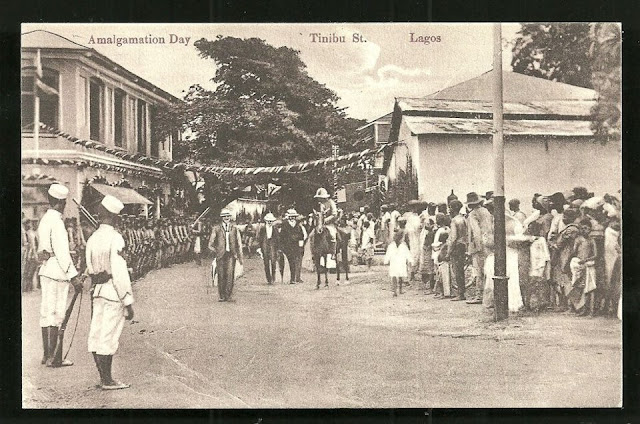
Amalgamation Day in Lagos, 1914

Amalgamation Day in Lagos, 1914

30 June, 2012

A government working against itself - II


The City of Jos is important to any analysis of all three tiers of governments' response to the trend. Violence in Jos has been entirely predictable, year-on-year, for 13 straight years, and continued getting worse for 13 straight years.  We should know by now that we have to prevent it from happening, that we have to heal the city. Yet, not only do we allow violence to recur year after year, but each time it happens our three tiers of government belatedly react as though caught unaware by something unpredictable. 

The different communities resident in Jos lived together in peace for so long, in a city that enjoyed the same reputation Calabar enjoys today; I refuse to believe that there is any fundamental reason beyond divide-and-rule politics for youth gangs from either constituent community to be massacring each other. Unfortunately, 1950s-style divide-and-rule politics appears (on the surface anyway) to colour public reaction to the event in Jos, so rather than come together to force our leaders do actually do something to fix the situation, we (if public commentary is to be believed) instead take sides with one or other of the warring youths.

We also (per the public commentary) take sides when we hear news of farmers and herders involved in tit-for-tat murders in the Middle Belt.  What nobody seems to be doing is questioning why it is that the three tiers of government are doing nothing about it.  We all know that the farmers and herders are competing for the same scarce resource, land, and that this competition, unmoderated by law or law enforcement, has taken the form of attacks and counter-attacks that happen, predictably, every year, and yet there is no institutionalized or systemic response to it.  There are no preventive measures, no efforts to create and enforce mutually beneficial compromises, no efforts to monitor risk factors, and no rapid reaction to outbreaks.

Why would leaders who rely on, and exploit our divisions for political purposes be inclined to do anything about incidents of violence that help keep us divided against each other? But if the people who benefit from the violence don't want to stop it, what is our excuse? We the people are the ones who die in these incidents, or who have to bury our relatives, or who have to dig into our savings to pay for the medical bills of the injured and to repair and replace homes and other property.

Again, I am not saying that things in Nigeria are at the point of anarchy.  What I am saying is that we are sleep-walking down a dangerous road, and while we are not near the end of the road, there is only one thing waiting for us at road's end if we don't change direction.  If we don't address this 13-year trend of rising violence (1999 to 2012), while we still have the ability to do something about it, we will eventually get to the point where we no longer have the ability to do anything about our fate.

Most of us seem to believe that anarchy can only happen in countries like Chad and Somalia, but even the richest countries in Africa, countries like the Cote d'Ivoire and Libya, have collapsed in recent years. And the Republic of Mali was hailed as a bastion of democracy and stability -- up until it collapsed too.

These things do not happen overnight; it is the culmination of many things over a period of many years or even decades -- things that were never inevitable or unavoidable, but things that the relevant parties nevertheless refused to do anything to prevent or avoid. 

It is so frustrating. The cases of Liberia and Sierra Leone are among the worst because the build-up to the catastrophe moved in slow-motion across enough decades that it could have been stopped and avoided long before it happened.

The Federal Republic of Nigeria still has a chance to avoid that destination, though for the families of the many, many victims (dead and injured) since 1999, it is already too late. I doubt the government has been keeping count, and if they have, I am sure they will never release the number to the public because it would be alarming. The 13 years of the Fourth Republic so far have been the second-most violent period of modern Nigerian history, behind only the period from 1966 to 1970. There was a lot of violence between 1960 and 1965, but, while our statistical record-keeping is weak and politicized, I think the cumulative death toll between 1999 and 2012 far exceeds the total from 1960 to 1965.

Two things stand out about the Fourth Republic. These factors were present before the Fourth Republic, but for whatever reason have become more acute since 1999:

(a) Our politicians, political parties and political factions have busied themselves recruiting violent young men to serve as their political enforcers and political defenders. In many cases, they have subsequently lost control of those young men, or have shifted from a situation of total control of the gangs to one of symbiotic (and almost equal) partnership. Our leaders think they are playing clever games among themselves, but if you weaken the capacity of the government to enforce its laws because you want to empower a militia group you think is on your side, the weakened institutions you've created will not be able to stop the militia groups you perceive to be your political enemies.
 
(b) If the law enforcement agencies did their jobs effectively, most of our leaders would be in prison, and they know it. Our political, economic and social leaders have long preferred to keep our law enforcement agencies and intelligence services ineffectual. Or rather, make them very effective a protecting Any Government In Power while being simultaneously ineffective at what it is they are supposed to do for the citizenry in terms of the social contract. But in keeping themselves safe from prosecution, they have long since (for decades now) left the citizens entirely unprotected and insecure. Heck, insofar as they use law enforcement agencies as a tool of government oppression, the people start crying out for protection from the government agencies that are supposed to be protecting them, an emotion exploited by the political recruiters of vigilance/ethnic/regional/militant militias, to gain sympathy from sections of the citizenry that should actually fear them for what they will eventually do/cause.

Some will respond, "well that is why we have to back our own "vigilance" militia, since we can't rely on the government to protect us from the proliferation of armed groups" ... to which I would respond, "Go and look at every country in Africa that did exactly that and see what happened."  Civilians get raped and pillaged by all sides in these long-running low-intensity wars, including by the very militia they once deceived themselves into thinking would fight to defend them as opposed to exploit them. .

Too many of us citizens are too quick to shield and protect the politicians and/or ethnic militia from our own part of the country, rather than work with our fellow citizens across the divides so we can all be safe.  But we citizens do not control or even minimally influence the decision-making of the armed groups or of the politicians that create them. And after a while, in our country (as in every other country in Africa where this has happened), the politicians themselves lose control of the very militia groups they created. These armed groups are exactly like the politicians who create them; they are interested only in their own perpetuation and profitability, even if it comes at the expense of you the ordinary citizen.

A government working against itself - I

What came first, the chicken or the egg? Is it the fractured nature of our society that produces the kind of leaders we have, or is it the leaders we have who work to create the fractured nature of our society?

I personally prefer to look at we the ordinary citizens as being the key protagonists. Both because I think we are (and that we underestimate our individual and collective ability to change things for the better) ... and because I think we the citizens can change ourselves (and thus our society), whereas our leaders are constrained to avoid change with all their might.

The things that most of us consider to be "problems" are the very things upon which our political and business elite rely for their wealth and power.  We can't really look to "the opposition" or to "the next generation", because they too aspire to climb the same greasy pole to wealth and power used by the current set. And if we are honest with ourselves as citizens, we will admit that one of the reasons that we the citizens never really push for fundamental change is the desire deep in our hearts to one day climb that same greasy pole ourselves.

I will hasten to point out that this paradigm isn't unique to us. It is a global phenomenon. Indeed, I am constantly aggravated by ex-leaders worldwide, who, in their retirement years, start spouting all sorts of ideas that they never fought for or enacted when they had power to do something about it. To get power, they played the game. To maintain power once they got it, they played the game. To secure private, personal wealth for themselves after their political careers, they played the game. Finally, with grey hairs on their heads, tens of millions of dollars in their bank accounts, and no with political power or influence left, they start criticizing their successors for doing exactly the same things they did, and for being motivated by the same things that motivated them in their time of power.

But this blog is about the beautiful, wonderful Federal Republic of Nigeria, so I will focus on us....

.... especially since our government's dysfunction is taking the country down a dangerously violent road.

As I have often mentioned on this blog, I wrote an essay on a popular Nigerian website back in 2003, warning that violence levels has risen sharply from 1999 to 2003, and that the trend showed the violence would only increase. I warned (in 2003) of the dangers of having so many ethnic militia, regional militia, private political armies, so-called vigilance groups, armed men loyal to governors and on state public service payrolls and so-called "militants", pointing out that every other country in Africa that had collapsed had gone through a phase where the government lost its monopoly of violence.

I said, in 2003, that while different sections of the Nigerian citizenry might have soft spots for one specific private army (based on the mistaken belief that that specific private army was defending their interests), we should learn from other countries in Africa where people thought the same things about their own ethnic/regional/vigilance/etc militia up until the tipping point to anarchy, beyond which they all began to pine for the "good old days" when a dictator held monopoly rights to violence.

[I promise you I am referencing something I wrote in 2003. I know it sounds like I am talking about things currently happening in certain parts of Africa.]

I argued, in 2003, that a country in which it was embarrassingly easy for one private army to smuggle in sophisticated, military-grade weaponry is a country in which it was just as easy for every private army to do the same. So if a particular political leader, or the government in general, or a specific section of the society chooses to overlook the institutional and systemic problems of border security because they fear fixing the problem would disadvantage their preferred private army, bear in mind that you are in effect empowering every private army and negating whatever relative advantage you think you are giving yourself.

When I wrote that essay in 2003, we had not yet fought a low intensity civil war in the Niger-Delta, nor faced an unchecked insurgency in the North. Back in 2003, I got one response to that essay, from someone who accused me of being an alarmist and a "nihilist" (whatever that means).  It is amusing the way people throw around adjectives.  Over the years, I have been called everything from a "neo-conservative" to a "bleeding heart liberal".  I am none of the things I have been called, and none of the people who called me these things ever presented a convincing argument against anything I said or wrote.

Look ... I am not saying anarchy is imminent in Nigeria. What I was saying back in 2003, and what I am saying now in 2012 is the trend of violence was and is upward, with little or nothing being done to stem the rise.

28 June, 2012

Whatever happened to ....

.... Sergeant Musa Usman?

You don't know who he is, do you?

I read about him nine years ago. The last I heard, he had been placed under arrest. I've wondered since what happened to him. Whether he was released, whether he was still in detention; whether he had retained his job, whether he had been sacked for "insubordination" or whatever excuse.

The fact that he is almost entirely unknown, the fact that his courageous statement to the Minister of Police is entirely forgotten, and the fact that there was exactly ZERO public reaction to his arrest 9 years ago, well, this says a lot about the state of politics in our Federal Republic.

And I am not just talking about the politicians. I am talking about you and me. All of us.

Read what he said (see below). Tell me he didn't have a point.

Absolutely nothing has changed since then, has it? And nothing will change, because we the people are too busy fighting each other to spare any energy to fight for changes that would benefit all of us.

The issue of substantive, meaningful police reform is not even on the agenda. Oh, sure, our leaders  keep promising it (read the articles below, you will see the promises from 9 years ago), but that is like lions promising to work towards vegetarianism on the Serengeti.


Anyway, this is what happened 9 years ago:

 THE SUBSEQUENT ARREST:

Harassment of Sergeant Musa Usman

In August 2003, police officer Sergeant Musa Usman was arrested and questioned by the police after speaking out about corruption and poor conditions in the police force. He voiced his criticisms on August 21, 2003, during a meeting in Lagos addressed by Minister for Police Affairs Broderick Bozimo. The minister had invited those present to express their views. Sergeant Musa spoke in the meeting about corruption in the police force; he complained about the poor pay and other disadvantages faced by junior officers. At one point, the Lagos State Commissioner of Police attempted to stop him by trying to take the microphone, but the minister said he should continue. A few days later, on August 27, Sergeant Musa was arrested and questioned by the Lagos State police in connection with the comments he had made during the meeting. It is not known whether he was subsequently released or transferred to another location. Members of a nongovernmental organization who made inquiries with the police in Ikoyi, Lagos, where he was normally based, were told that he was not there, and have not been able to make direct contact with him since. As of September 2003, his whereabouts were not known. In response to a letter addressed to the Minister for Police Affairs by the Network on Police Reform in Nigeria (NOPRIN), which was made public, the Lagos State commissioner of police denied arresting or questioning Sergeant Musa, claiming that it was a routine procedure. [88]
  WHAT PROMPTED THE ARREST:

You, too, Are Corrupt

By Mathias Oko
Monday, September 01, 2003
Junior police officers, angry at the arrest and dismissal of their colleagues for extortion, accuse their superior officers of the same offence.
The junior ranks of the Nigeria police have ac-cused their superior officers of aiding and abetting corruption in the force. The policemen, who were bitter over the recent sacking of 34 of their colleagues for extortion of money from motorists, said they were merely being used as scapegoats, and called for a similar disciplinary action against their superior officers. The junior policemen narrated their experiences in the hands of their superiors to Broderick Bozimo, minister of police affairs, who was in Lagos on a two-day working tour, August 21 and 22.
Musa Usman, a police sergeant attached to the force mobile unit, stirred the hornet's nest at the Onikan Sports Stadium, Lagos, August 21, when he made startling revelations on why corruption thrive among policemen. The officers present included Adebayo Adeoye, assistant inspector-general of police, AIG, in charge of Zone 11; Young Arebamen, commissioner, Lagos State Police Command; top- ranking police officers and the junior ranks alike, who were on hand to receive Bozimo.
Usman told the audience that poor condition of service was responsible for corruption in the force, and that the superior officers were liable for the much orchestrated extortion experienced daily on the highways. Though, Usman absolved himself of corrupt tendencies, saying he would never stoop low to the point of extorting N20 from anybody, he noted that officers who extort money make "returns" to the superior officers, who send them to check-points, and wondered why only the junior cadre should bear the brunt. "If 34 of our men could be paraded and shown on television to the millions of viewers in the country, and were later sacked, I hope our superior officers who sit in their offices and get returns would be shown on the Cable News Network, CNN, for the world to see," he said.
He attributed the large-scale corruption in the force to insensitivity on the part of the authorities. He also blamed it on the poor salaries of junior officers which he said, cannot take them anywhere in the face of the tight economic situation in the country. He said for instance, that, a police constable earns N8, 500; corporal N10, 000 and sergeant N12, 000. These, he said were grossly inadequate to cater for their immediate families. Usman decried the lack of insurance policy for the hazardous job of securing lives and property of Nigerians.
As Usman eloquently reeled out the ordeal of the junior police officers amidst ovation from his colleagues and admirers who urged him to "fire on," Arebamen, who was visibly angry by the reaction, attempted to seize the microphone from him. But the minister stopped him saying they should be allowed to express their minds.
Each of the six speakers, including a female cop attached to the traffic division spoke in similar vein. Michael Attah, a police inspector, told the audience that contrary to the official claims about the upward review of the minimum wage, policemen were yet to enjoy same with their civil service counterpart in the country. He explained that frustration was largely responsible for corruption and other vices in the force. Many policemen, he said, were dying silently because of series of problems confronting them which were beyond them, noting that the authorities were not doing anything about their plight. Attah noted, for instance, that some of them could not bring their families to join them in Lagos due to lack of official accommodation. "Even the existing accommodation in the barracks are an eye sore," Attah stated.
One of the junior officers who spoke with Newswatch on condition of anonymity at the stadium said the disparity between the senior cadre and their junior colleagues was too wide. According to him, this was the kind of scenario that prompted the nationwide strike last year and some of those fingered as masterminds were made sacrificial lambs. "Now they are at it again. It must be the junior officers they would want to crucify. What an injustice," he said.
Apparently overwhelmed by the outbursts, Bozimo expressed sympathy with their plight and thanked them for their courage in exercising their constitutional right to freedom of speech. He observed that if such freedom was allowed in the past and their problems addressed, the question of strike in the force would have been averted, and that the force would have been the better for it.
He told the agitated cops that he had come and seen, and would take their problems to the president. He spoke on the cardinal programmes for improving the police. These include improved welfare, training and retraining of officers and promised that more training facilities would be acquired to enhance professional training for the teeming incoming members of the service. Acquisition of facilities like computers, vehicles, as well as provision of accommodation, he said would be addressed through the Police Trust Fund Scheme, which he said, would serve as morale booster for the cops. "If these basic things are provided ,it would engender discipline," Bozimo said. He called on journalists and members of the public to help expose corrupt officers. He insisted that members of the public owe it a duty to discourage the police from taking bribe by not giving, because according to him, "if you don't give, they won't take. So don't give at all."
The minister visited several police formations in the zone including the zone II headquarters, Lagos; the Lagos State Command, police air wing and pension unit, all in Ikeja among others. He also paid a courtesy call on Rilwanu Akiolu, the Oba of Lagos.
© 2003 Newswatch Communications Limited

08 May, 2012

Debt Promises

The Minister of Finance and "Coordinating Minister for the Economy", Dr. Ngozi Okonjo-Iweala says the amount of money the Federal Government borrows from domestic sources each year will drop to ₦500 billion by 2015. The exchange rate for $1.00 varies between ₦150.00 and ₦160.00, so think of ₦500 billion as being a little over $3 billion. She says domestic borrowing this year is ₦744 billion (just under $5 billion), down from ₦852 billion (around $5.5 billion) last year.

First off, note that she is only referencing domestic borrowing, no foreign borrowing.That said, I do not believe her projection for domestic borrowing (or any borrowing) in 2015. Mind you, it is not her fault that I don't believe her.

Seven years ago, back in 2005, Dr. Okonjo-Iweala negotiated the famous debt cancellation deal. It cost us a lump sum of $12 billion, but that is besides the point. The point is she made a lot of promises about what would happen now that we were debt free, a lot of assurances about how much we would be saving over a 20 year period, and a lot of promises about what the alleged debt savings would be used to do.

None of what she promised has happened as she promised it, and, again, I will very quickly point out that it is not necessarily her fault. Not too long after the debt cancellation deal, then-President Olusegun Obasanjo moved her out of the Finance Ministry and into the Foreign Affairs Ministry. Shortly thereafter, she left the cabinet and returned to the World Bank, so she ceased being in charge of our fiscal health shortly after the debt cancellation deal was finalized.

Be that as it may, between 2005 and 2011, the Nigerian Federal Government amassed an additional $28 billion in domestic debt. Think about it. We paid $12 billion of $30 billion, had $18 billion cancelled, and then in the space of less than 6 years, we borrowed $28 billion of cumulative new debt (added to $11.8 billion of domestic debt we already held in 2005). For all intents and purposes, we paid out $12 billion for the privilege of being exactly where we were before we paid out $12 billion.

I did not agree with the debt cancellation deal. I think I was probably the only one on Earth who didn't. Dr. Okonjo-Iweala and President Obasanjo were lauded and hailed for it worldwide. But I wrote an essay, which is still floating around somewhere on the internet, questioning whether it was or was not a good deal.But, again, that is not the point. And again, I don't necessarily blame Mrs Okonjo-Iweala. Its not that I support her, I just don't think it is directly her fault.

Dr. Okonjo-Iweala has no real political influence. She has no party, no faction, no political machinery. There is no pro-Iweala parliamentary caucus, no pro-Iweala bloc of governors. She is simply not a political "player" and has no political "big stick" to wield. She has no political constituency to trade. Frankly, if she wants something to happen, and the real power-players in Nigerian politics want something else to happen, then something else will happen and there is NOTHING she can do about it.

I don't know what she would have done if she had been Finance Minister consistently from 2003 till today, and had had the full force of the Presidency behind her in that time. Maybe everything would be different and we would not have $28 billion in extra domestic debt. Maybe everything would be the same.

At the time of her first removal from the Finance Ministry, some commentators felt President Obasanjo had moved her from the Finance Ministry because he was jealous of her renown following the debt cancellation deal. But that is not what happened. In reality, by 2006, President Obasanjo was already looking forward to the 2007 "Do Or Die" Elections. He would need to spend (or rather "waste") billions of dollars in federal government funds to influence the results. He would either buy himself a Third Term, or if that failed, he would buy the 2007 "Do Or Die" Elections for his political proteges, and for the Peoples Democratic Party.

Obasanjo figured Dr.. Okonjo-Iweala wouldn't go for that, or migh insist on some "transparency" in terms of how much was being spent and on what ... so he moved her to where she would not be in charge of the money.  And there was nothing she could do about it. When she realized she was powerless as Foreign Minister, and was just there because Obasanjo was concerned about what the outside world would think if he just sacked her, Dr. Okonjo-Iweala resigned and went back to the World Bank.

So, what does this have to do with her predictions on 2015?

President Goodluck Jonathan reappointed Dr. Okonjo-Iweala as Finance Minister after the 2011 Elections. You see, he needed her name recognition in his cabinet, but only after the election, get it? He put her in charge of the money after the 2011 elections for the same reason Obasanjo removed her from control of the money before the 2007 elections.

You see where I am going with this, don't you?
 
There will be another Election in 2015. President Jonathan will seek reelection in an atmosphere in which a substantial chunk of the country thinks he shouldn't have had a first term to begin with. And bear in mind we will be facing the additional political headache of some Big Men saying it will be "the turn" of "the Southeast" after Jonathan's second term, while other Big Men insist that it is "the turn" of "the Northwest" to complete the five or six years they missed out on because of late President Yar'Adua's untimely death. In other words, President Jonathan is going to want, sorry, is going to need to spend a lot of federal government money in order to buy his way to a second term.

She may be grandiosely titled "Coordinating Minister for the Economy", but if Dr. Okonjo-Iweala does not go along with the need to buy the 2015 election, President Jonathan will move her out of the Finance Ministry and put her somewhere where she will not be an impediment to what he needs to do. He might make her Education Minister or Ambassador to Gambia. And there is nothing she will be able to do about it. You know I am telling the truth.

Whatever happens with our domestic and foreign borrowing  in 2012 and 2013 (it might continue to go down) will have no bearing on the inevitable increase in borrowing when electioneering wuru-wuru begins in 2014 and 2015. If anything, because of the many conflicts, political and otherwise, that are in play, it might just be the most expensive political wuru-wuru in Nigerian electoral history.  At the end of the day, our domestic and likely foreign borrowing in 2015 will be higher than Dr. Okonjo-Iweala predicts.

And by the way, all of the above references only federal debts. As you well know, our 36 states have been on an unchecked borrowing spree since 1999.

24 April, 2012

From Asuquo EB

Business Day's Asuquo EB has been my favourite editorial cartoonist for a while now. That does not mean I agree with his underlying theses all the time, but he (or she come to think of it) is creative, often funny and never cruel or insulting. These days a lot of people seem to confuse random unfunny cruelty with comedy.
This image is culled from BUSINESS DAY.

22 April, 2012

Fighting for Peace

I had intended to write about the hype surrounding Finance Minister and "Coordinating Minister for the Economy" Dr. Ngozi Okonjo-Iweala's nomination to replace Robert Zoellick as President of the World Bank Group.

The fact is, if Barrack Obama allowed anyone other than an American hold that job, his reelection prospects would dim. Similarly, the countries of the European Union, while feeling obliged to pretend otherwise, are keen to maintain their grip on the IMF (and can barely disguise their preference for Mr Obama's reelection) and so were always going to give their votes to the USA (in exchange for which the USA will continue to vote for the EU choice for IMF boss).

I am not really sure why we Nigerians (or more properly President Goodluck Jonathan) decided to distract ourselves with this bit of meaningless symbolism when we have practical, real world problems we are still avoiding rather than resolving.

Speaking of which, you might want to read this article by Carmen McCain in this weekend's edition of the Weekly Trust. An excerpt of the first half of the first paragraph:

During the November 2008 crisis in Jos, an old Muslim man went to sit on the steps of the neighborhood Assemblies of God church in Kwararafa. Four times, he turned away angry youth who wanted to burn the church. The fifth time, the youth attacked him. Two weeks later he died of his wounds. Before he died, he told his wife, “You tell Pastor that he shouldn’t worry. For what I have done for the church is for the sake of peace and the neighborhood and I love him very well.” Thus goes one of the first stories found in Fighting for Peace: Learning from the Peace Heroes Among Us by Reverend Yakubu Pam and Dr. Katrina A. Korb.

We spend a lot of time glorifying and hero-worshipping people who don't actually do anything worthy of the praise. And we spend a lot of time talking as if the worst of our number are the true representation of who we are as Nigerians. I mean, it is bad enough that most of the world (including our fellow Africans) negatively stereotype, so why do we pile on and negatively stereotype ourselves? Why do we do that?

In my opinion, the unnamed old man referenced in the paragraph above is an exemplar of the best of us, of who most of us are deep in our hearts even if we don't always have the courage to act on our convictions.

You know what is sad? That old man's sacrifice is entirely unknown to the majority of Nigerians, busy as we are discussing the World Bank Presidency prospects of someone who was never going to be World Bank President.

That old man should get a posthumous national award. He and everyone else whose story is told in that book.

But its not going to happen, is it?

22 March, 2012

Questioning technocrats

A bit of controversy has developed in the past week or so.

Mr. Herman Hembe, until recently the chairman of the Capital Markets Committee in the lower house of the National Assembly, was ostensibly leading an investigation into the collapse in the value of equity on the Nigerian Stock Exchange between 2008 and 2009. Somewhere along the way, his committee launched something of an attack on Ms. Arunma Oteh, current Director-General of the Securities and Exchange Commission, Mr. Oscar Onyema, current Managing Director of the Nigeria Stock Exchange. Ms. Oteh and Mr. Onyema were appointed to their current positions after the stock market collapse.

Ms. Oteh counter-attacked, accusing Mr. Hembe of demanding a bribe. You've probably all seen the video:


Mr. Hembe called for the EFCC and ICPC to investigate her accusation. He later resigned as Chair of the Committee, but also counter-accused Ms. Oteh, arguing the SEC (i.e. Ms. Oteh) offered him the bribe first. Oh, and he said some thing about her allegedly excessive expenses paid for with government money while she was lodged at the Transcorp Hilton in Abuja.

It is a soap opera ... but it is not what this post is about.

My attention was drawn to comments attributed in BusinessDay to CBN Governor Sanusi Lamido Sanusi. I have often said that Sanusi is the only political figure in Nigeria I could ever vote for, not because I agree with everything he says/thinks, but because I know what he thinks.

Sanusi has been writing and speaking about Nigerian issues for years, expressing honest, forthright, thoughtful and at times controversial opinions. Virtually everyone else in the Nigerian political landscape is either a blank canvas that nothing substantive is known about (yet they have supporters) or are people who, like politicians all over the world, tell citizens (or specific segments of the citizenry) exactly what they think those citizens want to hear, while revealing nothing of substance of their actual thoughts on the issues (mainly because their thoughts are supportive of most of the things the citizens oppose).

But like I said, I don't always agree with what he says. I certainly don't agree with what BusinessDay attributed to him, viz:

It is only fitting that this diary starts from the questions so poignantly raised by Central Bank of Nigeria (CBN) governor Sanusi Lamido Sanusi at a well appointed gathering in Lagos on Friday.

He asked, “can you rightly question the competence of this 1984 first class honours graduate in computer science from Nsukka and who went on to take an MBA from Harvard University and then worked at the African Development Bank for 18 years and could have been the governor?
“Can you really question her competence to head the Securities and Exchange Commission?

“And do you know who is questioning her competence? A 2005 graduate of the University of where? Benue State and the fellow became a member of the House the following year?”

Sanusi, known for being unusually outspoken in Nigeria asked the questions as he set the tone for his brilliant presentation as key note speaker at the knowledge roundtable on financial system stability organised by one of the country’s outstanding law firms, Olaniwun Ajayi, LP.

He cited Nigeria as a place where one can become the target of harassment and intimidation for standing up to vested interests.

Sanusi had said he did not want to speak to or about the macabre hearing at the House of Representatives because he did not want anyone to say he insulted him or her ,but not many in the audience thought he could keep quiet for long given, the outrage.

So it was not a surprise when the CBN governor asked rhetorically, “do you keep quiet and watch while a good person is being hung and dried for pursuing reform, or do you stand up in support? At the CBN, we will support reform minded people and regulators because an attack on one is an attack on all reform minded regulators.

I don't know if BusinessDay misquoted him. Perhaps they quoted sentences where it would have been more elucidatory to quote an entire paragraph or two.

Don't misunderstand me. I do not doubt Ms. Oteh. On the other hand, I do not not doubt her (double negative). I do not have an opinion whatsoever because I am not in a position to know who did what. There is no available, credible information upon which to make a conclusion. Programmatically, I find I am somewhat opposed to the SEC and NSE's plan for demutualization, but that has nothing to do with the who did what to whom when and how malarkey of the soap opera.

No, my disagreement with Sanusi's quoted comments have nothing to do with Ms Oteh or Mr Hembe at all.

It is the way Sanusi reportedly outlined a person's degrees, the prestigious universities the person's degrees were obtained from, the famous institutions the person worked for in the past, and then designated the person as "a reformer" ... which apparently led him to the conclusion that mere mortals have no grounds to question the person's suitability for a public service or political job.

That is nonsense and Sanusi knows it. You know how I know he knows it? Because everything he said about Arunma Oteh was also said about Charles Soludo, his predecessor as CBN Governor, and the fact is Sanusi has spent most of his tenure cleaning up the mess left behind by Soludo, reversing or altering some of the "reforms" of his "reformer" predecessor in the process.

Again, please take note, I am not criticizing Ms. Oteh or agreeing with the most likely corrupt Mr. Hembe.

There is another point I am trying to make.

The fact that a person has fancy degrees from a fancy university and used to work for one of the many multilateral organizations does not mean that their actions and decisions are beyond reproach, beyond question, beyond doubt. And insofar as they take actions and make decisions with "political" implications, then anything and everything they do should be rightly questioned by we, the electorate.

Indeed, one problem I had with Soludo, a problem I must admit I have with Sanusi too, is they both seemed to make what seemed to be one-man decisions on issues that should actually have been debated and decided politically, through elections driven by that particular issue, ultimately candidates elected by citizens based on the citizens knowing what the candidates' view on that issue is.

Of course our elections are not really driven by issues, and for the most part the votes of the electorate do not necessarily determine the results. The absence of issues in our voting was made clear by the map showing who won what state in the 2011 Presidential Election. We all know why the pro-Buhari states voted for Buhari, and we all know why the pro-Jonathan states voted for Jonathan (even the ones otherwise owned by ACN and APGA). After all that, the whole Nigeria was shocked when Jonathan summarily removed the fuel subsidy. I mean seriously, why would you vote for someone when you have no idea, not even a shred of an idea what they are going to do once elected?

Still, that doesn't mean CBN Governors get to decide political questions on their personal whim, or in the case of Sanusi, take over the Federal Executive's economic development and economic policy functions. The question of whether Sanusi or Jonathan would be better at economic policy-making is entirely besides the point. Institutions are more important than individuals, and neither Sanusi nor Jonathan will be in their respective jobs forever, so it cannot be a question of whom is personally better at it, but of what our institutional structure is supposed to function as and why it doesn't quite function properly.

But I digress.

My point is, even the most decorated, educated "technocrat" could make the wrong decisions even on straightforward bureaucratic matters, much less important, future-affecting political questions and economic policy. They can be wrong and they are often wrong. Indeed, I am not exactly sure why people act as though a lifetime of working at the World Bank means you somehow know how to transform an economy like Nigeria's.

Did any country in the world that transformed its economy by following the diktat of the Bretton Woods organizations? Indeed, as much as we Nigerians have bad memories of "military rule", and as much as the world (and myself) love democracy, the political and economic transformation of nations has more often been superintended by autocrats or army generals. And yes, that includes the USA, with their long line of presidents who used to be Army generals famous for doing immoral things in the service of strategic political and economic interests.

But I am digressing again.

The fact is, regardless of where Arunma Oteh went to school, regardless of where she used to work before, regardless of whether she designates herself a reformer or is so designated by someone else, and regardless of whether Mr. Herman Hembe is or is not as corrupt as she says he is ... we the people of Nigeria are perfectly entitled to question whether or not Ms. Oteh is suitable for the job.

Sanusi is wrong.

Assuming they quoted him properly.

And by the way, there needs to be more debate about the impending demutualization of the Nigerian Stock Exchange. I mean real debate, not one of those managed "Stakeholder" things that have become the preferred method worldwide for pretending to consult citizens when you have already decided and will do what you have decided even if citizens disagree.

But, as usual, I digres....

15 March, 2012

Some states are bankrupt

So says the Chairman of Revenue Mobilisation, Allocation and Fiscal Commission, though he was vague on the full details and didn't name any particular "bankrupt" state, which is par for the course when it comes to Nigerian officialdom.

I would like to see verified figures on all of the states' domestic debt totals, not just the deductions from the allocations of a few states.

12 March, 2012

What was the point of the 2011 Elections?

Violence and insecurity continue to be problems.

Our public debt (Federal and State) continues to rise.

There hasn't really been any reform of our system or method of governance, nor restructuring of our administration (fewer states, fewer LGAs, fewer federal ministries, etc, etc).

Institutions (like the Nigerian Police Force) have not been reformed.

I could go on ... but let me conclude by saying there are no plans to do tackle any of these issues, nor any of the other issues I have not bothered to mention. Sure, all of the politicians are making a lot of promises, but you and I know where we are headed.

The "new constitution" will be like every other constitution. The Big Men and Women are already engaged in the usual loud-but-meaningless discourse that accompanies every constitution review process. Will there be new states? Who gets what share of the oil revenues?

And even if the entire fuel subsidy were removed, it would not be the first time that our three tiers of government have found themselves with more money to spend than they previously had, and as always happens the new revenues would just disappear into the gaping mouth of our inefficient, wasteful, over-expensive governance structures -- I daresay the deficit will remain the same (or grow) and the debt will definitely grow. Anyone remember the silly promises made when we paid $12 billion to cancel $18 billion in debt? What has happened since then?

We had an election last year. The campaigns had no substantive correlation to any of the priority issues we face. The candidates at all three tiers mostly repeated the same blandishments as usual. I don't know if to blame us for voting for people we know will not solve our problems, or if I should acknowledge that we share a problem with the rest of the world -- political systems that restrict us to choosing between people who we know will not solve our problems.

I know everyone is acting like the problem with violence started a couple of years ago. Some even claim it is instigated by people opposed to Goodluck Jonathan's electoral victory last year, as if his victory changed, is changing or will change anything substantive for any of the practitioners of our you-chop-I-chop politics.

Look, this problem has been building up for 13 years, starting in 1999! Somewhere out there on the internet, on the server archives of a website that no longer exists is an essay I wrote in 2003 warning of where we were heading. On that extinct site's servers, you will also find the response from a newspaper journalist who thought I was being overly pessimistic -- actually he said "nihilistic".

It is annoying that our leadership didn't see it.

No, I take that back.

It is enraging that our leadership caused it. They are the ones who recruit the militia, they are the ones who buy the weapons and see to it that weapons can be easily smuggled into the country, and they are the ones who eventually lose control of the militia they created.

Don't misunderstand me. I am NOT saying that all of the militia were created, sponsored and protected by politicians. What I am saying is, because the politicians do not want to be arrested and prosecuted for their own particular share of the militia problem, they have assiduously maintained a situation and set of circumstances where our security, law enforcement and judicial systems cannot properly deal with the problem....

.... which creates a HUGE problem in that anybody can exploit this gaping hole the politicians are keen to maintain for themselves.

Even now, the politicians think they can avoid reform and restructuring by inviting foreign armies and navies into our coastal waters, into our airspace and onto our land. It won't work.

It is frustrating to see problems, to see no one doing anything about the problems, and to be unable to do anything yourself. I cannot believe how fast our debts are rising. And for what?

I remain confident in our future. But we need to start making changes. NOW.